‘Inquirer not for sale’: Surviving Erap

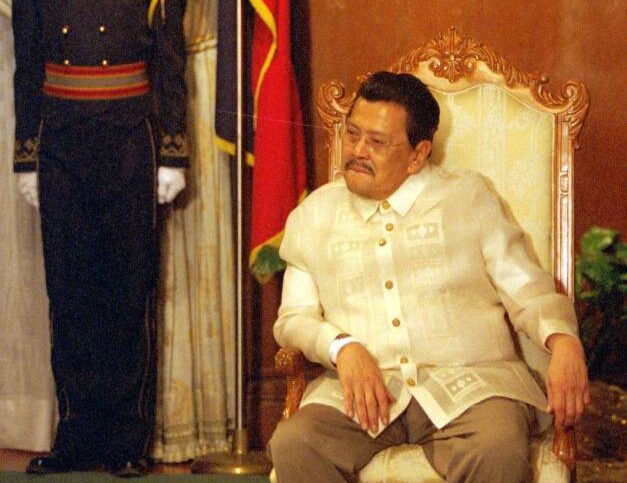
In the run-up to the 1998 presidential elections, then outspoken Manila Archbishop Jaime Cardinal Sin, instrumental in drawing people to the 1986 Edsa People Power Revolution, warned that electing Joseph “Erap” Estrada as president would be disastrous for the country.
A pastoral statement of the Catholic Bishops’ Conference of the Philippines followed up with a more explicit warning: the Philippines would be better off with “anybody but Erap.”
But Estrada, then the vice president, easily trumped the Ramos administration’s standard-bearer with the largest margin at that time—he got over 10.7 million votes against his nearest rival’s 4 million. He was the first actor, and a college dropout, to become President of the Philippines.
Many firsts
Estrada’s rise to the highest post of the land was marked by many firsts. Catapulted to Malacañang on sheer star power and undeniable personal charisma, the actor-turned-politician captured the imagination of the masses with his propoor “Erap para sa mahirap” campaign slogan.
His inaugural vow rang loud and clear: “Walang kaibigan, walang kumpare, walang kamag-anak (No friends, no buddies, no relatives).”
Ironically, falling short of those very same standards led to Estrada’s downfall just three years into his office. He became the first sitting President to be impeached and tried for corruption, culpable violation of the Constitution, and betrayal of public trust.
Just a few months after becoming president, reports about him intervening for a private corporation erupted. This was followed by reports of more shady deals with favored cronies, unexplained wealth, and policies allegedly made by a shadowy “midnight Cabinet” during drinking sessions in Malacañang
Bearing the brunt
The Inquirer bore the brunt of Estrada’s fury against the media. He accused the paper of printing lies about him, and complained that his detractors have thrown everything at him including the kitchen sink.
It was in fact an Inquirer story about a kitchen, among several others, that started Estrada’s attacks against the Inquirer.
In August 1998, the Inquirer reported about the makeover of the kitchen at Malacañang’s Premier Guest House, where Estrada had taken up residence. The kitchen, per the Inquirer report, was to be fitted with Italian marble and state-of-the art German fixtures at a cost of P10 million.
Succeeding Inquirer reports on a P100-million refurbishment of the presidential yacht, the BRP Ang Pangulo, and another P85-million upgrade for the Premier Guest House angered Estrada even more. The reports seemed to validate his love for luxurious living and the wining and dining in the Palace.
Estrada was known for entertaining friends, cooking his favorite bacalao, pork binagoongan, and pochero paired with pricey Petrus wine. This would later be confirmed by Aprodicio Laquian, the President’s chief of staff, who famously told a forum of foreign correspondents in March 2000 about drinking sessions in the Palace lasting up to 4 a.m.
“It’s the best thing working for me because at 4 o’clock in the morning, I am the only sober person in the room. And if this is in Canada, I will be the designated driver, I will be the one taking them to their beds and so on,” said Laquian.
Laquian was promptly fired and sent back to Canada.
Ad boycott
The Inquirer also reported on the appointment of Estrada’s US-based cousin Celia Ejercito de Castro as a presidential assistant despite her links to a P400-million textbook scam, as well as an incident when his son Jude used the presidential plane for a private trip to Cagayan de Oro where he and his friends left a restaurant without paying their P60,000 bill.
Things came to a head in July 1999. At a dinner meeting with movie producers in Malacañang on July 8, Estrada aired his gripes against the Inquirer and reportedly urged them to stop their advertisements in the paper.
In return for their compliance, the movie producers asked the President to abolish the 30-percent amusement tax on the industry.
Over the course of six months, the Palace-instigated ad boycott against the Inquirer persisted, seriously threatening the paper’s survival. Government financial institutions and some private corporations followed suit.
On July 16, I was writing my report about the ad boycott when my fellow Inquirer reporter Martin Marfil and I realized we were the only reporters left at the press office, then located at the Kalayaan Hall in Malacañang. It turned out that the other reporters had been quietly summoned to the Premier Guest House to meet with the President.
I went to the office of then Press Secretary Rod Reyes to ask why the Inquirer was excluded from the press briefing.
“I don’t know. We were just following orders,” Reyes said, adding, “The President instructed us to invite the members of the Malacañang Press Corps and, as relayed to me by [Estrada spokesperson] Secretary [Jerry] Barican, not to include the Inquirer.”
We were excluded from three more Estrada press briefings from July to August, depriving us of the chance to personally ask the President questions and provide our readers firsthand reporting on the burning issues engulfing Estrada at that time.
I relied on trusted Inquirer sources who continued to relay insider accounts, and allies who gave me access to official recordings of the President’s briefings. In August, the Palace sent a letter to the Inquirer informing the paper that it was barred from covering the President’s state visit to Brunei.
Fortunately, Marfil and I were able to cover the other presidential events for as long as we stayed invisible at the back and kept ourselves out of the President’s line of sight.
But at an out-of-town coverage a few months later, Estrada fumed when he saw me. He glared at me and castigated me for defying his ban, and muttered that the Inquirer was doing everything to malign him.
If looks could kill, indeed. For the first time since the ban, I felt scared.
Death threat
One evening, a car full of men followed us as we left Malacañang to go home. I asked my husband to drive back to the Palace, where I told the staff about the suspicious car.
Later, a man wearing military fatigues showed up at my place and asked my neighbors if my family and I were home: “Nakauwi na ba si Ma’am at ’yung anak niya?”
At about the same time, then Inquirer publisher Isagani Yambot received a death threat from someone who called up his phone at home and relayed the warning that his days were numbered (“malapit nang matapos ang mga araw niya”).
The Inquirer took the threats seriously, and assigned security personnel for Yambot and myself. I received a letter from then Philippine National Police chief Panfilo “Ping” Lacson assuring me that they were not behind the threats and harassment against me.
Yambot said the Inquirer editors had it on good authority that Estrada wanted to bring the Inquirer to its knees. At the time of the Inquirer ad boycott, Estrada also went after the Manila Times for a report that described him as an “unwitting ninong” to a government contract awarded to an Argentine firm. The P101-million libel case Estrada filed led to the sale and eventual closure of Manila Times (before it was bought up by new owners).
‘Not for sale’
Meanwhile, the presidential attack on the Inquirer was coming from all sides: the Bureau of Internal Revenue launched a tax audit of the Inquirer officers, and charges of libel and inciting to sedition were filed against the paper for its stories.
Finally, there were offers to buy the Inquirer, with buyers asking our owners to “name your price.”
But three things were going for the Inquirer which helped it to survive Estrada’s assault on the independent press. First— the Inquirer newsroom, led by our courageous editor in chief Letty Jimenez-Magsanoc, did not flinch, and it went on its fearless and dogged reporting of events.
Second, our owners, then Inquirer chair Marixi Rufino-Prieto and president Sandy Prieto-Romualdez, valiantly stood by the newsroom’s decision not to bow to the President’s pressures despite the financial squeeze. In a general assembly of employees, Prieto-Romualdez announced that the Inquirer was “not for sale.” She assured the employees that “there would be no retrenchment even if we are reduced to eight pages.”
Third—the support of our readers, and a broad sector of society, including international organizations who encouraged us to stay the course. In a few months, we received at least 10,000 letters from readers, one of them sending P20 in his letter as his modest contribution to keep us going.
Quarrel over
Later that year, Prieto-Romualdez and several editors met with Estrada in the home of his son Jinggoy, then mayor of San Juan. In his account of the meeting, Yambot said Estrada aired his complaints against the Inquirer. The editors listened and explained the Inquirer editorial policy of publishing accurate, fair, and balanced reports.
Much later, Estrada was reported to have met Rufino-Prieto in an event, where he made conciliatory gestures.
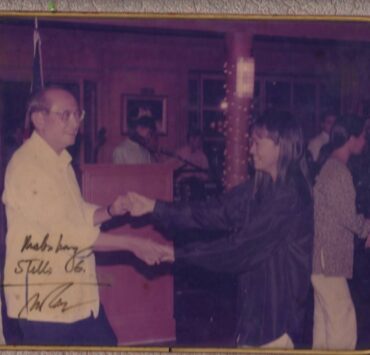
As for me, persistence paid off as well. In a coverage in Rizal sometime in October 1999, Estrada, then smiling and back to his charming self, asked me to sit beside him during lunch.
In her book, “From Macapagal to Macapagal-Arroyo: My 42 years inside Malacañang,” longtime Press Undersecretary Carmen Suva wrote of this moment: “Estrada approached Juliet and offered her lechon. Nang sinubuan ni President Estrada si Juliet, alam naming tapos na ang away (When President Estrada fed food to Juliet’s mouth, we knew the quarrel was over).”
Ignominious ending
But Estrada’s troubles were far from over. In the next few months, more reports and evidence about his unexplained wealth and properties attributed to his family and mistresses came out. It was the bombshell exposé of former Ilocos Sur Gov. Luis “Chavit” Singson, who said he delivered “jueteng” payola to Estrada, that sealed his downfall.
Singson said he delivered P10 million in jueteng protection money to Estrada from November 1998 to August 2000, amounting to a total of P400 million. Further, he claimed that Estrada also demanded a cut from the tobacco excise tax amounting to P130 million.
On Nov. 13, 2000, the House impeached Estrada. His trial at the Senate brought out more damning evidence of corruption. Bank executive Clarissa Ocampo testified that she was just a foot away from Estrada in Malacañang when the President signed bank documents as “Jose Velarde.”
But it was the vote of 11 senators not to open a sealed envelope, allegedly containing bank documents linking Estrada to over P3 billion in secret accounts, that led to the walkout of House prosecutors and Filipinos pouring out again on Edsa, calling for Estrada’s ouster.
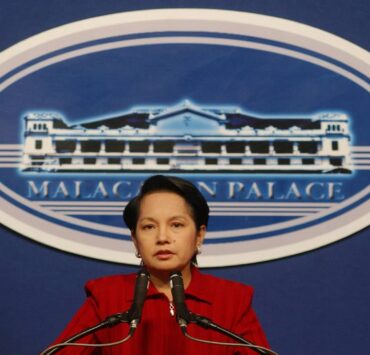
As the military withdrew support from Estrada, his then Vice President Gloria Macapagal-Arroyo took her oath as President on Jan. 20, 2001.
Estrada and his family quietly left through the Palace backdoor, on a boat that took them to the other side of Pasig River. It was an ignominious ending quite unlike Estrada’s action movies where he always came out as the victorious hero.
Watershed moment
The Inquirer still seemed to have the last say in closing Estrada’s short reign. The paper came out with an exclusive series on the diary of Estrada’s executive secretary, Edgardo Angara, which documented Estrada’s last days in Malacañang. The Supreme Court used the diary stories as basis for declaring that Estrada had made a “constructive resignation” from his post, and thus Macapagal-Arroyo’s assumption as president was legal.
Having experienced firsthand Estrada’s assault on press freedom, I thought his short-lived presidency was a watershed moment for the Philippine media, then regarded as the freest in Asia following the restoration of democracy after the first Edsa People Power Revolution.
That was until almost two decades later, when Filipinos elected another populist leader, Rodrigo Duterte, as president.