








Iran asked to count PH as ‘nonhostile’ nation

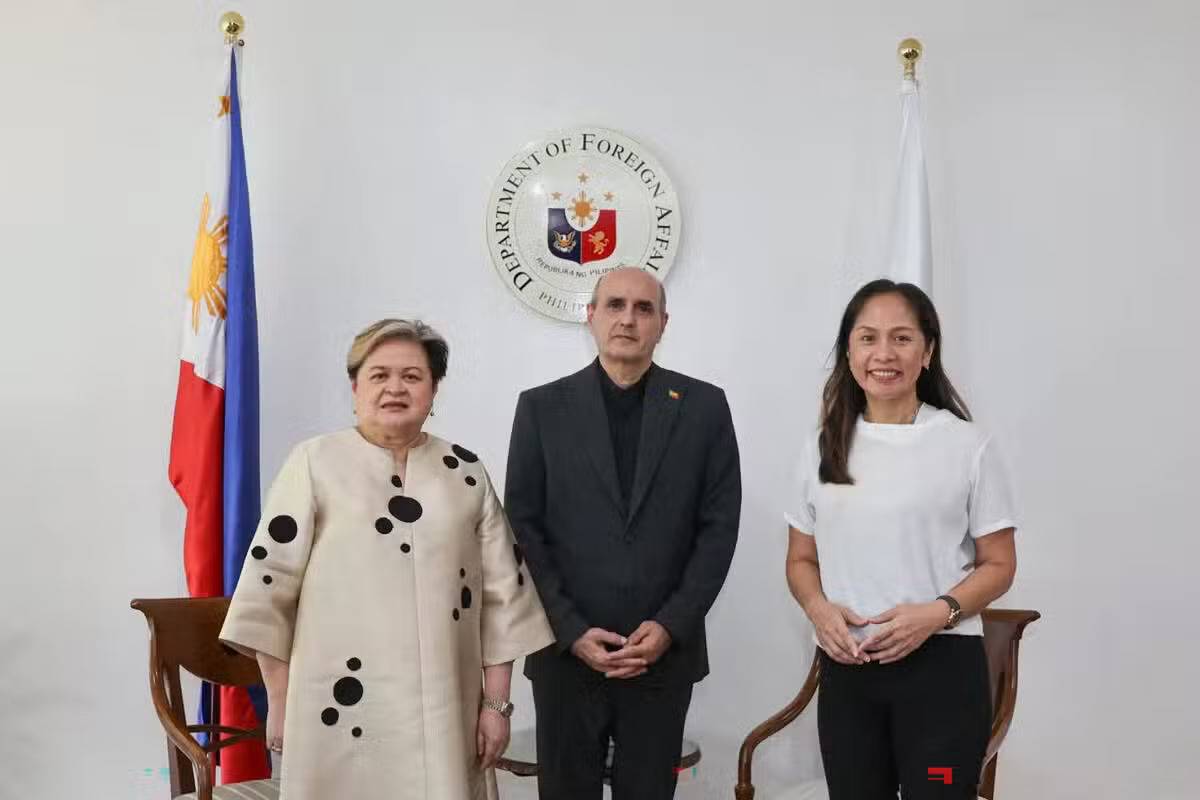
The government has asked Iran to classify the Philippines as a “nonhostile” country in relation to the Middle East conflict, as Manila initiated talks to secure safe passage for Philippine-bound oil tankers through the Strait of Hormuz, a waterway crucial to global supply lines now controlled by Tehran.
The request was made a day after Malacañang ordered the Department of Foreign Affairs (DFA) to set up a meeting with Iranian Ambassador Yousef Esmaeil Zadeh and negotiate the transit.
Malacañang on Wednesday reported that the request was conveyed by Foreign Secretary Maria Theresa Lazaro and Energy Secretary Sharon Garin to Zadeh during a meeting at the DFA main office.
In a message to reporters, Palace press officer Claire Castro said it was explained to the Iranian diplomat that granting the Philippines a nonhostile status was “vital for the protection of our seafarers and our energy supply.”
According to Castro, Zadeh revealed during the meeting that Tehran “has been awaiting our outreach.”
The ambassador also “reaffirmed (Iran’s) strong willingness to assist the Philippines with our specific requests,” she said.
“The meeting was exceptionally warm and open. Given their stated readiness to cooperate, we are highly optimistic about a favorable outcome,” Castro said.
Castro said Lazaro and Garin immediately reported the development to President Marcos after the meeting.
Lazaro is expected to speak today with a second Iranian official, Foreign Minister Abbas Araghchi, “to personally secure these commitments at the highest level.”
The Department of Energy, Castro said, would be preparing the necessary details coming from the meeting for “immediate transmission” to the vessels that are of Philippine interest and awaiting passage through the Strait of Hormuz.
The government also agreed to course all detailed requests through official diplomatic channels to expedite processing, she added.
The Philippines is committed to “deepening cooperation” with Iran, particularly on energy, said Lazaro, who posted her photo with Zadeh and Garin on social media on Wednesday.
“Pleased to meet Iranian Ambassador to PH, H.E. (His Excellency) Yousef Esmaeil Zadeh today to further our bilateral agenda,” Lazaro said.
“Building on the momentum of our Political Consultations last November 2025, we are committed to deepening our cooperation across all fronts, particularly energy cooperation,” she added.
Since the conflict in the Middle East began, maritime activity in the Strait of Hormuz has been risky, with some vessels, with Filipino seafarers onboard, being hit by missile debris.
The price of fuel has since hit historic highs in the Philippines.

Mr. Marcos earlier ordered officials to negotiate with Iran for the safe passage of Philippine-bound oil tankers through the Strait of Hormuz as the conflict in the Middle East showed no signs of ending soon.
A US defense ally
Castro said the talks with Iran were suggested during a meeting on Monday of the Unified Package for Livelihoods, Industry, Food, and Transport (Uplift) committee called by the President.
The committee is headed by the President and was created under after he issued an executive order declaring a national energy emergency.
The Philippines is a defense treaty ally of the United States, who together with Israel launched attacks on Iran on Feb. 28, setting off a regional conflict on its second month and creating long-term uncertainties on the global oil supply.
As part of its retaliation, Iran has since choked the traffic of oil tankers through the Strait of Hormuz, allowing only those bound for select countries who had made arrangements with Tehran. —WITH A REPORT FROM KEITH CLORES
******
Get real-time news updates: inqnews.net/inqviber