








Japan rejects China’s claim of SDF interference

Tokyo on Monday dismissed as “baseless” Beijing’s claim that interference by Self-Defense Forces (SDF) fighter jets during Chinese naval training was the cause of radars being locked on the aircraft, amid continuing bilateral friction following Prime Minister Sanae Takaichi’s earlier remarks on how Japan could react to an attack on Taiwan. Beijing later said that the radar locks were part of “normal operation.”
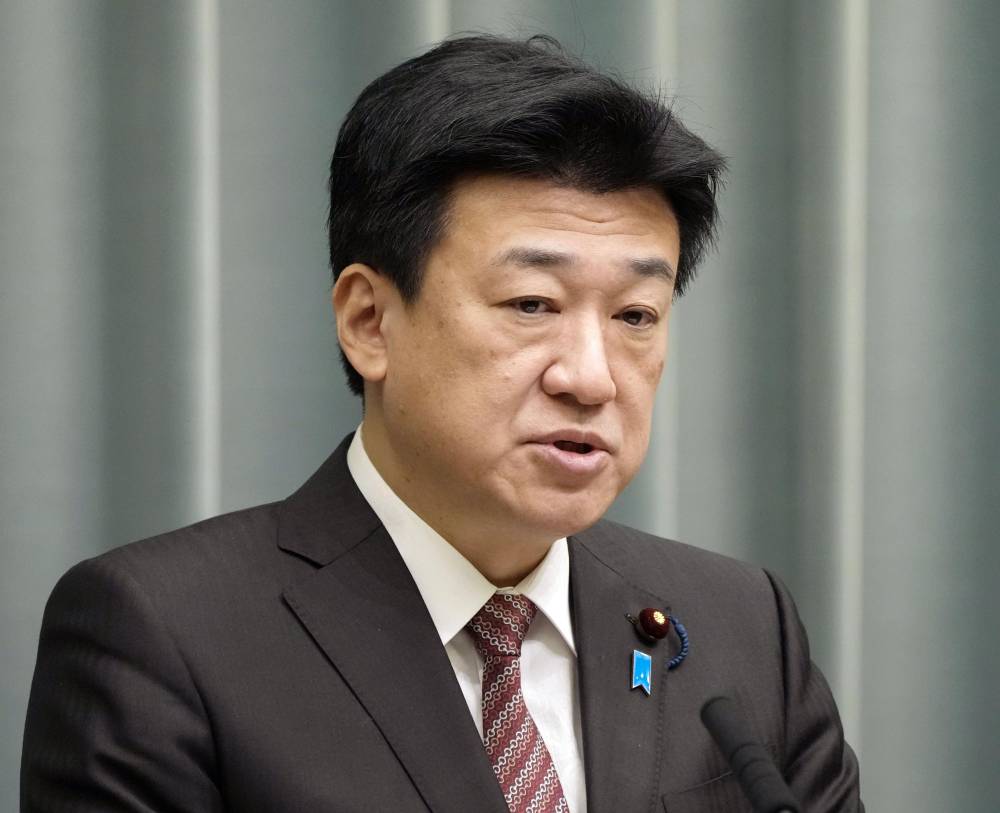
Chief Cabinet Secretary Minoru Kihara told a press conference that the Air Self-Defense Force (ASDF) jets had kept a “safe distance” from Chinese military aircraft off Japan’s southernmost prefecture of Okinawa in the Saturday incident.
The top government spokesperson added that communication between Japanese and Chinese defense authorities is “extremely important,” despite Beijing taking retaliatory steps over Takaichi’s suggestion last month that Tokyo could get involved in the event of an attack on Taiwan by China, which considers the self-ruled island part of its territory.
Hair-trigger situation
Chinese J-15 aircraft from the carrier Liaoning locked radar on an ASDF F-15 at around 4:32 p.m. on Saturday and on another plane at around 6:37 p.m. over high seas southeast of Okinawa’s main island, according to the Japanese defense ministry.
During their drills in the Pacific, Chinese fighters, helicopters and the carrier Liaoning conducted about 100 training takeoffs and landings on Saturday and Sunday, the Japanese defense ministry said, fanning fears of a hair-trigger situation.
The Chinese navy said on Sunday that Japanese aircraft “repeatedly approached and disrupted” the Chinese naval training maritime area and airspace and “seriously endangered flight safety.”
Diplomatic dispute
The incident came amid an escalating diplomatic dispute over Takaichi’s Nov. 7 parliamentary comments that a military attack on Taiwan could constitute a “survival-threatening situation” for Japan.

Kihara said the radar locks were “dangerous acts beyond what was necessary for the safe flight of aircraft” and that Japan will take all possible air and maritime surveillance measures while closely monitoring the Chinese military’s activities.
On Monday, meanwhile, lawmakers in Takaichi’s ruling Liberal Democratic Party (LDP) voiced hardline views on China during a meeting on diplomacy and national defense, with policy chief Takayuki Kobayashi calling the radar targeting “totally unacceptable.”
Itsunori Onodera, head of the LDP’s research commission on security, said the actions by the Chinese military could be taken as a “provocation.”