








Japan, US share serious concern over China radar lock-on incident

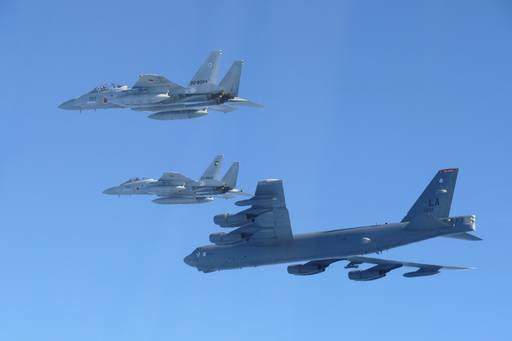
Japanese Defense Minister Shinjiro Koizumi said Friday he and his US counterpart, Pete Hegseth, shared serious concern over intensifying tensions in the region in light of the recent radar lock-on incident involving Japanese and Chinese fighter jets and long-range joint patrol of Chinese and Russian bombers near Japan.
The two defense chiefs, speaking for about 40 minutes via telephone, agreed that Japan and the United States will maintain close communication to calm the situation.
Koizumi also said he is arranging a trip to the United States early next year for his second face-to-face meeting with Hegseth, following the one held in late October in Tokyo shortly after the new Cabinet was formed under Prime Minister Sanae Takaichi.
Koizumi told reporters that the biggest problem of last Saturday’s radar lock-on incident, which took place over international waters off Japan’s southernmost prefecture of Okinawa, was that a Chinese J-15 aircraft locked its radar on an Air Self-Defense Force F-15 for about 30 minutes on one of the two occasions.
‘Beyond necessary’
Hegseth and Koizumi also discussed Tuesday’s long-range joint patrol of two Chinese and two Russian bombers over the East China Sea and Pacific, near Japan’s Shikoku Island.
They agreed those acts will only intensify tensions in the region, Koizumi said. He added that Japan will “continue responding to those acts in a calm yet resolute manner while steadily carrying out surveillance activities in the seas and airspace surrounding our country.”
Koizumi reiterated that China did not provide Japan with specific and appropriate information, including notice to air missions or navigational warnings, such as the area in which the Chinese military’s flight training would be conducted.
He once again called the radar lock-on “dangerous” and an “act that went beyond what is necessary for the safe flight of aircraft.”
Fighter jet radar systems are designed to search the surrounding area and collect data, such as a target’s distance and velocity for the aircraft’s fire control system. Radar locks can be considered a hostile act, as they indicate weapons are being prepared for firing.
Ramped up pressure
Beijing has ramped up pressure on Tokyo since Takaichi said in parliament on Nov. 7 that a Taiwan contingency could be a “survival-threatening situation” for Japan that may lead to action from the country’s defense forces in support of the United States.

China regards Taiwan as part of its territory and insists that the Taiwan issue is purely an “internal affair.”
Following their phone call, the Pentagon said in a statement the two “discussed Japan’s efforts to increase its defense spending and strengthen its capabilities, China’s miliary activities, and the importance of realistic training and exercises across Japan, including in the Southwest Islands.”
The two defense chiefs also reaffirmed the importance of the US-Japan alliance and underscored their commitment to preventing aggression in the Asia-Pacific region, it said.
Koizumi told reporters that Japan will try to gain understanding from other countries about the radar lock-on incident, while expressing his intention to continue to communicate with China. “Because there are issues, we have to persistently engage in frank discussions,” he said.