











Japan’s pacifist credo at crossroads

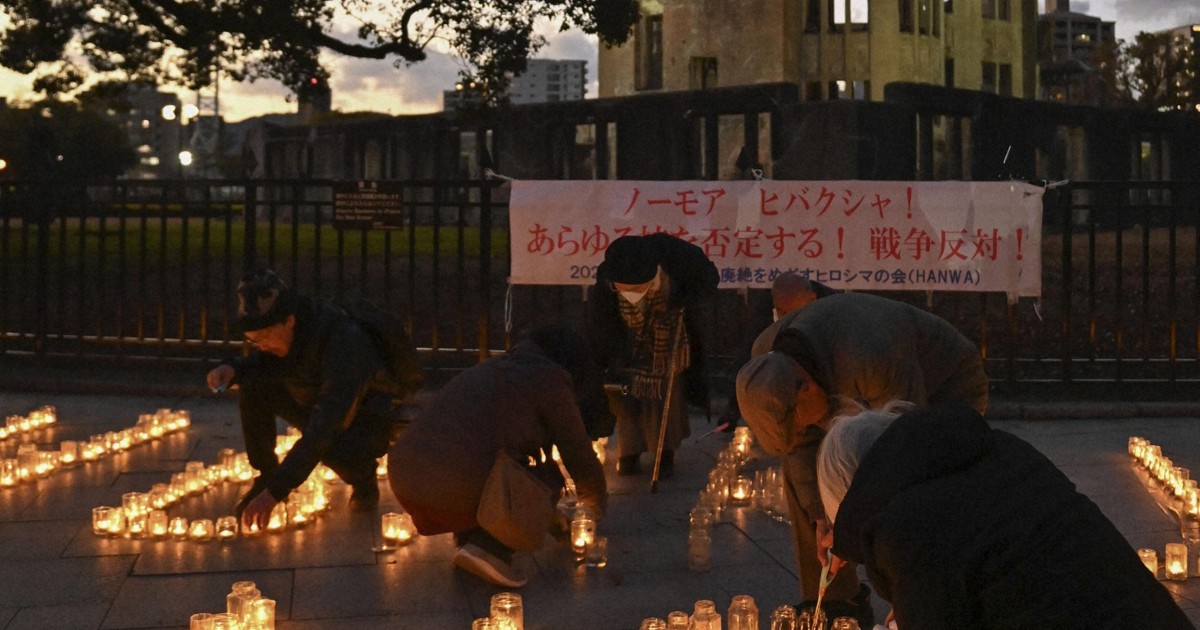
The general election is testing Japan’s pacifist principles, with some conservative parties pushing to review them to better respond to the changing security landscape.
Depending on the outcome of Sunday’s House of Representatives election, Japan may see an intensified debate on reviewing the country’s non-nuclear principles.
Under the government of Prime Minister Sanae Takaichi, a security hawk who took office in October, Japan is expected to update key defense and security documents in the face of an assertive China, a nuclear power, as well as the North Korean missile and nuclear threats.
The Japan Innovation Party, which formed a coalition with Takaichi’s Liberal Democratic Party in October, has called for a debate on the possibility of nuclear sharing with the United States.
Security alliance
The conservative party is advocating the sharing of nuclear-powered submarines with the United States, stressing the need to deepen the security alliance under which Japan has long been protected by the US nuclear umbrella.
Japan has maintained its three non-nuclear principles since 1967, prohibiting the possession, production, or introduction of nuclear weapons on its territory.
That stance is deeply rooted in the country, the only nation to have been attacked with nuclear weapons.
While Takaichi has said her government upholds the principles, she has not ruled out a review in the future.
When Japan adopted its current national security strategy in 2022, Takaichi, then minister in charge of economic security, called for the removal of language stating that Japan upholds the three non-nuclear principles as it could undermine the effectiveness of the US nuclear umbrella.

Expanded voter support
A recent Kyodo News poll points to expanding voter support for the LDP, with the ruling coalition likely to secure more than a majority of the 465 lower house seats.
Survivors of the atomic bombings of Hiroshima and Nagasaki are closely watching where the country is heading, worried that Japan’s pacifist foundation is under threat.
Yuka Miyazaki, a 19-year-old university student whose great-grandmother survived an atomic bombing, said she feels uneasy when politicians do not talk about nuclear issues in their stump speeches.
A student of international relations who conducts interviews with atomic bomb survivors, known as “hibakusha,” Miyazaki said, “The issue of nuclear weapons is taken up solely in the context of security. For me, it is also an issue of ethics and humanity, so it’s different.”