





John Hay starts preserving heritage properties

BAGUIO CITY—Eighty-four years ago, Japanese fighters bombed Camp John Hay, launching the Pacific leg of World War II a day after attacking Pearl Harbor in Hawaii on Dec.7, 1941.
After enduring years of Japanese occupation, Filipino soldiers, guerrillas and the Allied Forces defeated the invaders, cornered their Army General Tomoyuki Yamashita in Ifugao and returned him to Camp John Hay to sign Japan’s surrender papers, turning historic tragedy into legendary triumph at the former John Hay Air Station.
Relics of that event and narratives recorded by war veterans would soon be accessible at a prospective John Hay Museum being developed by the administrator of the former American base, as they embark on protecting the base’s remaining heritage properties, said Manji Singh Reandi, president of the John Hay Management Corp. (JHMC).
JHMC is the estate manager and a subsidiary of the Bases Conversion and Development Authority (BCDA), which governs all former base lands.
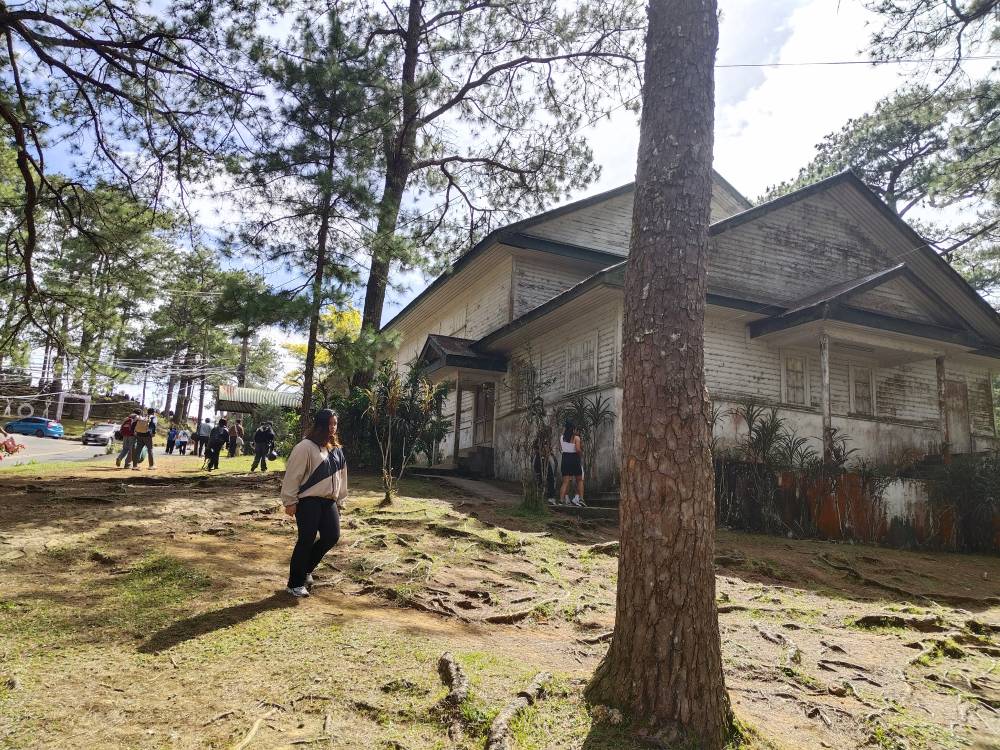
The old John Hay Theater on the road climbing up to Scout Hill will be preserved as the camp’s official museum, he announced.
JHMC is also documenting the accounts of war veterans and old Baguio residents about Camp John Hay’s past, in order to offer new generations and Baguio tourists a comprehensive and factual narrative about its role in Philippine history, Reandi said at a Dec. 5 news conference here.
He said JHMC is reaching out to local campuses and scholars who have researched John Hay history, or have compiled accounts made by old Baguio folk who witnessed the invasion throughout World War II.
Archival project
Apart from John Hay’s relevance to the war, the archival project would search as far back as 1903 to determine the base land’s legacy, said Reandi.
The 1909 doctrine issued by the American Supreme Court that recognized the “Native Title” of indigenous Filipinos, particularly of the late Baguio Ibaloy Mateo Cariño, was about his lands that became John Hay. These lands were sequestered to serve as a military garrison and were named after the United States Secretary of State John Milton Hay.
When asked, Reandi said the JHMC museum team could also study the history and legacy of the communities within the John Hay Reservation, such as Barangay Scout Barrio, which was settled by former employees of the base while it was under United States control. Barangay Happy Hallow, one of the oldest Baguio Ibaloy settlements, is also their state-recognized ancestral domain.
New master plan
Reandi said his administration’s initiatives could be incorporated in a new master development plan being drawn up by the BCDA. The agency has been updating the plan that guided Camp John Hay’s commercialization following the endorsement in 1996 by the Baguio government. The BCDA started 2025 by reclaiming businesses operating at the 247-hectare John Hay Special Economic Zone from its developer Camp John Hay Development Corp., at the conclusion of a long contractual dispute that began in 2013.
The BCDA’s relationship with the Baguio government and John Hay’s 14 outlying barangays have since been testy due to outstanding rental shares, and over 19 conditions Baguio set before the local government approved the master plan. Among the unfulfilled conditions was the exclusion of John Hay barangays from the John Hay Reservation. Only Scout Barrio was subjected to segregation, but it only involved occupied homes and not the entire barangay.

In the absence of a comprehensive plan, JHMC has embarked on short-term arrangements with local entrepreneurs and artists, amidst a policy shift to community-oriented projects that would reconnect John Hay with Baguio residents, Reandi said.
For instance, JHMC has worked out a formal lease arrangement with Baguio’s Pony Boys, which grants them an area to offer horseback rides, he said. Pony Boys is a reference to indigenous horse breeders in the mountain city.
This December, Scout Hill has become the venue of this year’s Mandeko Kito, a bazaar of artisan crafts and products, which used to be hosted at Baguio campuses, while a section of John Hay’s Historic Core has accommodated an art market for the Pasakalye Arts Group. John Hay has also been undertaking a weekend farmers market.
Primary project
But the redevelopment of heritage sites like the theater would be JHMC’s primary contribution to Baguio history, Reandi said. Only the historical core featuring the Bell House and the amphitheater, and the US Ambassador’s Residence, has preserved John Hay’s bygone eras. The rest, including old cottages, were destroyed to make way for high-end investments like five-star hotels.
The worn-down theater once served as a movie house that was open periodically to the Baguio public. In an online essay written by former journalist and lawyer Joel Dizon, the theater was described as a facility with a real marquee that accommodated “no more than 200 people.”
“There were only two screenings during the day, one at 10 a.m. and an afternoon matinee that started at 3 p.m. Before, after and in between, they vacuumed and spruced up the place so good that when you walked in, the theater smelled—I can’t think of a better description—like a new car.”