







Kid’s forest trip opens man’s heart for Aetas

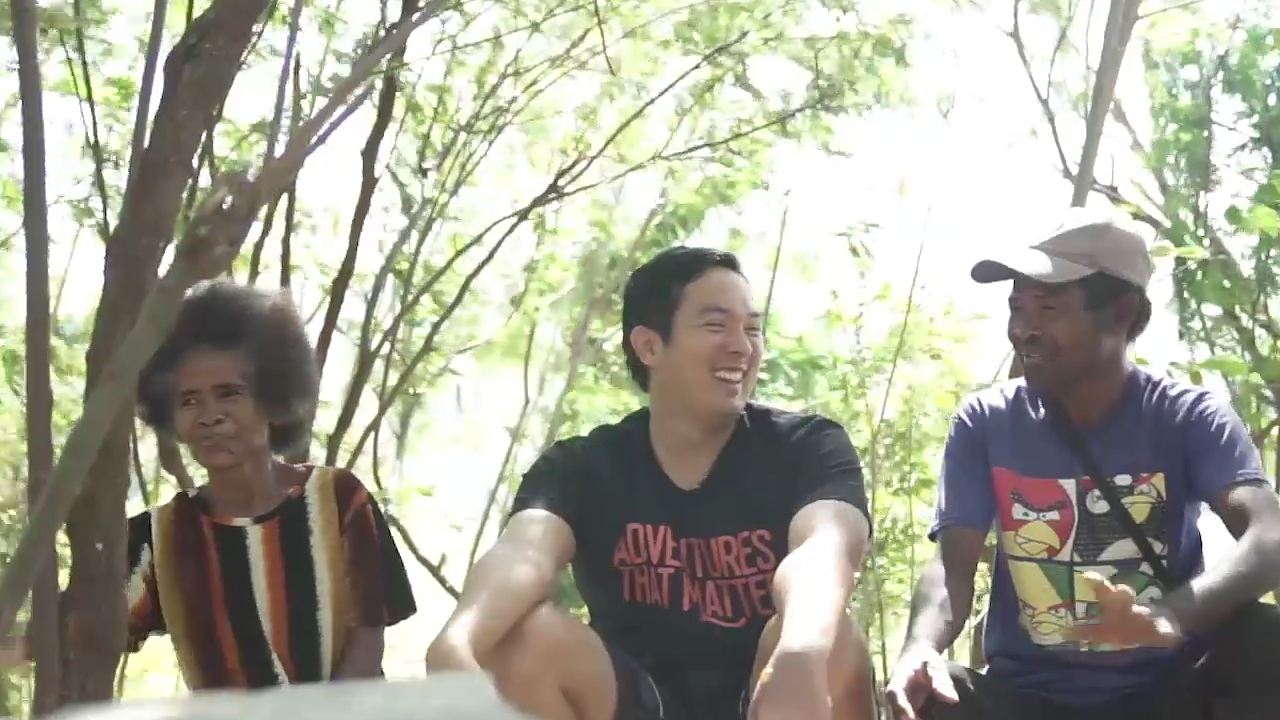
SAN FELIPE, ZAMBALES—Rafael “Raf” Dionisio first visited the forests and mountains of Zambales as an 11-year-old attending a summer camp organized by the late environmentalist Gina Lopez.
He recalled the discomfort—three days without electricity, cooking and washing—and also the awakening that experience sparked. “I was very sheltered when I was a child,” he said.
Dionisio described himself as “just an average student” before high school. But this early, he said he was already trying to find focus. By then, he was active in varsity basketball, theater and other extracurricular activities. He later pursued a business course in college, motivated at the time by the sheer ambition of financial success.
His academic journey took him abroad and back: as a scholar at the University of International Business and Economics in Beijing in 2006, followed by further studies at Ateneo de Manila University in 2008, completing a management degree with minor in Chinese.
Now 39, Dionisio is among the 2025 The Outstanding Young Men awardees honored this year. (Formerly called Ten Outstanding Young Men when it was founded in 1959, this institution has since honored more individuals in recent decades.)
Working with the Aetas
He was cited for his efforts in empowering Aeta communities with P9 million in livelihood projects, pioneering biochar innovation, planting over 129,000 trees, removing 12 tons of plastic waste and transforming tourism into a force for healing.
In an interview with the Inquirer, Dionisio said, looking back on his journey: “It made me realize that if you become successful but don’t bring others with you, then you haven’t really done anything for the country.”
He had his first encounter with the Aetas in this province while endeavoring to carry out a business idea—producing ube jam. He sought skilled labor on planting ube and recognized the Aetas’ innate expertise.
Dionisio also began to realize the conditions in those areas—the land was vast, the heat quite oppressive, there were hardly any trees. But he also saw the potential for a good hiking trail.
After meeting the Aetas, he contacted the Hineleban Foundation in the Mindanao province of Bukidnon, which helps communities restore forests and establish agroforestry systems.
The contrast between Bukidnon’s thriving forests—with their trees, clean water and abundant crops—and Zambales’ bare lands was striking.
“I realized the benefits of having forests—cooler air, more water and ultimately, the ability for farmers to succeed,” he said. Inspired by that success, he resolved to replicate it among the Aeta communities.
Tourism as restoration
Dionisio said he sought to tap the travel industry as a force for good, mindful of social dynamics and community involvement, when he cofounded Make A Difference (MAD) Travel in 2015.
Initially designed as a tour operator, MAD model soon evolved after he began working with the Aetas, and they experimented with planting.
“Some plants didn’t survive because we made mistakes, they were planted in the wrong spots. But those that were planted correctly and survived, like bamboo, are now thriving and being used for processing and construction within the community,” he said.
Visitors participated in seed potting or tree planting, while community members managed the food, aiming for restaurant-quality standards.
By 2018, these initiatives started generating income. “The trees were growing, like little tentative seeds turning into proper trees,” Dionisio said. By the next year, some trees had reached 30 feet, and support from foundations and celebrity helped advance these projects.
‘Place-based knowledge’
Many visitors said San Felipe was too far, even as tours organized in that town gained popularity. MAD Travel opened two new sites: one in Subic Bay Freeport with another Aeta community and another in Antipolo with the Dumagat community.
The Aeta community in Subic Bay Freeport became a vital source of native seeds, which were collected and planted in Zambales. Since forests there were still intact, the seeds were healthy and suited for reforestation, increasing survival rates.
Communities benefit in several ways through these tours: the soil is enriched, forests are planted, rivers and coastal areas are cleaned, and local businesses are developed sustainably.
“Many people have assumed that indigenous communities are untrustworthy or lazy,” Dionisio said. “But that is far from the truth. The Aetas are intelligent and deeply aware of what is important. They possess a body of knowledge that outsiders often do not have.”
He said this “place-based knowledge” comes from living closely with the land. This includes an understanding of which plants have medicinal properties, which materials can be used, even how leaves can serve as improvised post-its or name tags.
Response to setbacks
From the start, Dionisio had to gain the Aetas’ trust in him “little by little, returning repeatedly—it was like courting,” he said.
He recalled one instance after their first successful tour in San Felipe which had 20 visitors, enough food, guides and transportation services. The community refused to accept cash, fearing it would be spent quickly.

“They told me if I’m serious about helping, look at our ancestral land. It’s vast but empty. Bring us seeds and seedlings, because even if someone steals them, they will plant them, and the youth will benefit,” he said.
Wildfires remain the program’s biggest challenge because of the intense heat in the province. Fires in 2023 to 2024 destroyed some planted areas, setting back progress.
Since traditional firefighting—like hauling water up steep mountains—is expensive and unsustainable, the team turned to preventive measures. They cut dried grass and converted it into biochar—a carbon-rich material that improves soil fertility, increases water retention and stores carbon.
‘Communities as partners’
Dionisio sees reforestation as crucial to local economic resilience. He advocates shifting the Philippines from an import-heavy economy to one that produces more of its own food and raw materials. “We need to have a producer’s mindset, rather than relying on trade,” he said.
He envisions spreading knowledge through schools and through agencies like the Department of Tourism, Department of Agriculture, Department of Trade and Industry, so that companies in turn will focus on producing local goods instead of importing them.
He hopes future leaders will prioritize sustainable land use. “I want leaders to look at a mountain and ask—mining? solar? or ecotourism with agroforestry? Those are the choices I hope people make,” he said.
Dionisio believes true wealth comes from understanding the land, sea and community.
Empowering the Aetas multiplies productivity: “If we enable the Aetas to work properly, everyone prospers together. Why buy from outside when you can produce at home?” he said.
“Treat communities as partners, don’t discriminate them. City culture is very discriminatory. We need stories and experiences to truly meet communities,” he added.
******
Get real-time news updates: inqnews.net/inqviber