









Law prof: SC now a key player in impeachment

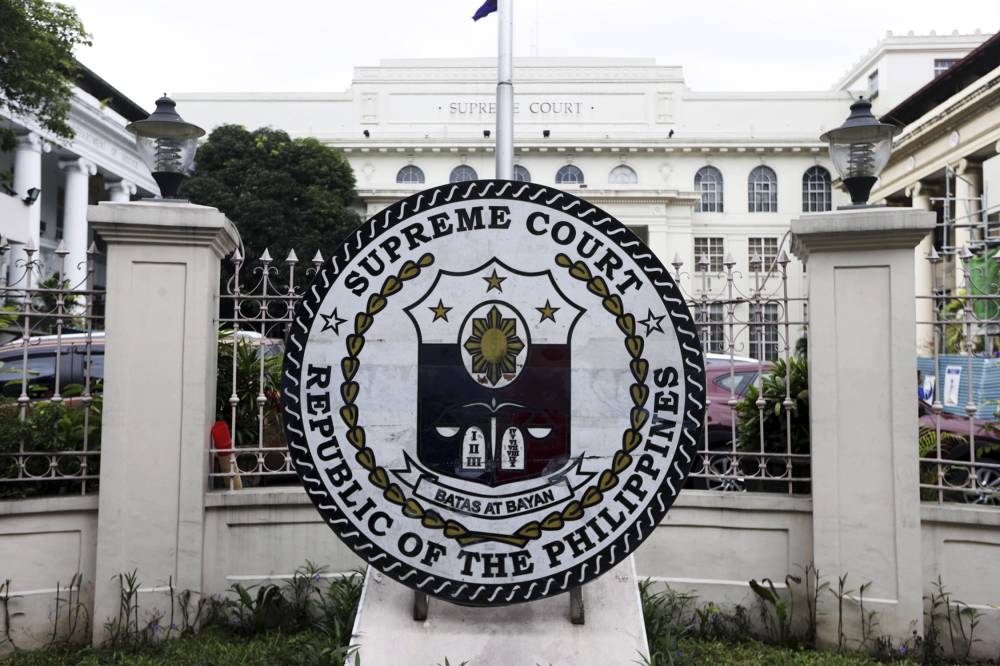
The Supreme Court has “made itself a key player” in impeaching officials with its ruling that voided with finality the impeachment of Vice President Sara Duterte, according to a constitutional law expert.
Paolo Tamase, a professor at the University of the Philippines College of Law, on Friday said that the Supreme Court’s Jan. 28, resolution retreated from the more controversial aspects of its June 2025 decision, even as it introduced changes in the impeachment process
“The Resolution still has a lot of due process language that may be unnecessary for impeachments before the House,” he said. “And in many ways, the key change is how the Court has made itself a key player in impeachment—which the Resolution does not reverse.”
Assertion of authority
Tamase noted, for example, that while the decision narrowed the Court’s review from “all legal issues” to strictly “constitutional issues,” and recognized that the full hearing of evidence against an impeached official belongs in a Senate trial, not in the House, it still retained the Court’s assertion of authority over impeachment proceedings.
The first change was important because the term “‘legal’ was broad enough to cover matters like internal procedures,” he said. The second change meant that the resolution “walks back from the [July 2025] decision’s virtually trial-type proceedings for impeachment before the House.”
The resolution also restores some deference to the House by recognizing its power to establish its own impeachment rules, which was absent from the 2025 ruling.
Tamase noted that the resolution also dropped several due process requirements that unnecessarily restricted the impeachment process.
Among those abandoned were requirements for strict notice and service of impeachment complaints, a “reasonable period” for House members to consider second-mode complaints and a “modicum of deliberation” standard before a one-third vote could trigger impeachment.
The “second mode” is sometimes referred to as the ‘fast track’ because after the signatures of at least one-third of the House members are collected, the impeachment case will be sent immediately to the Senate for trial.
New requirement
But the resolution imposed a new requirement—that the second mode be referred to the House committee on justice.
“That’s a surprise. The House never required that for past second modes because the Constitution was clear on (the need to) ‘forthwith proceed’ (to trial),” Tamase said.

Despite the reversals, the Court arrived at the same conclusion to junk the House’s motion for reconsideration by affirming its July 2025 decision because of two other changes that supplanted Congress’ own rules under its exclusive authority to initiate impeachment.
“Coordinacy normally requires the Court to respect the House’s interpretation, especially since the Rules of the 19th Congress and 15th Congress were identical on this point. The House was thus acting consistently with congressional precedent,” Tamase said.
‘Session day’ definition
Among others, the court changed the definition of a “session day” as the calendar day when the House holds plenary sessions, rather than the period that starts from a call to order and closes on the announcement of an adjournment, which has long been the tradition.
That change allowed the Court to rule that three earlier impeachment complaints filed by civil society groups against Duterte in December 2024 were never acted upon within the required period, triggering the constitutional one-year bar and invalidating the Feb. 5, 2025, impeachment of the Vice President, Tamase said.
“That’s a highly unusual reversal. The Motions for Reconsideration and the Comments total hundreds of pages; neither of them appear to have questioned the Decision’s definition of a session day,” he said.