











LGUs face subsidy demands as fuel prices soar in provinces

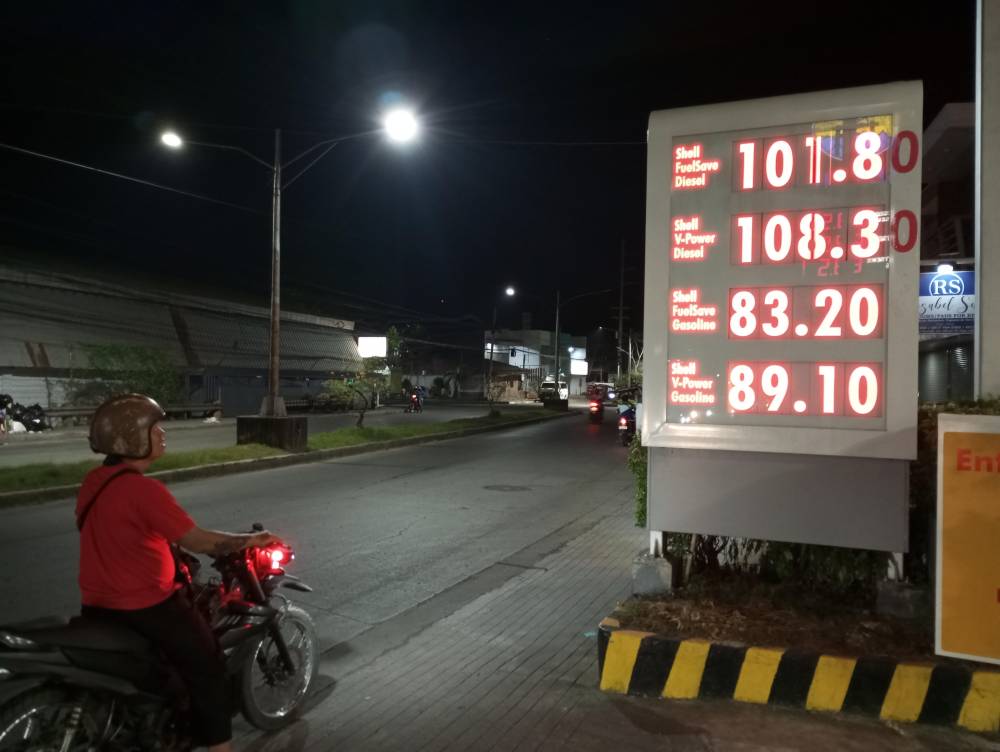
Local government units (LGUs) in different parts of the country are faced with rising demands for subsidy as the transport sector bears another round of fuel price hike on Tuesday. The latest increase is the second since the crisis in the Middle East began over two weeks ago, prompting public utility vehicle (PUV) drivers to cut trips to save on fuel cost.
In Baguio, the city government is studying the release of subsidies to compel PUVs to continue serving residents late at night.
Since fuel prices shot up, city engineer Richard Lardizabal said they observed a sharp reduction of jeepneys plying their routes by the late afternoon, leaving long lines of stranded passengers including tourists.
City administrator Vittorio Jericho Cawis informed transport leaders that the Baguio government would source out funding for PUV subsidies and provide mechanisms to ease the impact of fuel shocks on mass transport.
“The succession of fuel price increases has changed motorist behavior and many residents have been leaving their cars at home and have been taking mass transportation,” said Elmer Mendoza, Cordillera transport development officer of the Department of Transportation.
This meant an increase in passengers who need to go home lining up at jeepney terminals at night, he pointed out.
A jeepney operator said some PUV drivers decide to turn in early at night to conserve fuel because they no longer have passengers on their return to downtown Baguio from different barangays.
Wilson Bumay-et, president of the Baguio-Benguet Jeepney Federation, pleaded for additional economic relief from the city government apart from financial aid promised by the national government “so jeepney drivers can feed their families during this crisis.”
For residents only
One issue that needs to be addressed, however, is that some PUV drivers actually live outside Baguio, raising questions about their eligibility for city government subsidies. “We have a driver who commutes to Pangasinan at the end of his shift every day,” an operator said.
In Iloilo City, the local government had come up with guidelines for the distribution of fuel subsidy coupons, an assistance program aimed at helping drivers cope with rising fuel prices.
Mayor Raisa Treñas said the subsidy would be given only to drivers operating within Iloilo City.
According to Treñas, each registered jeepney unit will receive one fuel subsidy coupon based on the validated master list of the Land Transportation Franchising and Regulatory Board, and the distribution will be coordinated through the drivers’ respective transport cooperatives.
For tricycle operators, she said eligibility requires a franchise issued by the city council, a motorized tricycle operator’s permit issued by the Business Permit and Licensing Office, and proof that the operator is a resident of Iloilo City.
Direct release
Treñas added that the city had made the submission of requirements easier for drivers, with March 23 set as the deadline for applications under the first batch of the fuel subsidy program.
She noted that some tricycle drivers operating in Iloilo City live outside the city, which has raised concerns about competition with locally franchised operators.
In Cagayan de Oro City, taxi drivers are hoping that the fuel subsidy from the national government will be coursed through the Department of Social Welfare and Development and be directly released to them.
One taxi driver told the Inquirer that they were told the subsidy would be given to their respective operators, which raised concerns that the amount might not reach them, as what happened in the past.
A “motorela” (motorcycle-driven passenger cab) driver said they would rather have a fare increase than wait for fuel subsidy. “A fare increase directly benefits us,” the driver said.

In Eastern Samar, Gov. Ralph Vincent Evardone reported that nine fuel stations in the province have already run out of supply, while 57 others have raised their pump prices amid tightening deliveries.
Evardone also urged local governments in the province to secure adequate fuel reserves to ensure that critical services remain uninterrupted.
“We cannot [allow] our front-line services to stop,” he said, stressing that the continued operation of government offices, emergency responders, and other essential services must be safeguarded despite the shortage.
The situation is worsened by logistical constraints as a bridge in the town of Giporlos is currently under a weight restriction, preventing fuel tankers from crossing and disrupting the normal delivery of fuel to several towns.
The Department of Public Works and Highways imposed a 5-ton weight limit on the bridge starting March 11 after it sustained structural damage due to overloading.
Much of Eastern Samar’s fuel supply is transported by land from Tacloban City, making the bridge restriction a significant bottleneck in the distribution chain.
In Agusan del Sur, gas stations in the province are experiencing shortages due to delays in tanker deliveries, forcing some to temporarily close operations.
Wilmer Sabana, a gas station owner, said supply delays were affecting many towns in the province.
“Some stations remain closed until their tankers arrive because fuel allocation is slow. Once the tanker comes, they reopen, but supply remains inconsistent.” —REPORTS FROM VINCENT CABREZA, HAZEL VILLA, JOEY GABIETA, CONG CORRALES AND CHRIS PANGANIBAN



From energy shock to energy security