










LGUs guard against overpricing of fuel

As consumers face the frenzy of price increases owing to rising fuel costs due to the crisis in the Middle East, local government units (LGUs) are making sure the adjustments are within what is allowed by law.
This came as consumers and citizens groups from across the country have barraged local governments with complaints of illegal price increases and unreasonable business practices that seem to take advantage of the crisis situation.
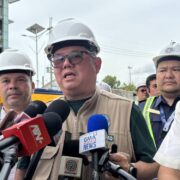
In Agusan del Norte province, Butuan City Mayor Lawrence Fortun created a “Bantay Presyo” task force to crack down on unjustified price increases and ensure fair and responsible pricing.
According to Fortun, when the Department of Energy (DOE) advised fuel retailers that pump prices will increase starting March 11, some establishments already implemented the adjustment way earlier. “We have accounts to prove this and we will investigate it,” he said.
Fortun warned businesses against taking advantage of the situation, saying the city government would impose strict penalties, including the possible revocation of business permits.
The task force, composed of local and national government offices and civil society groups, will conduct inspections of commercial establishments to check for possible hoarding and price manipulation.
The city government had set up a hotline where consumers can report establishments charging prices higher than prevailing market rates.
Fortun urged businesses and residents to cooperate with the task force’s monitoring efforts, calling for a sense of community amid global uncertainties affecting fuel supply. “This is the time to support one another,” he said.
In Zambales province, San Marcelino Mayor Elvis Soria created the Municipal Task Force on Fuel Price Monitoring under the supervision of the Municipal Disaster Risk Reduction and Management Council.
It is tasked to conduct regular checks on pump prices at gasoline stations across the town to guard against unauthorized price hikes.
Price patrol
Members are also tasked with providing regular updates on oil price increases and assessing their potential impact on public services and emergency response operations.
In Bulacan province, at least two gasoline stations in Malolos City are facing possible revocation of their business permits due to complaints of hoarding, Mayor Christian Natividad said.
Natividad said they were completing the investigation on the reported hoarding activities by the gasoline stations based on complaints by motorists.
According to reports, the establishments stopped operations on Monday and waited for the start of the fuel price hike implementation past midnight on Tuesday before reopening for business.
“We will see to it that they will be punished. We will revoke their business permit if they are proven to have committed such violation,” Natividad said.
As the city government continues to monitor the operation of gasoline stations, Natividad said they also mobilized the local police to help in the price watch as part of their regular patrols.
In Cagayan de Oro City, authorities flagged nine gasoline stations for alleged overpricing and premature price adjustments after inspection teams from the DOE and the local monitoring board conducted rounds to check on the fuel situation.
Show-cause order
The inspections were carried out as part of ongoing government efforts to ensure that fuel retailers comply with regulations on price adjustments and protect consumers.
Jose Edgardo Uy, chair of the Cagayan de Oro Regulatory Compliance Board, said the flagged gasoline stations would be further investigated to determine whether sanctions or penalties should be imposed on them.
“Some were selling their fuel for as much as P92 per liter for diesel and P76 per liter for gasoline,” Uy said, noting that the DOE suggested pump prices for Mindanao are P69.59 per liter for diesel and P71 per liter for gasoline.
Uy added that three of the flagged gasoline stations were also found operating without business permits or a certificate of compliance.
In Camiguin, Gov. Xavier Jesus Romualdo identified 19 gasoline stations on the island province as selling fuel beyond the price range set by the DOE.
Romualdo had issued show-cause orders against the gas station owners, requiring them to explain why their business permits should not be suspended or revoked.
In Pangasinan, a leader of a farmers’ group asked the government to investigate some gasoline stations for refusing to sell fuel to small farmers and fishers who come to them with just their containers in tow.
“Refusing to sell them fuel effectively cuts them off from production. The farmers cannot bring their tractors or irrigation pumps or bancas to the gas stations,” laments Rosendo So, chair of the group Samahang Industriya ng Agrikultura.
“This is unacceptable. Farmers and fisherfolk rely on diesel not only for transportation but for the very production of food. Denying them access to fuel effectively disrupts agricultural operations at the start of the planting season,” So added.
The group warned that if the situation is not addressed immediately, the impact will extend beyond farmers and fisherfolk to the broader food supply chain.
“If farmers cannot prepare their fields and fisherfolk cannot go out to sea, food production will decline. This will inevitably translate to higher food prices and worsen inflation for Filipino consumers,” So emphasized. —REPORTS FROM CHRIS PANGANIBAN, FROILAN GALLARDO, JOANNA ROSE AGLIBOT, CARMELA REYES-ESTROPE AND YOLANDA SOTELO