








LTFRB eyes provisional fare increase if MidEast crisis worsens

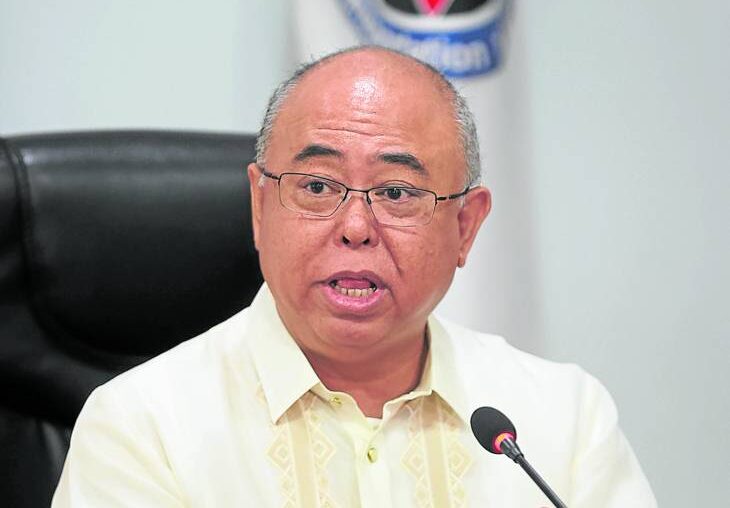
The Land Transportation Franchising and Regulatory Board (LTFRB) is studying a provisional fare increase for all public transport services amid the expected rise in fuel prices due to the worsening conflict in the Middle East.
“Across the board, if necessary,” LTFRB Chair Vigor Mendoza II told reporters following a public consultation on Tuesday.
The potential fare hike may therefore cover jeepneys, buses (including those plying provincial routes and offering point-to-point or P2P transport), airport taxis and transport network vehicle services (TNVS) or app-based ride-hailing services.
Mendoza declined to give an estimate of the fare increase, saying many possible “scenarios” that can still happen in the Middle East.
The LTFRB official, however, noted that the prevailing fuel prices on Tuesday would not yet justify a P1 fare increase for jeepneys.
“There will be an increase but maybe not yet P1. I think our jeepney operators are asking for a full P1 [increase]. We do not see that yet given the prices right now,” Mendoza said.
The LTFRB chief said the implementation of the provisional fare hike would depend on “how soon the [fuel] prices will increase,” adding that this week’s increase of P1.20 to the cost of diesel “would not yet trigger our need to increase fares at the moment.”
Options
But should the price of diesel increase to more than P60 per liter, Mendoza said “that becomes the challenging portion for us.”
“Our first option, of course, will probably be fuel subsidies. [Fare hike] is our last option,” he said.
Besides, “granting a fare increase now on the basis of a high fuel price would be unfair to our riders” since the hike in fuel cost is currently a result of a “temporary crisis,” said Mendoza.
“The increase is very artificial. We don’t want that. We want a more stable rate. What really is the market demand,” he said. “Week to week, we can see the rise in the price of fuel based on demand. [This is] not based on artificial factors, such as the war in the Middle East.”
“It’s basically fuel cost recovery. So, if the price of fuel goes down, then there will also be a proportional reduction in [fare rates].”
“Coming up with a permanent decision is something we have to consider. If it’s a permanent decision, that’d be hard to take back afterwards,” Mendoza said. “We would have to conduct another public hearing just to bring it down.’’
Petitions for permanent fare increases of P2 for jeepneys and city buses, 50 centavos per kilometer for provincial buses, and an increase of 30 to 40 percent for point-to-point (P2P) services are pending with the board, according to Mendoza.
The LTFRB is still waiting for data from the Department of Energy, the Department of Labor and Employment, and the Department of Economy, Planning, and Development to better plan remedies for motorists.
In an interview at the LTFRB office on Tuesday, the leader of the jeepney drivers’ and operators’ group Manibela said the group was supporting the government’s proposed measures to address the looming fuel price crunch.
“Our fellow citizens understand us. We’ve talked to our passengers and they understand our grievances. This is just temporary anyway. Also, we hope the fuel subsidies would be given immediately,” Manibela chair Mar Valbuena said.
He said another solution was to remove the excise on petroleum products, estimating that it ould save P6 per liter for jeepney drivers and operators.
P2P operators’ plea
Meanwhile, P2P bus operators said the 30- to 40-percent increase they seek would allow them to cope with rising fuel costs, especially since their rates have not increased in over 10 years.
“We were deeply impacted during the pandemic. We subscribed to this program when diesel was just P30 [per liter], and now we’re bracing ourselves for this long ordeal that we are seeing in the Middle East,” said Roberto Torres, P2P Alliance spokesperson.
The group was one of the stakeholders that attended the public consultation at the LTFRB office on Tuesday.
“We understand that people’s pockets have a threshold. What we’re only after is sustainability. If our operating cost goes down, we are willing to go back to the previous rate,” Torres told reporters after the consultation.
“The impact on our passengers will be huge if we can’t keep up with the rising costs,” he added.
According to Torres, P2P transport service providers have not increased their fares since 2014. He said the LTFRB did not approve their petition for an increase in 2023.
The group’s member companies, he said, bore the brunt of increased costs due to prior conflicts in the Middle East, the COVID-19 pandemic and the Russian invasion of Ukraine.
“We’re lucky we’re still standing now,” he stressed.
The LTFRB gave P2P Alliance until Tuesday to submit a position paper on its proposed increase, along with its members’ financial statements.
******
Get real-time news updates: inqnews.net/inqviber