











LTFRB imposes 19-day cap on TNVS surge pricing

The Land Transportation Franchising and Regulatory Board (LTFRB) has ordered a temporary reduction in surge pricing for transport network vehicle services (TNVS) or vehicles booked through ride-hailing apps.
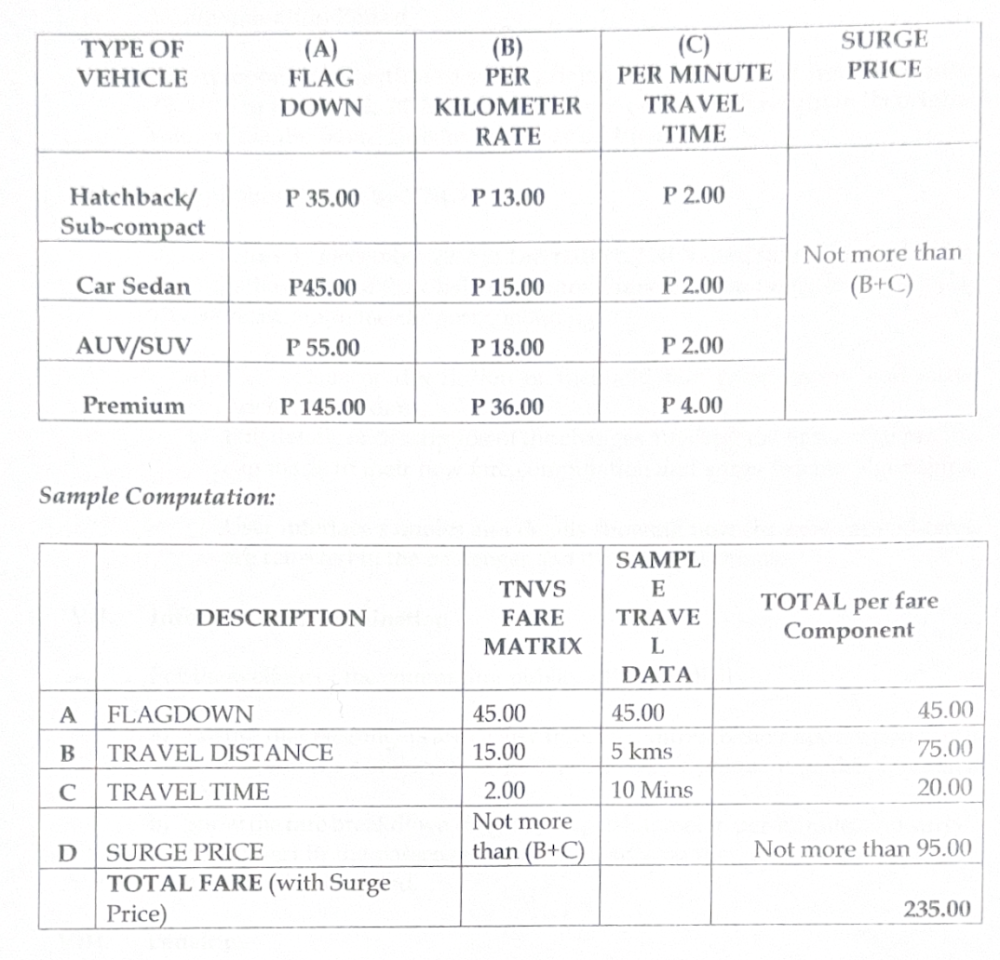
Based on Memorandum Circular No. 56 signed by LTFRB Chair Vigor Mendoza on Friday, surge pricing for the TNVS vehicles shall be not more than the sum of the per-kilometer rate and per-minute travel time.
The directive takes effect from Dec. 17, 2025 to Jan 4, 2026.
According to the LTFRB, “Transport Network Companies (TNCs) shall not collect any share, commission, or impose a service fee derived from the surge price component of the TNVS fare during the implementation of this Memorandum Circular.”
Compliance report, penalties
TNVS covers hatchbacks/subcompact units, car sedans, and AUVs/SUVs. (See table)
After the temporary adjustment order ends on Jan. 4, the “surge pricing will return to its original rate unless the Board finishes its study on the matter,” the board added.
The memo also said all accredited TNCs shall submit to the LTFRB a compliance report containing the following information, on or before Dec. 17:

Full details or description of their old fare computation and surge; pricing algorithms; full details or description of the changes affecting the new surge pricing; cap made to their new fare computation and surge pricing algorithms; user interface samples; and details showing how the new capped fares are reflected in the passenger and driver applications.
Companies that will “willfully or repeatedly” charge fares exceeding the temporary surge pricing cap, or try to bypass the cap through indirect fees or similar charges, shall be penalized based on existing laws and regulations.
Friday’s memorandum was in response to mounting complaints from commuters about high TNVS fares especially during peak hours and bad weather, especially amid the holiday rush.
On Tuesday, the LTFRB issued another memorandum warning TNVS drivers who would cancel bookings without a valid reason. Drivers may only do so if suddenly forced to stop operations by natural calamities or car maintenance problems, and when “passenger behavior’’ becomes an issue, it said.