









Marcos defers fare hikes: ‘Not right’ amid int’l crisis

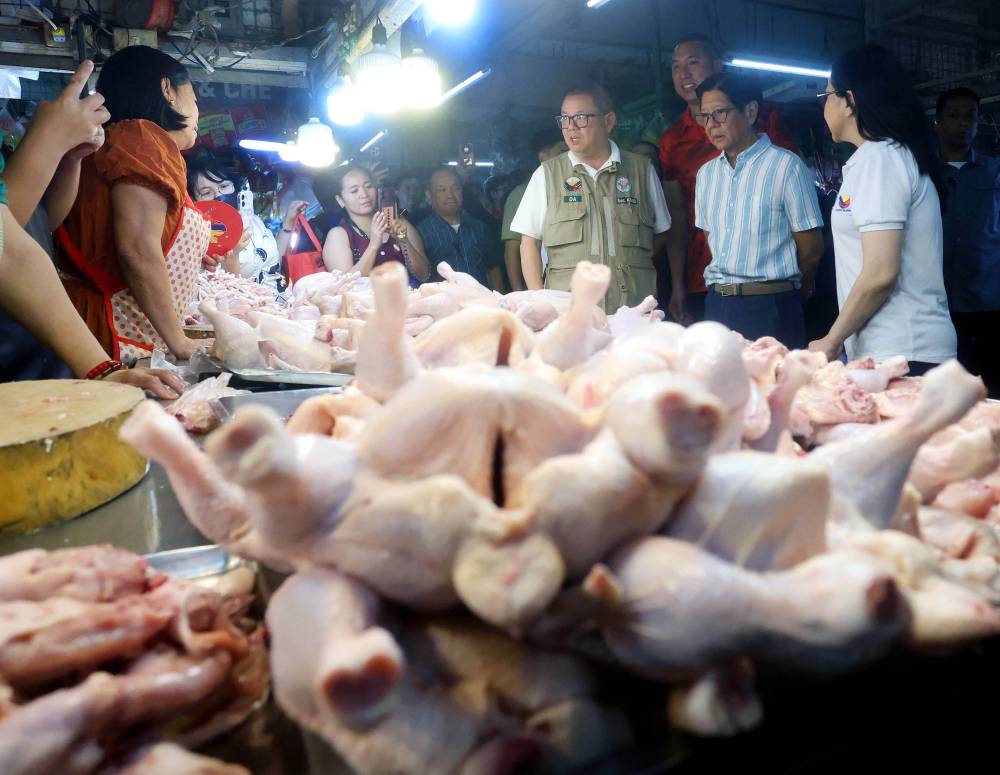
President Marcos on Wednesday ordered the suspension of fare hikes for most types of public utility vehicles (PUV), supposedly to take effect today, saying the increases should not happen during a global crisis.
He also assured workers in the transport sector that government assistance would be expedited and fuel subsidies coursed through various agencies would be expanded nationwide by next month.
“In my view, since we are still facing challenges due to the conflict in the Middle East, I said that this may not be the right time to increase the fares for our people,” Mr. Marcos said in a video message.
“That is why I have instructed the Department of Transportation (DOTr) to suspend the fare hike for now and defer it. Let us postpone it because we are currently in a situation where we need to continue supporting our commuters—our workers, students, and everyone who uses our transport system,” he added.
Approved hikes
The President did not give a timetable as to the eventual implementation of the new rates.
On Tuesday, the Land Transportation Franchising and Regulatory Board (LTFRB) announced its approval of fare increases for four types of PUVs: traditional and modern jeepneys; city and provincial buses; airport taxis; and transportation network vehicle services (TNVS) or app-based ride-hailing services, such as Grab and inDrive.
The base fare for traditional jeepneys, which covers the first 4 kilometers, was supposed to increase to P14 from P13. Each succeeding kilometer was to cost P2 more than the previous P1.80; that for modern jeepneys to P17 from P15, while the rate for every succeeding kilometer to P2.40 from P2.20.
Ordinary units of Metro Manila or city buses would have seen their base fare, which covers the first 5 km, increase to P15 from P13, while each succeeding kilometer would have cost P2.49, up from P2.25. The basic fare for air-conditioned Metro or city buses, on the other hand, was supposed to increase to P18 from P15, while each succeeding kilometer would have hiked to P2.98 from P2.65.
Point-to-point or P2P services were set for a 15-percent increase, while base fare of TNVS was to increase by P20, with sedans rising to P65 from P45, AUV (Asian utility vehicle)/SUV (sport utility vehicle) to P75 from P55, hatchbacks to P55 from P35, and premium service to P165 from P145.
Surprise move
With the deferment ordered by the President, the pending rate hike petitions filed by other transport subsectors—regular taxis, motorcycle taxis, and UV Express services—may also have to wait.
Transport group leaders have criticized the fare adjustments for not being enough to compensate for the soaring prices of fuel, which breached P100 a liter.
Mr. Marcos’ freeze order came as a surprise for many since the LTFRB’s decision had been sent to Transportation Secretary Giovanni Lopez—for recomputation in view of the criticism.
PUV groups have been clamoring for fare increases since last year or months before the Middle East conflict was reignited by the joint American-Israeli attack on Iran on Feb. 28.
Jeepney groups then requested a P2 fare increase, and also asked the provisional P1 hike granted in October 2023 be made permanent.
Subsidies
Pagkakaisa ng mga Samahan ng Tsuper at Opereytor Nationwide (Piston) asked for a bigger adjustment of P5, noting that diesel prices had increased by about P50 from October 2023 to mid-March 2026.
The Department of Social Welfare and Development (DSWD) on Tuesday started the distribution of P5,000 cash relief aid to tricycle drivers in Metro Manila. Also set to receive the amount are drivers of jeepneys, buses, taxis, UV Express, motorcycle taxis and TNVS.
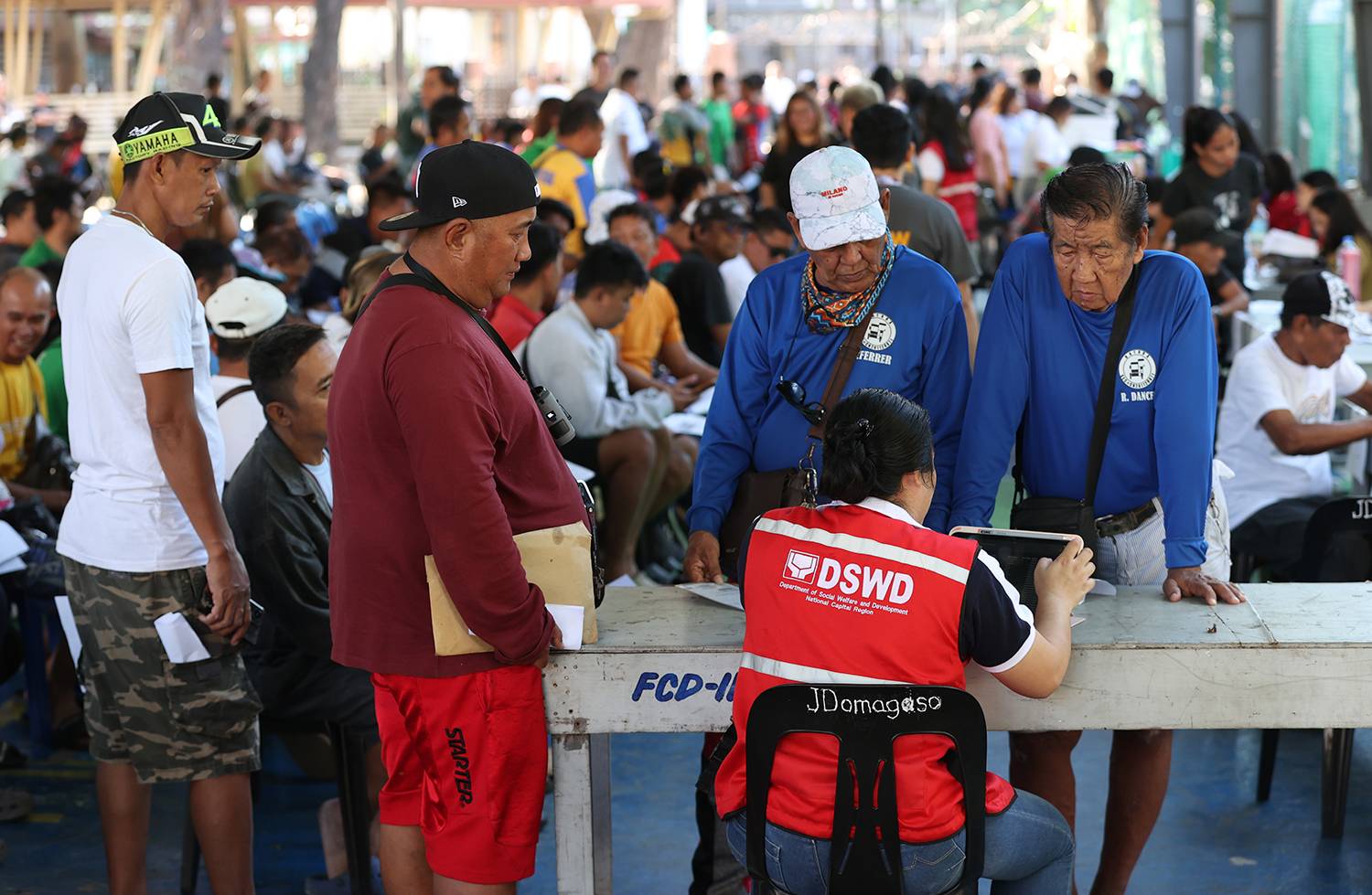
The assistance would be expanded nationwide by April once the DSWD, DOTr, and the LTFRB have finalized the list of beneficiaries.
Next week, the DOTr will begin the distribution of fuel subsidies to operators and drivers of UV express, taxis, and buses, LTFRB Chair Vigor Mendoza II announced on Wednesday.
Mendoza said the DOTr has allocated around P2.5 billion for the subsidies that should benefit over 1.1 million transport and delivery workers, including 233,314 drivers and operators, 1995,018 tricycle drivers, and 723,00 delivery riders nationwide.
He explained that the amount of subsidy differs per sector: P5,000 for drivers and operators of traditional jeepneys; P10,000 for those driving modern or more eco-friendly units.

“There is cash aid and subsidy. I know these are still not enough but if we combine them all together, we can get by,” he said.
Not enough
Meanwhile, the peasant group Kilusang Magbubukid ng Pilipinas (KMP) found the government’s latest assistance package for farmers and fishermen to be “too little, too late.”
According to KMP, the P10-billion Presidential Assistance for Farmers and Fishers (PAFF) and the P150-million fuel subsidy still fall far short in addressing the worsening impact of rising oil prices.
“The DA will provide P2,325 for 4.17 million farmers and fisherfolk, and it will only start in May. What about from March to April? Farmers and fisherfolk will bear the full brunt of the successive price hikes of oil and other commodities,” said KMP secretary general Ronnie Manalo.
Manalo said rising fuel prices have already forced some vegetable farmers in Bulacan to call off planting for the season.
Michael, a young farmer from San Jose del Monte, said that while he awaits his next harvest bitter gourd and string beans from their family farm, he is now unsure about his next crops.
Rowena, another vegetable farmer, said she was forced to borrow money from relatives just to have gasoline for her water pump. —WITH REPORTS FROM DIANNE SAMPANG AND ANDREA GREGORIO
******
Get real-time news updates: inqnews.net/inqviber