




Marcos’ help sought in solving ‘sugar crisis’

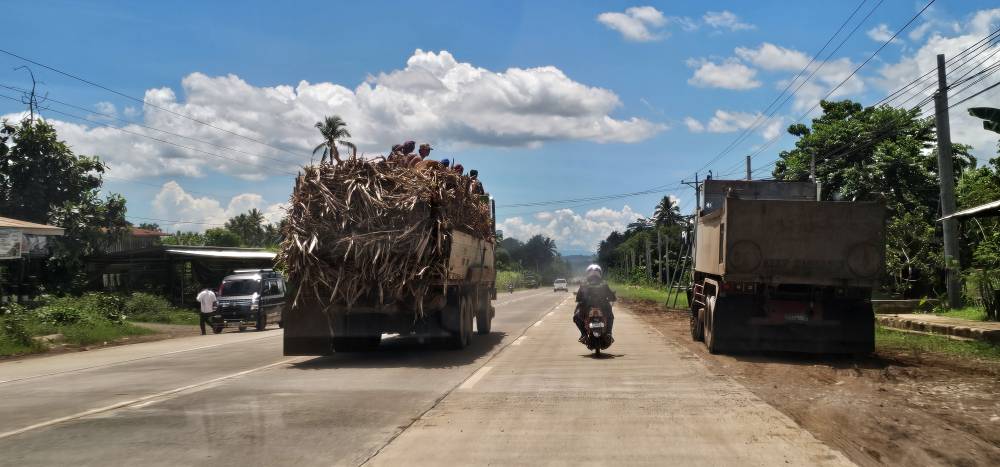
BACOLOD CITY—Sugarcane planters and labor groups have called on President Marcos to intervene in addressing the plummeting millgate prices of sugar.
The National Federation of Sugarcane Planters (NFSP) had joined voices with the National Congress of Unions in the Sugar Industry of the Philippines (Nacusip); Philippine Agricultural, Commercial, Industrial Workers Union (Paciwu); Congress of Independent Organizations (CIO-UNI); and the Nacusip Agrarian Reform Beneficiaries (ARB) Council in supporting the measures proposed by the Confederation of Sugar Producers Associations (Confed) that seek to arrest the further decline of sugar and molasses prices in the country.
“It has come to the point that sugarcane farmers are seriously considering abandoning sugarcane cultivation because of unprofitable millgate prices this crop year,” NFSP president Enrique Rojas said in his letter to the President.
On Dec. 12 last year, sugar prices dropped to a low of P2,103 per 50-kilo bag, the lowest in four years, while in the same period in 2024, the average sugar price was more than P2,500 per bag, he said.
This crop year, prices have been below production cost, and farmers are losing between P200 and P400 per bag of sugar they produce, Rojas said.
The Sugar Regulatory Administration (SRA) is pushing for a sugar export-import program, but majority of industry players do not believe the plan will truly address the problem, he said.
Gov’t buying
At best, SRA’s “quick-fix” might slightly lift sugar prices in the short term, but it will continue the same system of over-importation of sugar which primarily caused this prevailing problem of very low sugar prices in the first place, Rojas explained.
Instead of SRA’s proposed program, the NFSP proposes direct government buying of domestic sugar to be sold at a modest profit after the milling season ends, he said.
Rojas calls for the establishment of a technical working group to work out the mechanics for the direct government sugar buying program.
Alongside this, Rojas also calls for the creation of a sugar importation policy, which will spell out the guidelines on when and what volume to import.
In the immediate, the classification of imported sugar into “C” or reserve is seen to increase the purchase of domestic sugar by end-users, Rojas said. He added that the activation of the National Biofuels Board could help address concerns on pumping up molasses supply and demand.

“We have suffered long enough … we have waited far too long for a fair, honest, and well-intentioned solution,” read the letter to Mr. Marcos signed by Nacusip president Roland de la Cruz, Paciwu senior executive vice president Benjie de la Cruz, CIO-UNI secretary general Joseph Brian Perez and Nacusip ARB Council chair Elisama Gregorio.
Hardest hit
The groups represent the majority of organized laborers in sugar mills, sugar refineries and sugar farms. Many of their members became landowners and sugar farmers by virtue of the government’s agrarian reform program.
“Today, the sugar industry is dominated by small farms owned by agrarian reform beneficiaries. The same small farmers now comprise the majority members of farmers’ associations,” they pointed out.
“Because of this, when problems hit the sugar industry, our members are the first to be hit and the hardest hit,” they said, adding that the solutions recommended by Confed are the only viable solutions to dampen the adverse impact of over-importation on sugar industry stakeholders.
They said the help from the Department of Agriculture and SRA “is slow and delayed.”