






Marcos nod seen as key to opening Sara records


In deciding on how to obtain the bank and tax documents of Vice President Sara Duterte and her husband, Manases Carpio, the Senate impeachment court may follow the procedure used to get the tax records of the late former Chief Justice Renato Corona, who was convicted in his impeachment trial 14 years ago.
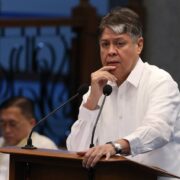
Impeachment court spokesperson Reginald Tongol said in an online press briefing on Thursday that during Corona’s 2012 trial, Revenue Commissioner Kim Henares sought authorization from President Benigno Aquino III after the Senate impeachment court issued a subpoena for the chief justice’s tax records.
Henares sought Aquino’s permission to avoid possible criminal liability pertaining to privacy and confidentiality under the National Internal Revenue Code (NIRC) in complying with the impeachment court’s subpoena, said Tongol.
In that case, the subpoena preceded the request for presidential authority to release Corona’s tax records to the impeachment court.
Section 270 of the NIRC penalizes personnel from the Bureau of Internal Revenue (BIR) who divulge information collected from taxpayers, including trade secrets and confidential information.
“That was the process, which is why the presentation of tax records during the Corona impeachment trial was organized,” Tongol said.
A similar process could be considered if the impeachment court subpoenas Duterte’s BIR records, he added.
The Senate impeachment court on Wednesday deferred its decision on whether to subpoena the bank and tax records of Duterte, as the prosecution and defense lawyers trial debated whether accountability or confidentiality should prevail.
Impeachment court presiding officer Sen. Francis Escudero gave senator-judges until Monday to study what he called “complicated” issues raised by both parties. The prosecution and the defense each presented about 30 pages of arguments in their memorandums, laying out their respective positions for the senator-judges to consider.
Asked whether the president has the sole power to authorize the BIR chief to present the tax records of any individual before the impeachment court, Tongol said Section 71 of the NIRC provides that income tax returns (ITRs) “shall constitute public records and be open to inspection as such upon the order of the President of the Philippines.”
“That power is provided by law,” Tongol added.
Tongol said there were two schools of thought regarding that.
One view holds that the Senate has the sole constitutional authority to try and decide on all matters concerning impeachment cases. The other believes that the Supreme Court may review impeachment proceedings if there is an allegation of grave abuse of discretion amounting to lack or excess of jurisdiction, or a violation of constitutional rights, Tongol explained.
Anyone is free to file a case, but whether the high court will decide on the merits or dismiss it, is uncertain, he said.
“If it’s dismissed because the Supreme Court will say it’s a political question to which the Senate has the sole power to try, then that’s the only time we will know a definitive answer,” Tongol said.
Lawyer Michael Poa, who represented the defense during oral arguments last Wednesday, questioned the relevance of the documents sought by the prosecution as these spanned nearly two decades and date as far back as 2007, when Duterte was Davao City’s vice mayor—pointedly noting that she was a non-impeachable officer then.
Akbayan Rep. Chel Diokno told the court that Duterte and her spouse’s tax and bank documents are vital to exposing the true state of her finances, a key element of the impeachment case, and would help senator-judges assess her fitness for office and whether her wealth was lawfully acquired.
Diokno said that Duterte’s bank records “increased significantly” in 2007, with transactions that year rising to P208.15 million. He added that financial movements intensified between 2009 and 2013, with annual totals consistently exceeding P400 million.
The impeachment court has allotted 92 trial days (three months), hearing three times a week – 62 days for the prosecution and 30 for the defense. But Senate President Sherwin Gatchalian has warned that the trial could stretch to 17 months.
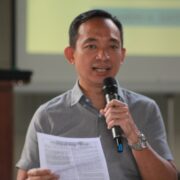
Manila Rep. Joel Chua, a member of the House prosecution panel, told a media briefing that the trial could move faster if prosecutors believe the Articles of Impeachment it had presented were strong enough to secure Duterte’s conviction.
The House prosecution panel had withdrawn six witnesses for Article IV (threats against President Marcos, first lady Liza Araneta-Marcos and former Speaker Martin Romualdez), leaving National Bureau of Investigation (NBI) Director Melvin Matibag as its remaining witness for the article.

Tongol, however, said that it may be too early to say that the impeachment trial would be finished ahead of schedule after some of the prosecution witnesses were withdrawn.
“The saved trial days may be used for other witnesses or other matters that the court will consider,” he said.
Veteran lawyer Lorna Kapunan, a volunteer counsel for the House prosecution panel, said the responsibility for making the trial proceed faster lied not solely on their side.
She pointed out that the current slow pace of the proceedings was due to repeated objections raised by Duterte’s lawyers, who even counted typographical errors that did not alter the prosecution witness’ testimony.
A witness-a-day rate was initially expected, but lengthy legal sparring between prosecutors and defense lawyers bogged down the trial. But during the first six days of trial, the court heard only two witnesses from NBI who testified on video recordings of Duterte saying she had made arrangements to kill Mr. Marcos, his wife and Romualdez, in the event she were killed in a alleged assassination plot.
Next week, prosecutors plan to present the next impeachment charge against the vice president—that she embezzled P612.5 million in confidential funds for her office and the education department from 2022 to 2023.
The two other Articles of Impeachment allege that Duterte amassed unexplained wealth and bribed officials to skirt procurement rules.
Chua, the lead prosecutor for the corruption charges, said the trial could end within three months if the defense chooses not to present its case to challenge the impeachment charges.
******
Get real-time news updates: inqnews.net/inqviber