







Marcos not interested in Cha-cha proposals

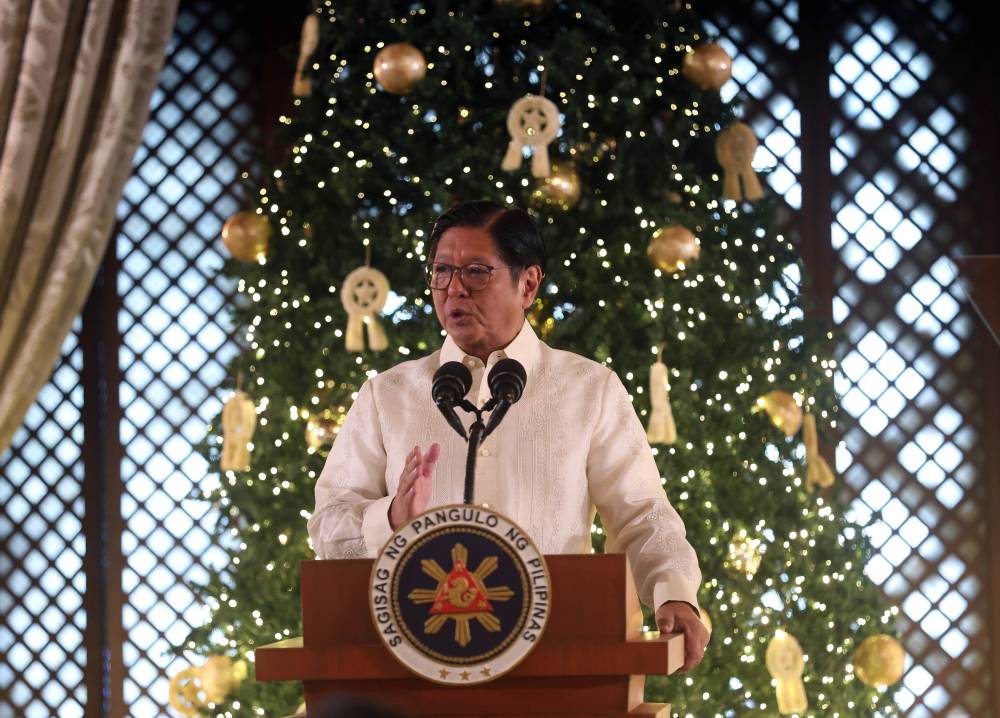
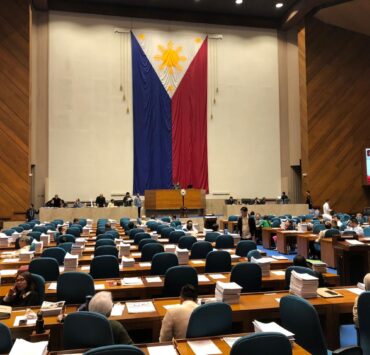
Charter change (Cha-cha) is still off the table for President Marcos even after Senate President Vicente Sotto III backed calls to amend the 1987 Constitution following the Supreme Court’s latest ruling rejecting the impeachment move against Vice President Sara Duterte.
“That is not yet being discussed for now. The President is focused on growing the economy of the country and it was not discussed in the latest meeting of the President with the economic team last Friday,” Palace press officer Claire Castro told reporters in a message on Saturday.
“But, if they (charter change proponents) have already taken steps toward this end, then the President will study it,” she said.
The President has so far tried to distance himself from amending the Constitution, but he has also declared in the past that he would conditionally support Cha-cha.
But in December 2023, with the backing of his allies in the House, Marcos said he was considering amending the Constitution’s economic provisions to attract more foreign investors.
In August 2025, following the first ruling of high court declaring the impeachment complaint against Vice President Duterte unconstitutional, Malacañang changed tune again, saying President Marcos would not oppose calls to amend the 1987 Constitution through a constitutional convention as long as it would help improve the charter and close loopholes in its provisions.
At that time, House Deputy Speaker Ronaldo Puno said “historical experience” and “evolving exigencies of governance” forced lawmakers to consider amending the Constitution.
One particular example he cited was the interpretation of the word “forthwith” in Article XI, Section 3(4) on impeachment, as he noted how a single ambiguous word “can become the justification for legislative inaction, procedural manipulation, or worse, the loss of accountability itself.”
Castro, herself a lawyer, noted that the framers of the 1987 Constitution had already made its definitions and provisions clear, arguing that any perceived ambiguity is “sometimes muddled to favor certain interests.”
“But if [amendments] will lead to improvements and clarity to prevent any provisions in the Constitution from being exploited, the President will not oppose it,” she said.
The Supreme Court last week affirmed its July 2025 ruling to void the impeachment of Vice President Sara Duterte, saying it violated the constitutional ban against the initiation of more than one impeachment case against the same official within a year.
Flawed process
Voting 13-0, the court “denied with finality” a motion by the House of Representatives to reconsider that decision.
Under the current House rules, there are three ways to initiate an impeachment: through a verified complaint for impeachment filed by any congressman; through a verified complaint filed by any citizen upon a resolution of endorsement by any House member; and through a verified complaint or resolution of impeachment filed by at least one-third of all the representatives.

In its ruling, the Supreme Court called the third the “second mode,” which lawmakers deem to be the “fast track mode,” since after the required number of signatures are collected, the impeachment case can be sent immediately to the Senate for trial.
But the high court ruled that the fourth impeachment complaint, which was transmitted to the Senate, was prohibited by the Constitution after the three prior complaints, though archived, had triggered the one-year bar.
For Sotto, the high court’s ruling had unconstitutionally amended the 1987 Charter through what he described as an “overreach” of the justices.
“It might really take years, or several retirements, before we can finally move forward and put that back in its proper place in the Constitution,” the veteran lawmaker said.
“What I see as the immediate solution, though it can’t really be called immediate, is for us to change the Constitution. If it’s like that, then perhaps a constitutional assembly can act on it, or else we will be waiting for decades,” he added.
According to Sotto, he intended to meet with Speaker Faustino Dy III in the second week of February to discuss steps that the Senate and the House could take following the Supreme Court ruling.