





Marcos orders probe of ‘disrespectful’ migrant officer in Bahrain

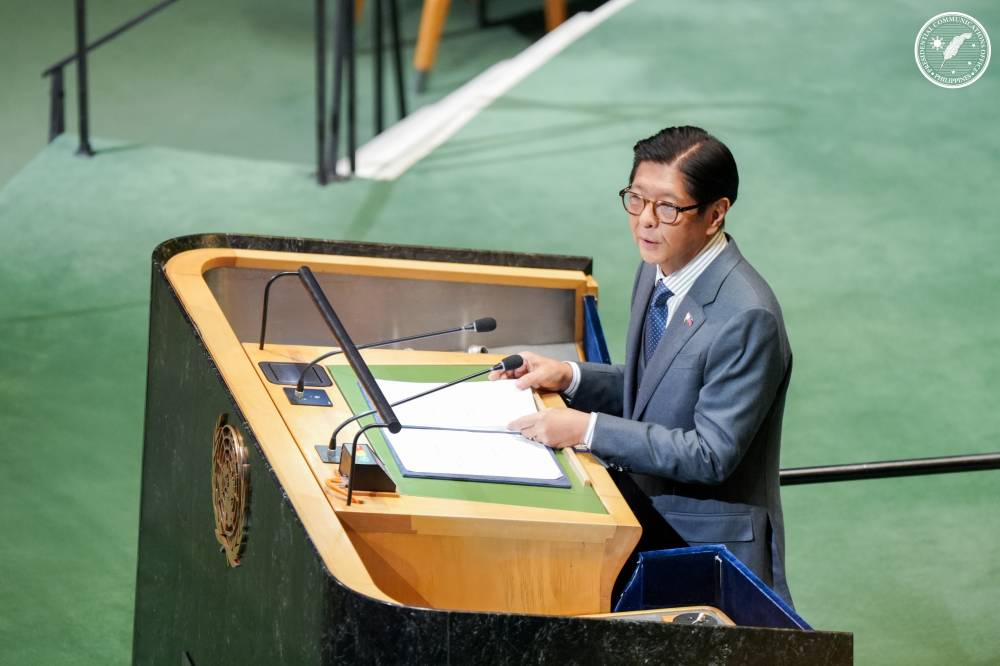
President Marcos has ordered an investigation into an incident involving an employee from the Migrant Workers Office (MWO) in Bahrain, who reportedly “disrespected” overseas Filipino workers (OFWs) seeking assistance.
According to Palace press officer Claire Castro, Mr. Marcos was “angry” at how MWO employee Anthony Allermo appeared to drive away OFWs asking for help amid the conflict in the Middle East.
“The President was not pleased with this. When the President saw the viral video showing Allermo treating the OFWs poorly, he immediately instructed Migrant Workers Secretary Hans Leo Cacdac to investigate and take action regarding the incident,” Castro said.
“A public servant should not abuse their power. There is no excuse for arrogance or disregarding our fellow citizens,” she added.
Allermo has already been recalled by the Department of Migrant Workers (DMW) while the administrative probe into the incident is ongoing.
Based on the video circulating on social media, several OFWs were allegedly turned away by Allermo at the MWO in Bahrain, telling them that the office did not have any funds for assistance.
“You will no longer be entertained. Go ahead and report to whoever you want to complain to. Manila says there are no funds,” Allermo was heard telling OFWs in the video.
Chartered flights
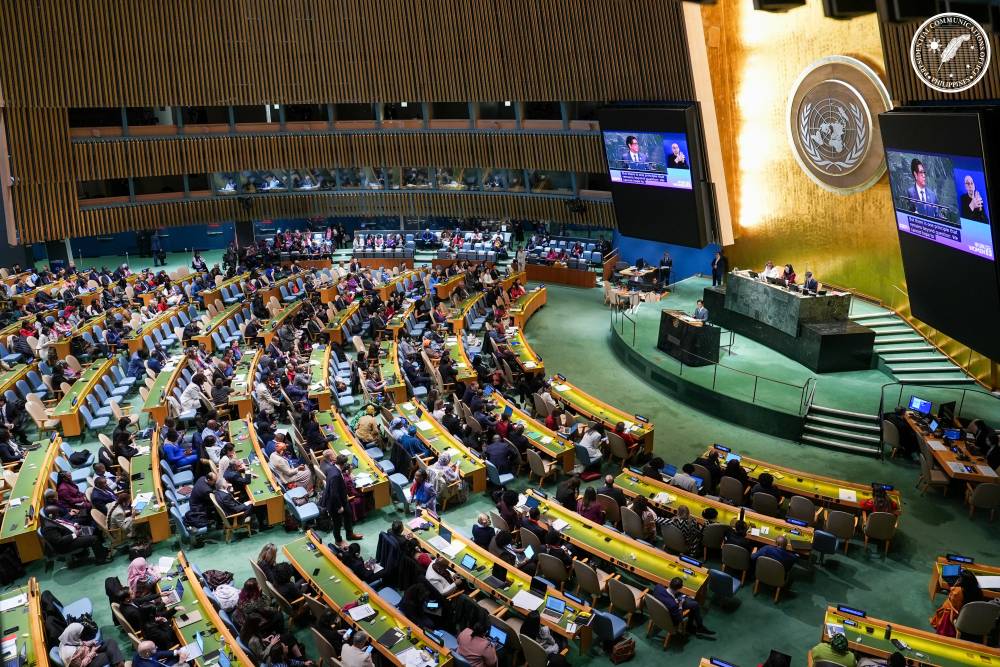
In a briefing in New York on Tuesday (Manila time), Castro also said the DMW has already arranged charter flights for Filipinos seeking repatriation after some countries opened their airports, although with limited operations.
Twenty OFWs from Dubai, with their nine dependents, are set to arrive in Manila at 9:30 a.m. on Tuesday, according to Castro. Another 16 OFWs from Israel are also returning to Manila at 9:30 p.m. on Wednesday.
The Philippine government has also booked commercial flights via Emirates Airlines for OFWs and their dependents from Dubai to Manila.
In Riyadh, Saudi Arabia, the DMW has arranged flights for Filipino repatriates, with the earliest departure on March 14.
More funds needed
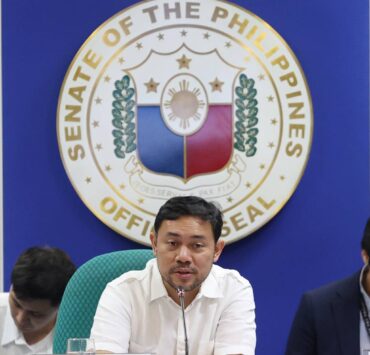
Secretary Cacdac earlier told lawmakers that while current resources can support existing repatriation requests, additional funds would be necessary in a worst-case scenario involving a larger number of returning OFWs.
Based on simulations conducted by the Overseas Workers Welfare Administration (Owwa), a mass evacuation of OFWs from the region could cost up to P3.67 billion if the crisis escalates—beyond the P1.5 billion remaining in Owwa’s Emergency Repatriation Fund.
There are about 2.5 million OFWs in different countries in the Middle East.
Qatar, United Arab Emirates (UAE), Lebanon, Saudi Arabia and Oman have partially opened their skies and allowed limited flights to and from their countries.
The Israeli government partially reopened Tel Aviv’s Ben Gurion Airport to outbound international flights on March 8.
However, the airspace of Iran, Iraq, Bahrain and Kuwait remains closed.

Excluding the charter flights scheduled for Manila, more than 600 Filipinos—about 400 of them OFWs, mostly from the UAE—have been repatriated in seven flights since March 5.
AFP: Not that simple
The first batch of government-sponsored repatriation flights arrived in Manila on March 8.
The Armed Forces of the Philippines on Tuesday said deploying military aircraft to help repatriate Filipinos from the Middle East would require extensive planning and coordination, stressing that such rescue missions are not simple during wartime conditions.
Philippine Air Force (PAF) spokesperson Col. Ma. Christina Basco said several operational and diplomatic factors must be considered before aircraft can be sent to extract Filipino workers overseas.
“We have to consider several things like our prepositioning, ground control, and coordination on the ground. This is miles away and quite far,” Basco said in a press conference.
She added that issues such as diplomatic clearances, consolidation of evacuees and extraction procedures would also have to be carefully arranged.
The remarks came after Vice President Sara Duterte earlier suggested that aircraft could be easily deployed to rescue Filipinos caught in the Middle East unrest.
“In this kind of situation where there is conflict or wartime, unlike during COVID when it was more of a health risk, we have to consider the safety of movements, the aircraft, and everyone in the airspace,” Basco said.
She added that the PAF has yet to receive a formal request to assist in the repatriation operations being carried out by the DMW.