





Marcos to decide on fuel tax after budget meet

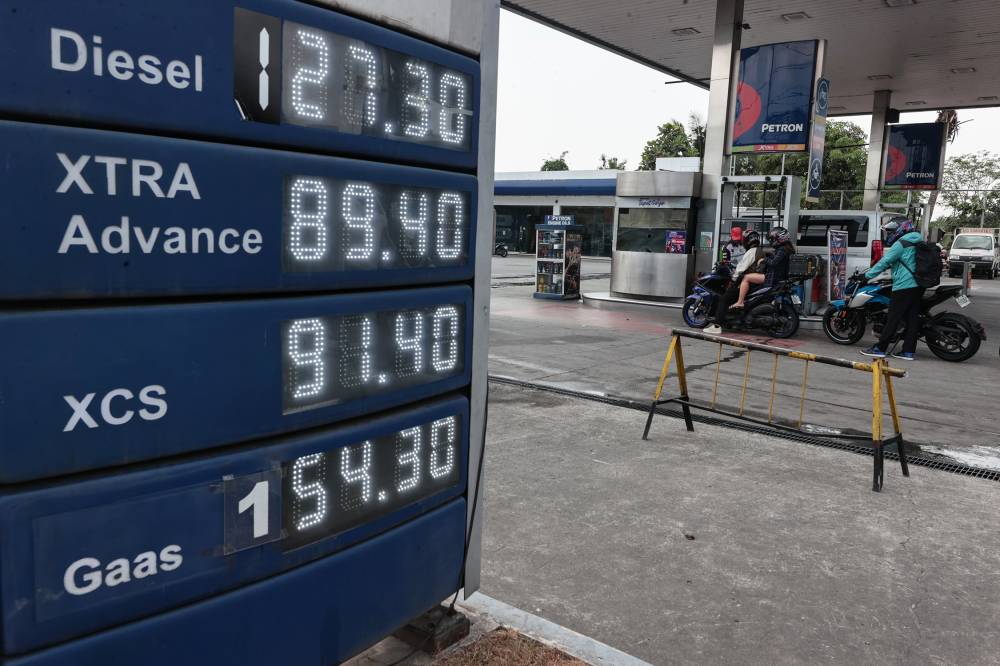
President Marcos may decide today if he will reduce or suspend altogether the excise on petroleum products, amid the spate of fuel price increases since the Iran war broke out on Feb. 28, according to Malacañang on Monday.
Sen. Loren Legarda also on Monday filed a bill seeking to institutionalize the government’s energy crisis response, including the provision of fuel subsidies and the temporary regulation of the oil industry and setting of price controls.
The Development Budget Coordination Committee is scheduled to meet on Tuesday to recommend the President’s action on the fuel excise in accordance with Republic Act No. 12316, the law enacted last month granting the President authority to reduce or suspend that tax.
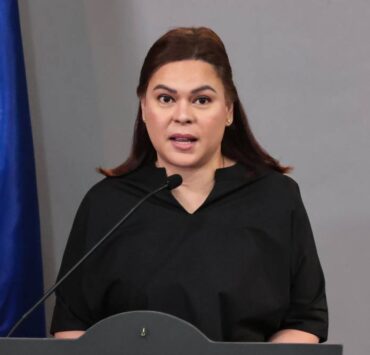
“[I]f the recommendation is appropriate and beneficial for the people and the country, then the President will approve it promptly,” Palace press officer Claire Castro told reporters on Monday.
“Let us remember that taxes are the lifeblood of the government, so we need to balance everything,” she said.
The Department of Finance (DOF) had warned earlier that suspending the excise from May to December would result in a revenue loss of at least P136 billion.
Mr. Marcos could only invoke his newly granted emergency power by April 12 at the earliest—the first day when RA 12316 takes effect following a 15-day publication period on the Official Gazette.
Even with the suspension of the excise, diesel prices can only be brought down by P6 per liter, while prices of gasoline, liquefied petroleum gas and other fuel products can be reduced by P10 per liter.
Any reduction or suspension of the excise, however, will only apply to incoming fuel shipments and not to the current inventory.
VAT on fuel
Transport groups have urged the government to also suspend the 12-percent value-added tax (VAT) on fuel products to further pull down prices.
For instance, diesel prices may go down by more than P24 if the full P6 per liter excise and the VAT are both removed.
But economists have warned that reducing taxes should only be a temporary solution since suspending the VAT on petroleum products could raise projected revenue losses to P360 billion.
RA 12316 states that any suspension or reduction of the fuel excise can only take effect for three months and not more than a year in total.
Thus the President’s authority over the excise can only be exercised until Dec. 31, 2028.
This authority also depends on certain conditions specified by the law, such as Dubai crude prices reaching at least $80 per barrel for a month and the declaration of a state of emergency or calamity.

Crisis response
On March 24, Mr. Marcos issued Executive Order (EO) No. 110 declaring a state of national energy emergency—on top of his declaration of a yearlong state of calamity in November last year in the wake of Tropical Storm “Tino” (international name: Kalmaegi).
Meanwhile, Legarda on Monday filed Senate Bill (SB) No. 2020, recommending several crisis response measures based on the Unified Package for Livelihoods, Industry, Food, Transport, Energy, and Defense policy under EO 110.
The Department of Energy (DOE), in coordination with the DOF, Department of Trade and Industry and Philippine Competition Commission, is directed “to address actual or imminent supply disruption, market failure, or price instability, to regulate, direct, and manage the oil industry, and to implement temporary and targeted energy supply management measures,” the bill states in part.
The DOE and other agencies are also allowed emergency procurements of fuel, under Legarda’s measure.
Other provisions in the bill include the mandatory reallocation of energy supply, rationalization of distribution margins, and enforcement of minimum strategic fuel and energy resource stockpiles.
The bill also seeks to provide fuel subsidies to workers in the transportation and agriculture sectors, assistance to repatriated OFWs (overseas Filipino workers), the use of gender and development funds for targeted crisis assistance, loan payment reliefs, and expanded access to a quick response fund.
Several lawmakers including Legarda had earlier raised the idea of filing a bill similar to the Bayanihan measures passed during the COVID-19 pandemic.