








Marcos to sign 2026 budget in first week of January

President Marcos will not be able to sign the P6.793-trillion national budget for 2026 by the end of December as he had hoped for, and instead will be able to do so by early January.
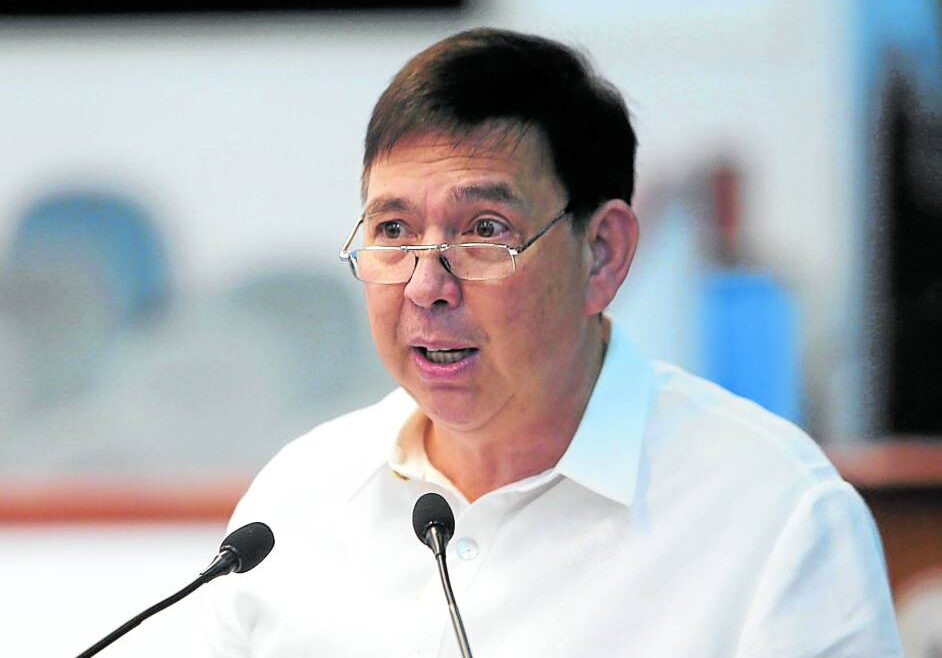
In a message to reporters on Wednesday, Executive Secretary Ralph Recto confirmed that the President will sign the 2026 General Appropriations Act (GAA) “in the first week of January,” placing it any time from Jan. 1 to Jan. 7.
This means the national government will work on a reenacted 2025 budget of P6.326 trillion—considered by watchdogs and advocates to be the most corrupt budget in history due to the sheer volume of last-minute insertions—at least for several days.
Recto assured the public that a one-week reenacted budget “will not affect government operations” and “in fact, a careful review of the budget prepares the Executive [to execute] it properly.”
The move will give the President three weeks to study the bicam-submitted report on the 2026 budget after the joint panel of the House of Representatives and the Senate completed its deliberations on Dec. 18.
The last time the signing of the budget was held in January was for the 2020 GAA by then President Rodrigo Duterte on Jan. 6, 2020.
Prior to that, the 2019 budget was signed by Duterte only in April 2019, which prompted the national government to use a reenacted 2018 budget from January to mid-April of that year.
President Marcos signed the 2023 GAA, the first full-year budget of his administration, on Dec. 16, 2022, the 2024 GAA on Dec. 20, 2023, and the 2025 GAA on Dec. 30, 2024.
Since 2000, the national budget has been reenacted in five instances, of which four happened during the administration of then President Gloria Macapagal-Arroyo: in 2001, 2004, 2006 and 2009.
A reenacted budget occurs when Congress fails to pass a new budget law before the fiscal year ends.
Acceptable delay
Senate President Pro Tempore Panfilo Lacson and Sen. Sherwin Gatchalian agreed with the slight delay in the signing of the 2026 budget, saying it is the most prudent course of action to ensure that every provision is thoroughly reviewed.
“A briefly reenacted 2025 budget would be preferable to rushing the passage of the 2026 version only to find it unresponsive to the needs of the times or worse, prone to corruption,” Lacson said in a statement.
“We acknowledge that submitting the budget to the Executive on Dec. 29 is two days before the new year, and the Executive needs sufficient time to review the 4,000+ page enrolled copies of the budget. The prudent course of action is to move the signing to Jan. 5 to ensure that every provision is thoroughly reviewed,” added Gatchalian.
Both the House and the Senate have vowed to ratify the 2026 budget on Dec. 29.
Lacson also reiterated that the key, even after the budget is finally signed into law, should still be continued vigilance in monitoring, reporting, and even shaming wrongdoing in government.
Political science professor Ranjit Rye of the University of the Philippines agrees that the “short delay” in the signing was “acceptable and not unprecedented.”
“What matters more is not the date of signing but the substance of the budget and the safeguards built into it,” Rye told the Inquirer.
“The reforms introduced this year, including efforts to improve transparency in the bicameral process, have contributed to a budget that places relatively greater emphasis on development priorities compared to many past cycles,” he explained.
Far from perfect
Despite reassurances from both Malacañang and Congress that the 2026 budget was free from corruption, particularly by putting zero allocation for locally funded flood control projects under the Department of Public Works and Highways, budget watchdogs and several lawmakers criticized the bicam-approved spending bill for containing unscrupulous line items.
The 2026 national budget in its current form was still far from being perfect, with the inclusion of “pork barrel”-like provisions, according to Rye.
“Budgets are never purely technical documents—they are political instruments and products of compromise. There are no perfect budgets, but given current constraints, this is a reasonable outcome for this moment,” Rye said.
He noted that the 2026 bicam-budget allocated increased resources to human development, particularly in health and education, “signaling a broader shift toward social investment.”

Some P1.38 trillion—equivalent to about 20 percent of the 2026 proposed national budget—was allocated to the education sector.
Rye urged President Marcos to listen to watchdogs and transparency advocates to consider exercising veto powers on contentious items in the budget, including the allocations to the Department of Health’s Medical Assistance for Indigent and Financially Incapacitated Patients (Maifip) program and the Assistance to Individuals in Crisis Situations (AICS) under the Department of Social Welfare and Development.
Budget watchdogs slammed the bicam’s move to increase the Maifip funding next year to P51.65 billion and AICS’s to P63.9 billion, saying these were forms of “soft pork” for legislators aimed to perpetuate patronage politics.
Controversial programs
Retired UP professor Roland Simbulan also made the same call, urging the President to reject the entire unprogrammed appropriations (UA) for 2026.
Such standby funds are contentious because, while they are meant to provide flexibility for emergencies or unforeseen expenditures, excessive or opaque use can undermine accountability.
The bicameral panel cleared P243 billion in unprogrammed appropriations, reversing earlier efforts to rein in the mechanism after the Senate version cut the allocation to P174.55 billion.
The 2026 unprogrammed appropriations, however, was more than 50 percent lower than the P531.67 billion in 2025.
Loophole fixed
Defending what was left of the UA, Gatchalian stressed that a corruption loophole previously lodged under this category has been eliminated.
He was referring to the Strengthening Assistance for Government Infrastructure and Social Programs, which previously housed lump-sum funds for government infrastructure projects and social services and was funded with more than P50 billion in 2023, P225 billion in 2024, and P160 billion this year.
Gatchalian also pointed out that under the UA, there are still other components such as foreign-assisted projects requiring counterpart funding from the national government that are still under negotiations.
Other items in the UA include additional funding for the AFP Modernization Program. —WITH REPORTS FROM ZACARIAN SARAO AND INQUIRER RESEARCH