




Maureen Ava Mata: ‘3-legged’ advocate for walkable cities

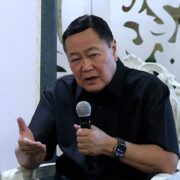
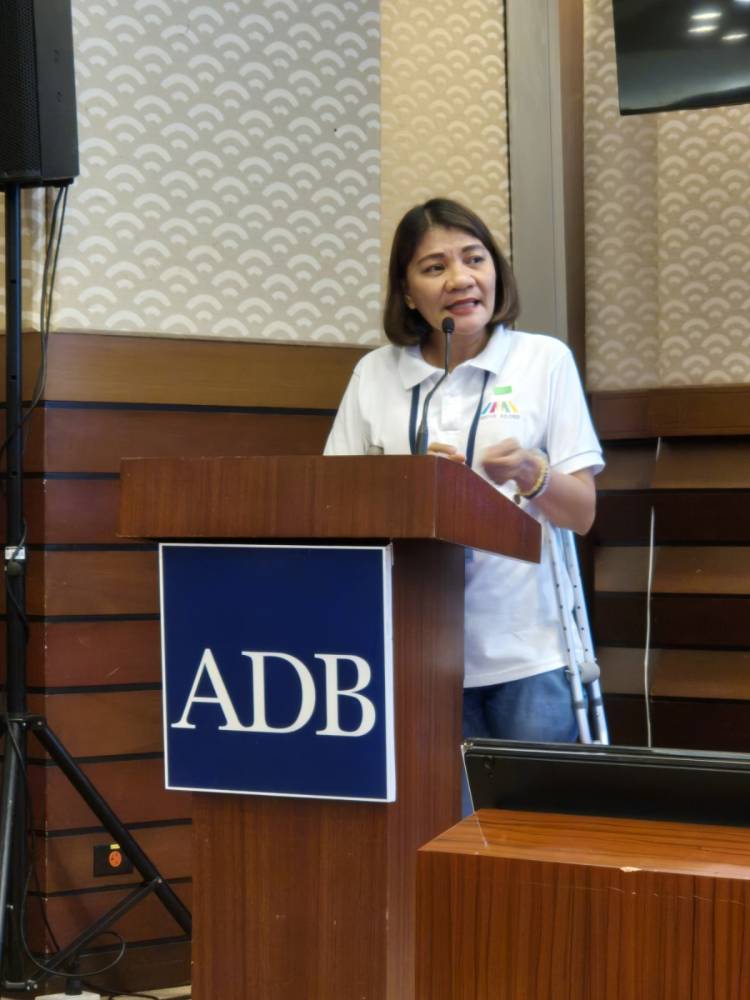
Maureen Ava Mata lost her left leg to bone cancer when she was 18. The amputation forced her to learn how to walk again, this time on “three” feet—her right leg plus two crutches.
This introduced her to many challenges, and it amplified the problems she saw in the country’s public transportation system.
Getting on a jeepney or a bus, for example, became more difficult because most of them do not usually stop at the designated loading area, she noted. These public utility vehicles (PUVs) stop where most of the passengers congregate, even at spots where boarding is prohibited.
“You have to run, you have to chase them. Of course, I cannot run because I am an amputee, I have crutches,” Mata, a 51-year-old doctor, told the Inquirer.
‘I have to be creative’
But for one of this year’s Inquirer Women of Power awardees, Mata’s experiences turned her into a disability-rights advocate who understands firsthand the challenges faced by persons with disabilities (PWDs).
“I had to learn how to commute. I had to use my ‘three’ feet, no pun intended,” she said. “I have to be creative when walking, when using public transportation.”
Mata pointed out that crossing the street was more dangerous for people like her because they would be unable to move away from speeding vehicles that do not slow down for pedestrians.
“I was almost hit by a vehicle,” she said. “And then when you cross the street and you’re using a backpack, there will also be pickpockets opening the zipper of your bag.”
Having to use both her hands to hold her crutches also leaves her unable to carry anything else. That’s why when she was a medical student, she spent more for a taxi when she had to bring her clothes from her dorm in Manila back to her house in Makati.
First time as organizer
Mata said she didn’t even try taking public transportation while on a wheelchair, noting how difficult it would be to load it onto a jeepney. Other PWDs are forced to either just take the train, or simply “walk” on the sidewalk.
“That’s how hard it is to use a wheelchair when you commute, and I did not attempt. In other countries, you still can, but not here,” she said.
About seven years after her amputation, Mata said a barangay councilor asked her to help organize other PWDs for the distribution of identification (ID) cards for PWDs living in the city. The IDs allowed them to receive benefits, such as discounts in jeepneys, tricycles and other PUVs, as well as free cinema tickets.
Mata became the president of the PWD organization in Barangay West Embo, now a part of Taguig, where she began her journey as a disability advocate.
She and her neighbors with disabilities named their group “The Chosen Ones,” a play on “The Chosen One” moniker for Harry Potter.
Data profiling
A few years later, she became the president of the Makati Persons with Disability Federation, which conducted a house-to-house data profiling of all the PWDs in the city, Mata said.
Eventually, she was invited to participate in national organizations, becoming a board member of the groups Alyansa ng May Kapansanang Pinoy, Women With Disabilities Leap to Social and Economic Progress, or WOWLEAP, and Leonard Cheshire Disability Philippines Foundation.
Mata attributed her rise to a national stature to the trust of other leaders in her capability.
“I was molded from the grassroots, but up until now, I still work in the grassroots,” she said, noting that she doesn’t get a salary for this work.
Training next leaders
Mata currently serves as project manager for WOWLEAP, conducting capacity development training programs across 101 barangays in Eastern Samar, Cebu, Dinagat Islands and Camarines Sur.
Part of her work includes training leaders of PWD groups on personality development, resource mobilization, advocacy, lobbying and networking. “In short, we help them, we capacitate them … for the disability sector to push and lobby for their rights,” she said.
Mata has also been a volunteer with the poll watchdog Legal Network For Truthful Elections (Lente) Philippines since 2013 and was a prime mover in establishing a vulnerable sectors’ office within the Commission on Elections.
She has also helped write modules on disaster risk reduction management, disability awareness and sensitivity orientation in order to help people understand the plight of PWDs.
‘Disability lens’
“We help other stakeholders develop their ‘disability lens,’” she said. “In disasters, disabilities become invisible. In transport, it’s invisible, so how will the disability sector be able to access the different basic services or their rights in the community?”
“Accessibility is not just about the infrastructure and the environment, the built environment. It’s also the other learning materials, the attitudes and the barriers that we have to break down,” Mata said.
In Move as One Coalition, an alliance of more than 100 civil society organizations that was formed during the pandemic, she serves as an accessibility and inclusion advocate, providing a voice for commuters in transport planning and policy discussions.
The Edsa challenge
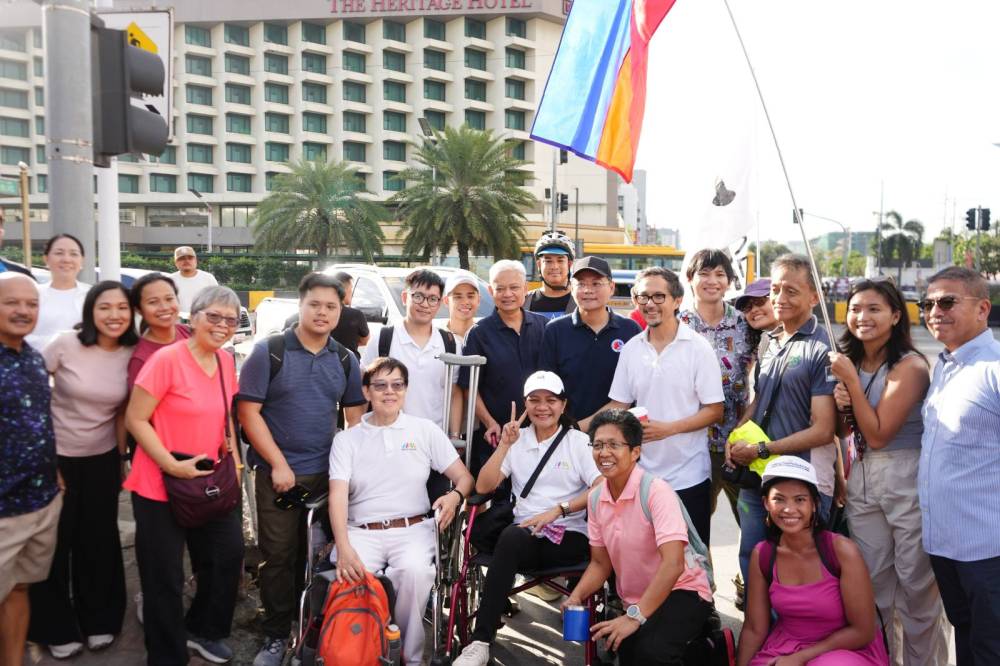
Aside from holding training, Mata helps ensure that PWDs remain visible by conducting unity walks along major roads and inspecting government projects, such as the newly built Kamuning footbridge on Edsa.
She said that a person’s disability should be considered once he leaves the house for any reason. “How can that person be able to access different types of services that are given to those with no disabilities?” Mata said.
“[People] are all different, and they all have different places to go to,” she said. “That’s why we have accessibility walk-throughs … photo walk, inspection, so we can see [the problems they face].”
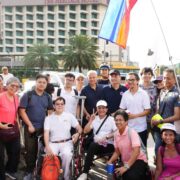
Through its unity walks conducted with officials of the Department of Transportation, Move as One has been able to show how difficult it can be to navigate the sidewalks along major roads like Edsa, given the insufficient space and barriers like concrete posts that block the pathway, especially for one on a wheelchair.
Mata emphasized that the national transport policy should put “people first,” with public spaces made to accommodate commuters, not cars.
“We would want to walk without any barriers, that’s why they need to fix the crossing, the pedestrian lane. They need to fix the pathways, walkways. There should be space for bicycles, there should be space for pedestrians … and hopefully not just footbridges for those who walk,” she said.
******
Get real-time news updates: inqnews.net/inqviber