









Mindanao no longer terror ‘hot spot’ since 2017–NSC


The National Security Council (NSC) has downplayed concerns regarding the prior visit of the Bondi Beach shooters to the country, with no less than President Marcos rejecting the sweeping statement and the misleading characterization of the Philippines as an Islamic State (IS)-training hot spot.
Palace press officer Claire Castro said the President “strongly rejects” such claims, even as authorities confirmed that the gunmen behind the mass shooting at Sydney’s Bondi Beach had stayed in the country for nearly a month before returning to Australia.
Castro read a statement from the NSC, which said there were no validated report nor confirmation that the individuals involved in the Bondi Beach incident received any form of training in the Philippines.
Since the Marawi siege in 2017, local security forces have “significantly degraded” IS-affiliated groups in the country.
Assessments by both the United Nations and the US government indicate that these groups now operate in a fragmented and diminished capacity, the NSC said.
The threat of terrorism in parts of Mindanao has shifted from high to low, the military said on Wednesday, according to Armed Forces of the Philippines spokesperson Francel Margareth Padilla in a press briefing on areas with reported terror group presence.
Padilla also noted that the security situation in the Bangsamoro Autonomous Region in Muslim Mindanao has “markedly improved.”
Declining groups
This assessment is based on the decline in the strength and capabilities of local terror groups.
Padilla said membership of IS-linked local terrorist groups has declined from 1,257 members in 2016 to just 50 in 2025.
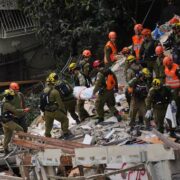
The last major IS-linked attack occurred in 2017 during the siege of Marawi, which killed more than a thousand people—including militants, soldiers and civilians.

Since then, at least 10 leaders of IS-linked groups were killed, which Padilla said created a “leadership vacuum” within these groups that she described as “fragmented and largely defensive.”
“The loss of senior figures has weakened command structures and reduced the ability of these groups to plan, direct and sustain operations,” Padilla said.
Because of this, Padilla said terror groups in the country no longer have the capacity to conduct recruitment efforts, large-scale attacks or even training activities.
Mindanao gained this negative attention following the visit of Sajid Akram, 50, and his son Naveed Akram, 24, to Davao City a month before they allegedly opened fire on an Australian beach, killing 15 people and wounding dozens more.