










More young Pinoys get chronic kidney disease—and they learn too late

(First of two parts)
Kyle Terence Abanto was only 23 years old when his doctor told him he had stage 5 chronic kidney disease (CKD5), the end-stage of the illness that currently has no cure.
He considered it a life sentence, since for the rest of his years he would be dependent on a dialysis machine. Creating normalcy in his daily affairs would thus be a struggle.
Now 26, Abanto is one of an estimated 7 million-plus young adult Filipinos who have developed CKD in different stages.
Local and international experts warn that CKD patients are getting younger in recent years, primarily due to unhealthy lifestyle behaviors, such as excessive consumption of processed foods high in sodium, fat, and sugars.
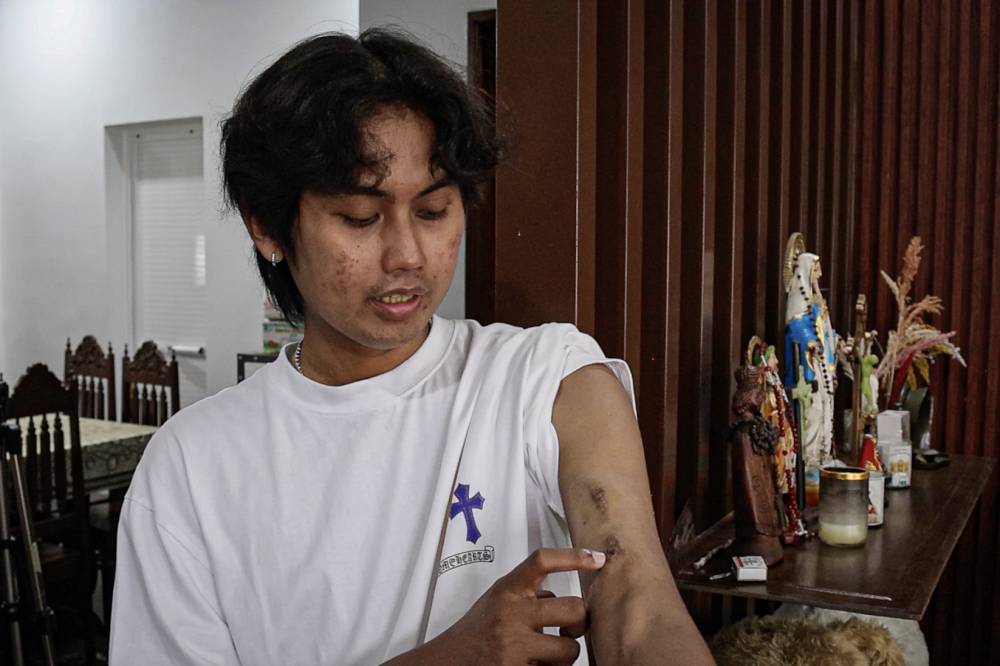
When the Inquirer visited Abanto at his family home in San Rafael, Bulacan province, he showed two prominent keloid scars on his upper arm that were dark and scabbing. They mark the spot where a catheter is placed during his four-hour dialysis sessions thrice a week.
He remembered how he got another scar, a 1-inch long keloid on the lower part of his neck.
It was back in June 2022 when he first experienced signs of the disease: fatigue, pain and swelling in some parts of his body, frequent vomiting, and loss of appetite.
“I just ignored it back then. Maybe I was just exhausted because I was at that point in my life when I was reaching for my dreams. I had lots of things in store for myself,” he said.
Abanto hoped to be a photographer, cinematographer, content creator, and dancer, among other things—and, more importantly, a husband and a father.
But a month later, his symptoms suddenly got worse.
“One night, I just felt that my body could not take it anymore, so I asked my mother to finally take me to the hospital. I just passed out afterwards,” he recalled.
When he woke up, a catheter was already inserted in his neck and connected to his heart to filter blood. He had to undergo an emergency hemodialysis.
“The doctor told me that I had end-stage kidney disease. Both of my kidneys were no longer functioning. To be able to live longer, I had to get dialysis sessions thrice a week, or if fortunate, get a kidney transplant,” Abanto said.
“My family and I were in denial. How could I get that sick when I was still young?” he added.
They even went to faith healers, believing it was just a hex put on him by someone holding a grudge. His condition did not get any better.
Lifestyle choices
His doctor told him frankly that it was mainly his poor lifestyle choices, especially the ultraprocessed foods (UPFs) he regularly and excessively consumed, that made him develop CKD at such an early age.
“I knew it was my fault, but I did not know better. I was focused on reaching my goals. All I remembered was I was eating anything that I could easily eat. Everything ‘instant’ and ready to be consumed, I ate them. And I really liked salty foods,” Abanto said.
His diet was mostly instant “pancit canton,” cup noodles, different canned goods, such as corned beef and luncheon meat, and potato chips of different flavors and brands. “Combo meals” of fries, burgers, and soft drinks were his usual orders in fast-food restaurants.
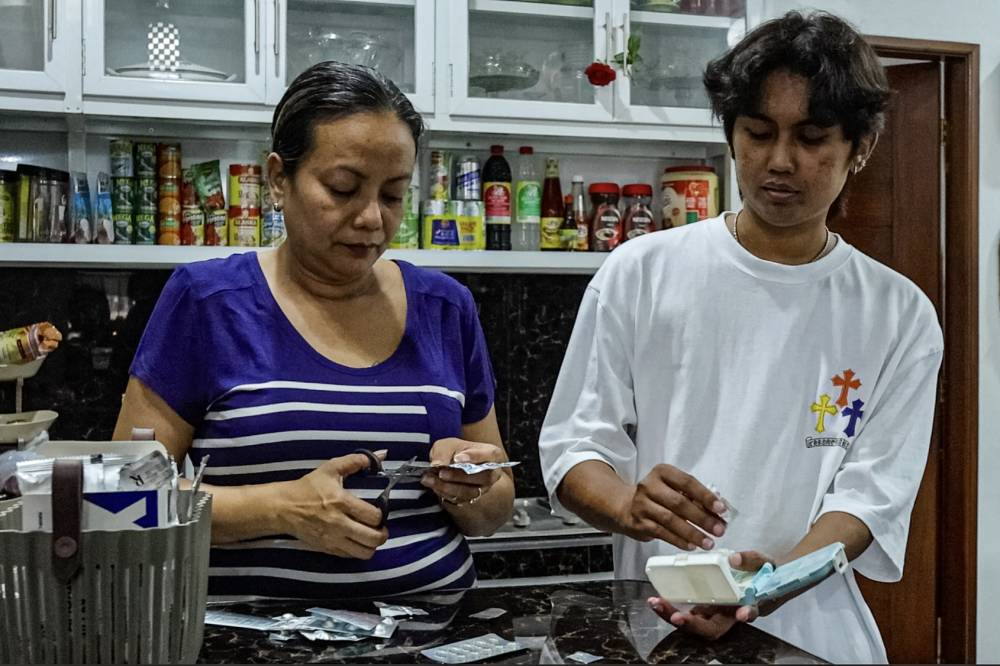
Abanto also remembered taking at least a tablet of painkillers each day for headaches and body pains, so he could finish more passion projects.
“I believed what I was doing was just normal. Every one of the people my age was eating instant foods. Self-medicating was also the norm. I was young, and I was supposed to be healthy and strong—or so I thought,” he said.
Undiagnosed cases
Experts estimate there are at least 13 million Filipinos affected by various stages of CKD. The majority of these cases remain undiagnosed, as the early stages show no symptoms.
Nephrologists at the National Kidney and Transplant Institute (NKTI) recently raised the alarm over the rising number of young Filipinos requiring dialysis.
President Marcos echoed this in his remarks when he visited the NKTI in Quezon City in June.
Citing data from the Philippine Renal Disease Registry, NKTI doctors said the majority of patients, or 57.44 percent, were between 20 and 59 years old.
Another worrying trend: young people had overtaken senior citizens (40.82 percent) as the majority of CKD patients.
The rest were in youngest age groups: 10 years old and below (1.11 percent), and from 11 to 19 (0.62 percent).
While they were at the lower end of the curve, younger Filipinos with renal diseases were also slowly increasing in number.
According to NKTI pediatric nephrology consultant Dr. Ana Katherine Alas, cases of CKD in children increased from 144 (9.3 percent) in 2023 to 301 (12.1 percent) in 2024.
21st-century shift
“In the 1990s up to 2000s, the most common cause of end-stage renal disease was glomerulonephritis,” said Dr. Anthony Russell Villanueva, NKTI emergency department head .
The condition refers to the kidneys’ filtering units getting damaged—usually a complication among the elderly resulting from preexisting conditions like high blood pressure and diabetes.
“It is unrelated to food or nutrition,” Villanueva said.
“But by the 2000s, the Filipino diet shifted to Western foods, with preference for fast food—ultraprocessed, salty and sweet. This has contributed to the increase in CKD patients,” he said.
World health experts also agree that the start of the 21st century saw the “most striking change” in food systems, first in high-income countries, then in low-and middle-income countries, when meals and dishes prepared from unprocessed or minimally processed foods veered toward ultraprocessed food and drink products.
“The result is diets with excessive energy density, high in free sugars and unhealthy fats and salt, and low in dietary fiber that increase the risk of obesity and other diet-related noncommunicable diseases,” read a report by the Pan American Health Organization.
The study showed the Asia-Pacific region with the fastest growth in the amount of ultraprocessed products sold per person. From 18.4 kilograms per capita in 2000, it grew by 82.6 percent to 33.6 kpc in 2013.
In contrast, North America during the same period showed a decrease in UPF consumption, from 328.9 kpc in 2000 to 299.6 kpc in 2013.
In a 2016 report, the Global Panel on Agriculture and Food Systems for Nutrition said the sale of UPFs and sugar-sweetened beverages continued to grow exclusively in lower-middle income countries, including the Philippines, and upper-middle income countries.
It projected the sale of these unhealthy foods and drinks in Southeast Asia to approach the level of high-income countries by 2035.
Mental health issues
Following his CKD5 diagnosis, Abanto developed anxiety and depression. His self-esteem dropped following physical changes in his body due to the disease. His skin got darker and yellowish, he had swelling in different parts of the body, and the scars on his arms from the multiple catheter insertions were growing in size and number.
Because of his sickness, he was not able to finish his sociology course at Camarines Norte State College. He would have earned his degree in 2023.
“At first, I tried to keep it cool. But eventually, after all the same dialysis sessions, I realized that my world had stopped from turning because I am forever sick,” he said.
“The most heartbreaking realization for me is that I will be stuck in the clinic half of my life, waiting for each dialysis session to end. How can I achieve all my dreams with these difficulties?” Abanto said.
Studies have found that CKD imposes not only physiological but also emotional and psychological burdens especially on young adult patients.
About 30 to 60 percent of dialysis patients show symptoms of clinical depression.
Many families also struggle with the steep expenses entailed by a lifetime of dialysis sessions. The procedure is estimated to cost around P1 million a year, even with financial assistance from the Philippine Health Insurance Corp. (PhilHealth) and other agencies extending assistance.
Depression is exacerbated by guilt due to feelings of being a financial burden on the family, causing some CKD patients to avoid seeking care to reduce expenses.
Anxiety about finances can also lead to delayed treatments, skipping medications, or relying on alternative but ineffective therapies.
Where are the warnings?
Abanto remained hopeful of receiving a new set of kidneys from a donor at the NKTI despite the long waiting list. A kidney transplant is still considered the “gold standard” in treating CKD5 patients.
He also felt fortunate to have the complete support of his family, loved ones, and even his employer.
On Tuesdays, Thursdays, and Saturdays, he goes by himself to the dialysis clinic, about 45 minutes from where he lives.
“While my dialysis ‘classmates’ are all asleep during the four-hour session, I am still working. I ask the nurse to set me a table where I can put my laptop and do my video editing,” Abanto said.
“I still need to work because I do not want to become a burden to my family. I always tell my mom that I do not want to be useless just because I am sick,” he added.
In between sessions, aside from working at home, Abanto plays computer games or creates content for his social media accounts.
Sometimes he would visit his girlfriend in Manila, or meet up with fellow young dialysis patients who are part of a support group.
“Through the content I create on social media, I have learned that there are also many young CKD patients like me. They told me that I was their inspiration to continue living,” Abanto said.
“Learning that I am not alone in this fight, and that there are people out there who share the same struggles I face every day, makes me somehow relieved and happy,” he added.
“I always ask, ‘Why me?’ If only there were warnings (about my unhealthy diet) this would not be happening to me. Maybe fewer young people like me would be suffering from this lifetime disease,” he said.
(To be continued)
***
In September, Abanto successfully underwent a kidney transplant, the organ coming from a deceased donor. While PhilHealth now covers the standard costs of medications and tests, his family still has to shoulder other expenses not covered by the Z-Benefit Package for post-kidney transplantation services.
Those who would like to help Abanto and his family may send their donations through the following accounts:
• BDO
4895040900595626
Kyle Terence U. Abanto
• Gcash
09166878560
Kyle Terence Abanto
(This report was written with the support of Healthy Philippines Alliance, a national coalition of civil society organizations committed to advancing the health and well-being of all Filipinos.)