



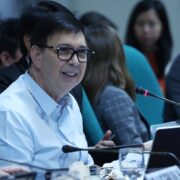

Myrna Siose: Quiet force behind ancestral land fight in Mindanao

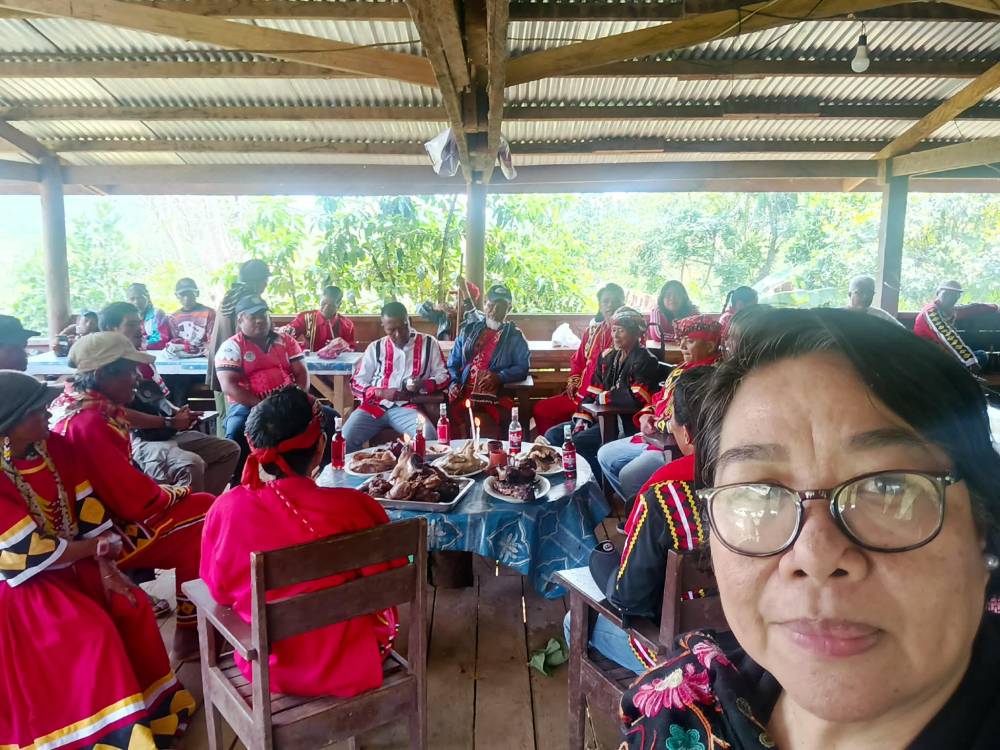
The dust had barely settled on the makeshift tents along the national highway when gunfire rang out.
It was April 19, 2022, in Quezon town, Bukidnon. The Manobo-Pulangiyon tribe, displaced for several years, had gathered the courage to finally step onto a fraction of their 1,000-hectare ancestral land.
Among those who accompanied them was labor leader Leody de Guzman, then a presidential candidate. He aimed to shine a national spotlight on the dialogue with the company occupying the land. But instead of a dialogue, they were met with bullets.
Armed guards opened fire on the indigenous group and their supporters. Amid the chaos and the scramble for cover, a shout rang out from the guards: “Mga NPA na sila (They are New People’s Army rebels).”
Immediately, the state forces who were supposed to mediate the proceedings vanished. “The soldiers and police suddenly left,” Myrna Siose recalled.
In the immediate aftermath, the narrative was quickly hijacked.
The “lumad” (indigenous peoples), fighting for land taken from them since the 1930s, were Red-tagged, their decades-old tenurial dispute painted as part of the insurgency.
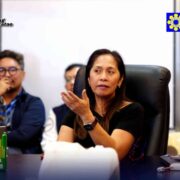
Watching from the periphery, Siose knew this was just another violent chapter in a systemic war against the powerless. But Siose does not fight with guns. She fights with paperwork, community organizing, and an unyielding demand for accountability.
“This advocacy is rights-based,” she said, her voice carrying a quiet but undeniable gravity. “This is not rebellion.”
Far from spotlight
For nearly 50 years, the Zamboanga del Sur native has operated far from the spotlight.
“All these years, I’ve made sure I stayed in the background,” Siose said.
Her life’s vocation began in 1974, before she even understood the academic terms for “structural inequality.” A young Siose was already holding teach-ins for illiterate lumad in her Jesuit-run parish.
That time, local elections were approaching and she wanted to ensure they would not be exploited or tricked into voting against their interests simply because they could not read the ballots.
“I was too young then to realize I was already doing teach-ins, capacity-building, and organizing. This started my involvement with the lumads,” Siose, now 64, told the Inquirer.
Two years later, in 1976, as a high school sophomore navigating the dark, stifling climate of martial law, her eyes were fully opened after she attended a five-day seminar that introduced her to the structural approach to understanding poverty.
It was an awakening. The poverty of indigenous peoples was not an accident of fate; it was by design.
The transition to a full-fledged community organizer was sparked by her time with the civic group Jesuit Volunteers Philippines (JVP) while she was stationed in her hometown, in the heart of marginalized lumad communities.
Living among indigenous peoples, she witnessed firsthand the gaps in basic social services and the daily injustices they endured.
For Siose, JVP was not merely a stepping stone or a temporary postgraduate immersion. It was the furnace where her life’s work was forged.
“In nongovernment organizations, there’s always an ‘extra mile,’” she said.
Definitive calling
This period cemented her belief that structural change requires a constant, dedicated presence. She found her definitive calling—not just to serve, but also to multiply that service by training young people to be “men and women for others” who could fill the massive gaps in governance.
Following the 1986 Edsa People Power Revolution, the country was euphoric but fragile. Amid this volatility, Siose found herself at Xavier University (XU)-Ateneo de Cagayan conceiving a program to make the youth understand the democratization struggle beyond the classroom, by embedding social involvement in the university’s DNA. Jesuit priest Miguel Varela agreed on the condition that the program be named in Binisaya.
Thus, the Kristohanong Katilingban sa Pagpakabana (KKP) was born.
“I set it up in 1986. XU is the community. Since we are Christians, we should care. And if you care, you will also act for human rights,” Siose explained.
Guided by her experience as a Jesuit volunteer, she helped establish the Post-College Volunteer Program, a formal training initiative preparing university graduates to undertake community organizing and community development work in rural areas facing socioeconomic and political challenges through a Year of Service (YOS).
When the expansion of agricultural plantations threatened local farmers during the early days of the Comprehensive Agrarian Reform Program, Siose and her students were there.
They organized a movement to stop the unregulated entry and acquisition by multinational giants of local farms, proving that the university had become a center of political education in Northern Mindanao.
“This is it,” she said of those days. “Faith that fights for justice.”

Brush with Reds
“When you spend your life working with the disenfranchised—the ‘last, the least, and those who are not in the list’—the line between legal advocacy and armed struggle often blurs for those pushed to the brink,” Siose added.
She understands the allure of taking up arms, as her college friends and classmates, frustrated by the slow pace of justice, headed to the mountains and joined the underground communist movement.
Siose holds no malice toward them. But she chose to carve a different path—one anchored in the belief that institutions, no matter how broken, must be forced to work for the people.
“I can do service to the community without waging a war against the government,” she said.
Today, Siose’s arena is the labyrinthine government bureaucracy, as head of the secretariat of a group of Church and civil society organizations that support indigenous peoples and farmers working to address tenurial issues.
Pushing for registration of the land in Bukidnon where the lumad remain locked out fills much of her time and attention, especially since the tribe’s ancestral land supposedly overlapped with land awards granted by the Department of Agrarian Reform (DAR). Realizing that government agencies were operating in silos, she orchestrated a masterclass in applying social pressure on bureaucratic lethargy.
Siose pooled legal minds from nongovernment group Balaod Mindanaw and dragged the DAR, the Department of Environment and Natural Resources (DENR), and the Land Registration Authority (LRA) to the table.
“At the end of the day, we know that DENR has a map of all these lands,” she said.
Table for powerless
Through sheer tenacity, they narrowed down the verified area to 696 hectares currently undergoing LRA registration. By next month, a newly formed technical working group involving the military, police, and land agencies will finally sit down to untangle the conflicting claims.
“Bukidnon is not an isolated issue of land conflict, but we hope this attempt at resolving conflict through a structural and nonviolent approach could become a breakthrough that would be helpful in similar situations,” Siose said.
As she navigates the halls of the LRA in Manila, fighting for the final push, she finds a poetic full-circle moment. Many of the bureaucrats she now coordinates with—from the National Anti-Poverty Commission to the Department of Agriculture—are alumni of the very YOS volunteer program she founded decades ago.
“I think this is not an accident,” Siose said, smiling.
She had spent 35 years training volunteers, creating a legion of advocates scattered across the country, transforming them from outsider activists into insider allies.
True power, Siose has proven, is not about sitting at the head of the table. It is about building the table, pulling up chairs for the powerless, and teaching the next generation to hold the line.