











Northern Mindanao workers to get higher wages in 2026

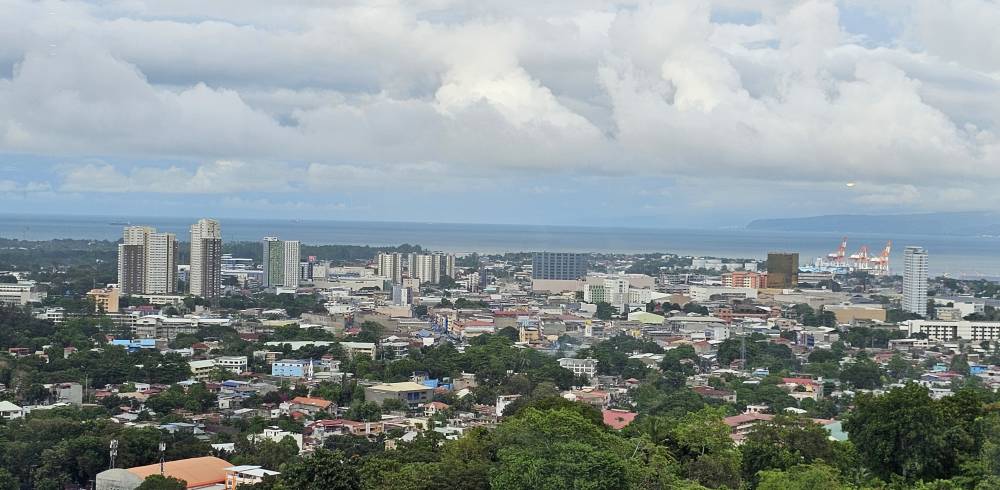
Private sector workers in Northern Mindanao will receive higher daily wages in mid-January, according to the Department of Labor and Employment (Dole).
In a news release on Wednesday, Dole announced that the National Wages and Productivity Commission (NWPC), in its Dec. 22 meeting, affirmed Wage Order No. RX-24 granting an increase of P39 in wages in the nonagriculture and agriculture sectors, bringing the daily minimum wage rates in the region to P485 (under Wage Category I) to P500 (Wage Category II).
The increase will be given in two tranches: a P25 increase on Jan. 16, and another P14 on May 1.
Wage Category I includes the cities of Cagayan de Oro, Iligan, Malaybalay, Valencia, Gingoog, El Salvador, and Ozamiz and the municipalities of Tagoloan, Villanueva, Jasaan, Opol, Maramag, Quezon, Manolo Fortich, and Lugait. Wage Category II covers all other areas in Northern Mindanao not mentioned under Wage Category I, and all retail and service establishments employing not more than 10 workers.
Meanwhile, Wage Order No. RBX-DW-06 which grants a P500 monthly increase for “kasambahay” (domestic workers) across Northern Mindanao was also affirmed, bringing the monthly minimum wage of domestic workers to P6,500.
Wage Order No. RX-24 and Wage Order No. RBX-DW-06, published on Dec. 31, will take effect on Jan. 16.
The latest wage order makes Northern Mindanao the 14th and last region to approve a wage hike for private workers in the country.
Attracting investments
According to Dole, the Regional Tripartite Wages and Productivity Boards (RTWPBs) in Davao region and Bicol are expected to begin their wage adjustment processes in January and February 2026, respectively.
From January to December 2025, a total of 14 regions granted daily minimum wage hikes for private workers, ranging from P20 to P100.
However, these regional increases were lower than the P200 across the board, legislated wage raise labor groups have been asking the national government.
Meanwhile, 11 wage orders granting monthly minimum wage increases for domestic workers were also issued by RTWPBs. The increases range from P300 to P2,000 per month.
“All wage orders were issued motu proprio (on their own initiative), majority of which were issued unanimously by the concerned RTWPBs,” Dole said.
“The wage increases were made to take effect after the anniversary date of the previous wage orders to reinforce policy stability that helps create an environment attractive to investments, which are needed to generate more decent, remunerative and productive employment,” it added.
The National Capital Region remains the region with the highest daily minimum wage rate ranging from P658 to P695 for workers in private establishments.
On the contrary, workers in Soccsksargen (South Cotabato, Cotabato, Sultan Kudarat, Sarangani and General Santos) receive the lowest minimum wage ranging from P443 to P460, despite a P30 to P33 two-tranche hike effective in November.

According to Dole, more than 4.5 million minimum wage earners in the private sector, along with 755,000 domestic workers, benefitted from the wage orders issued by the RTWPBs in 2025.
Wage orders were issued in consultation with workers and employers to ensure balance between protection and needs, reasonable returns on investments and employment generation.
Wage disparities
In addition, about 8 million full-time wage and salary workers earning above the minimum wage are also expected to indirectly benefit from wage adjustments at the enterprise level, arising from the correction of wage distortions.
On Labor Day last year, President Marcos ordered the RTWPBs to review their respective regional minimum wage rates. The RTWPBs, composed of representatives from the government, management, and labor sectors, conduct consultations and a public hearing in their respective regions as part of the minimum wage determination process.
Labor groups and several lawmakers have been pushing to abolish the RTWPBs to establish a single, unified national minimum wage. They argued that the current system, which employs a “provincial rate” in salaries, causes wage disparities and fails to meet living costs.
Dole, through the NWPC, also reiterated the guidelines that provide for an exemption mechanism for calamity-affected enterprises following the several typhoons that hit the country and caused significant challenges to businesses in affected areas.
Enterprises may inquire and apply through the RTWPB with jurisdiction over their business areas whether they may be eligible for a full exemption or for a specific minimum wage tranche, if any.