
Number-crunching P-Noy got cozy with journalists

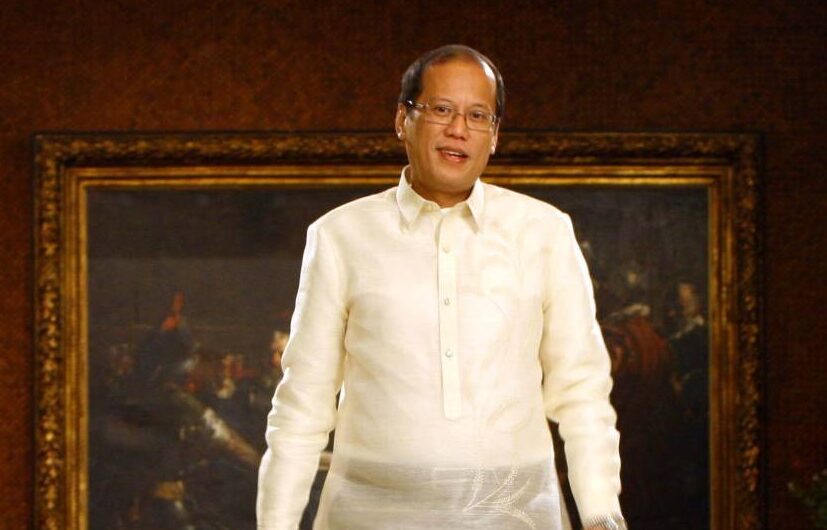
Then President Benigno “P-Noy” Aquino III had a penchant for soliciting questions from reporters prior to a briefing in Malacañang or during out-of-town coverages.
It was perfectly understandable: he wanted to get his facts right before any of us could shoot the first question, and rightly so. His meticulousness with data—especially with numbers relating to taxpayer money or gut issues—was the stuff of legend among his Cabinet officials, presidential staff and speechwriters.
It came with the territory. And we, the Inquirer reporters, just had to be on our toes, or at least prepare a mental list of our questions about the day’s headlines, policies and, to lighten up the mood, even about the fiftysomething bachelor’s “love life.”
‘Kayo ang boss ko’
“Kayo ang boss ko!” he thundered in his inaugural address in Manila on June 30, 2010. It was a vow to the Filipino people that he said he was determined to keep until he stepped down six years later.
He set the tone on his first day in office when he banned “wangwang” (car sirens) to show his intolerance for abuse of authority. Two months later, demonstrating his demand for competence from government officials, he fired the weather bureau chief over the inaccurate forecast of a destructive typhoon’s path.
During a break while on a visit to New York City to attend the United Nations general assembly in September, he treated some Cabinet members on his entourage, some reporters and his security escorts to a sidewalk lunch of hot dog sandwiches and drinks. The total bill: $54.
Aquino seemed always eager to face the media, whether inside a public school gymnasium crammed with evacuees in the middle of a storm, on a presidential plane on his way to visit a foreign country, or in a hotel function room at the close of an Association of Southeast Asian Nations (Asean) summit.
He made time for journalists, especially to convey urgent messages to the public. Every now and then, however, he would rant about their “penchant to highlight negative reports.”
We believe Aquino tried to be square with journalists, not least because he treated some as friends from way back to his days as Tarlac congressman.
They called him ‘Noy’
At the House of Representatives in Quezon City, he would flit in and out of the press office on the left wing of the plenary hall where reporters hang out and work, often with a can of soda in hand, to banter with the rambunctious bunch, swapping jokes and slapping backs. They were close; they called him “Noy.”
It didn’t come as a surprise then that after his successful, exhilarating run for the presidency in May 2010, he brought with him a tabloid reporter—known for his deadpan humor—to Malacañang to serve as his assistant press secretary whose job included relaying the President’s requests for prebriefing questions from reporters. On occasion, he was also a kind of jester plus more in the pressure cooker that was and still is Malacañang.
Dictates of diplomacy
But Aquino’s apparent transparency with the local press was sometimes limited by the dictates of diplomacy.
On the plane during Aquino’s visit to Canada in May 2015, reporters received a request from Canadian protocol officers, through their Filipino counterparts, not to raise a stink about the cargo of trash (that Ottawa sent to Manila two years earlier) during Aquino’s joint briefing with Prime Minister Stephen Harper in Parliament Hill in Ottawa.
The President didn’t push the envelope with his host. “I think, before we left Manila, this was already prepared by the relevant agencies tasked to examine the problem,” he explained later to reporters. We never got to ask our question about the trash, but we didn’t sulk in a corner either. We dispatched our story to the newsroom in Manila with this lead: “It was the smelly elephant in the room that nobody wanted to acknowledge.”
‘Kanlungan’
That three-day visit actually started off refreshingly well, with Aquino planting a red spruce on the picturesque, sprawling grounds of the Governor General’s official residence in Ottawa, next to the taller red maple planted 26 years earlier by his mother, the late President Corazon Aquino. It also ended well, with the President’s friend, folk singer-composer Noel Cabangon performing his nostalgic and poignant signature song “Kanlungan” before misty-eyed members of the Filipino community in Vancouver.
There was one event during another foreign trip where Aquino showed national interest mattered more than pleasing one’s neighbor in the region. During an Asean summit, reporters were allowed to listen in to a plenary session and witnessed the President dispute then Cambodian Prime Minister Hun Sen’s claim that member countries had reached a consensus on the West Philippine Sea conflict. They really had not, he said. As a result of his intervention, Asean issued a joint communique excluding Hun Sen’s remarks.
Distraction from GMA
There was another unforgettable Asean summit, this time in Bali, Indonesia, in November 2011, where a domestic matter distracted the President. He not only arrived late for the plenary session, but also skipped a bilateral meeting with then United Nations Secretary General Ban Ki-moon, and the gala dinner with world leaders that included then US President Barack Obama. The reason: he was dealing with a crisis in Manila. Former President Gloria Macapagal-Arroyo, in a wheelchair wearing neck braces, was being barred at Manila’s airport from flying to Singapore for a medical treatment despite a Supreme Court order allowing her to travel. Then Justice Secretary Leila de Lima insisted that the travel ban on Arroyo and her husband should stay until the high court ruled on the justice department’s motion for reconsideration.
As the drama played out in Manila, we caught up with then Foreign Secretary Albert del Rosario at the summit venue and asked him about Aquino’s absence in some events. We couldn’t recall his exact words now, but he sounded very disappointed about it.

From rats to ‘vin d’honneur’
As we often tell younger Inquirer reporters covering their first Asean summit, it pays to be always at the “scene of the crime,” as it were, to catch the nuances of a developing story instead of staying inside press rooms just waiting for briefings from spokespersons.
Covering Malacañang of the Aquino presidency went like clockwork. For security reasons, reporters would be herded from the press office at the New Executive Building or NEB to Malacañang Palace next door to cover a host of events, from presidential, to Cabinet meetings, and to the vin d’honneur reception for foreign dignitaries at the start of a new year. The NEB didn’t only serve security screenings or press briefings. It seemed like home to huge rats that reporters saw scurrying across its parquet floor, curiously stopping suddenly to stare back at them before disappearing.
Defining moments
There were red-carpet arrival honors for visiting heads of states on the grounds outside the Palace under the century-old Balete tree, with cannon booms or rifle fire welcoming them. There was pomp, and there were defining, historic events.
We remember covering the signing of the peace agreement between the Philippine government and the Moro Islamic Liberation Front on March 27, 2014, which formally ended the Muslim separatist rebellion and carved a new Bangsamoro region in Mindanao.
Malacañang’s grounds were crawling with foreign dignitaries from Saudi Arabia, Libya, Turkiye, Malaysia and the United Nations, rebel leaders and peace negotiators. The atmosphere was festive and Aquino was exuberant. It was one of the biggest achievements of his administration, along with the 2016 arbitral ruling that invalidated China’s claims in the South China Sea.
Dark moments, too
But there were some dark moments. In his presidency, Aquino had his share of crises, too—the Rizal Park hostage-taking on Aug. 23, 2010, that ended with eight Hong Kong tourists killed; Interior Secretary Jesse Robredo’s death in a plane crash on Aug. 18, 2012, and the death of 44 Special Action Force police commandos in a Jan. 25, 2015, operation to capture a foreign and a local terrorist in Mamasapano, Maguindanao.
In the latter, Aquino was skewered not only for the national police’s failure to coordinate the mission with the military ahead of time, but for his decision to skip arrival honors for the slain commandos at Villamor Air Base in favor of the launch of a car manufacturing plant.
An official offered this explanation: “He knew the emotions were very raw. When his dad (Benigno “Ninoy” Aquino Jr.) was assassinated, he practically never had a private moment with his remains. He didn’t have time to cry alone … So when attending wakes, he’d allow grieving people their time. He knew how it was.”
It was a moment of reckoning for a numbers-obsessed President, who was conscious about growing the economy, keeping government expenses to the bare minimum—and saving lives during storms.