









Oil and gas prices rapidly rise

NEW YORK—The price of oil surged higher and showed no signs of halting its rapid climb a week after the United States and Israel launched major attacks on Iran that escalated into a war in the Middle East.
The conflict, in which nearly every country in the Middle East has sustained damage from missiles or drone strikes, has left ships that carry roughly 20 million barrels of oil a day stranded in the Persian Gulf, unable to safely pass through the Strait of Hormuz, the narrow mouth of the Gulf that is bordered on its north side by Iran.
The disruption and damage to key oil and gas facilities in the Middle East has led to an interruption in the supply of oil and gas.
Oil prices surpassed $90 a barrel on Friday, with American crude settling at $90.90, up 36 percent from a week ago and Brent, the international standard, climbing 27 percent over the course of the week to land at $92.69.
‘It’s crazy’
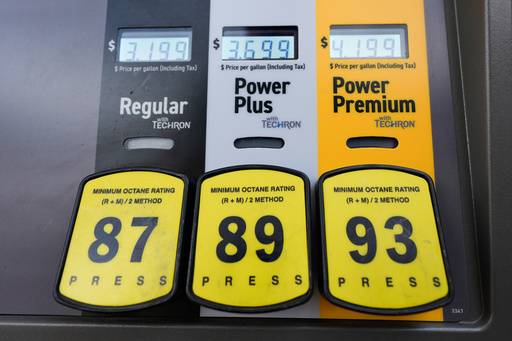
The fallout is ratcheting up what consumers and businesses will pay for gasoline, diesel and jet fuel, with some drivers already feeling it at the pump.
“It’s crazy. It’s not needed, especially at a time when people are already struggling, but not unexpected from all this turmoil that’s going on,” said Mark Doran, who was pumping gas in Middlebury, Vermont, on Friday. “I don’t think there’s been an end in sight to any Middle East conflict that’s been started by us, so the fact that they say that there’s going to be an end that quickly is not believable and the Middle East is, you know, a place that the US is not going to solve.”
On Monday, President Donald Trump said that the United States expected its military operations against Iran to last four to five weeks but has “ the capability to go far longer.” And on Friday, Trump appeared to rule out talks with Iran absent its “unconditional surrender.”
“The more news we get, the more it seems like this is going to last a really long time,” said Al Salazar, head of macro oil and gas research at Enverus.
Price shocks
In the United States, a gallon of regular gasoline rose to $3.32 on Friday, up 11 percent from a week ago, according to the AAA motor club. Diesel was selling for $4.33 a gallon on Friday, up 15 percent from a week ago.

The price shocks were felt even more heavily in Europe and Asia, markets that rely more heavily on energy supplies from the Middle East. Diesel prices doubled in Europe and jet fuel prices rose by close to 200 percent in Asia, according to Claudio Galimberti, chief economist at Rystad Energy.
Energy prices climbed throughout the week as Iran launched a series of retaliatory attacks, including a drone strike on the US Embassy in Saudi Arabia and the conflict widened. Iran also hit a major refinery in Saudi Arabia and a liquefied natural gas (LNG) facility in Qatar, halting flows of refined products and taking about 20 percent of the world’s LNG supply offline.
‘Extreme deficit’
“We keep seeing news of vessels being hit or refineries or pipelines, so the list is very long,” Galimberti said. As a result, roughly 9 million barrels of oil per day are off the market because of facilities being hit or producers taking precautionary measures, he said. “Right now, with all of this shut in, we are in a situation of extreme deficit.”
The United States is a net exporter of oil, but that does not mean it is immune to increases in the price of oil or gasoline or that its producers can just make up the difference.