










‘Oil shock’ subsidies set for farmers, drivers

Key government agencies are set to give subsidies to agricultural workers and public utility drivers to help them cope with the expected increase in fuel prices arising from the escalating tensions in the Middle East.
The Department of Trade and Industry (DTI) is also meeting with manufacturers to discuss the possibility of holding prices of essential goods at current levels to help consumers.
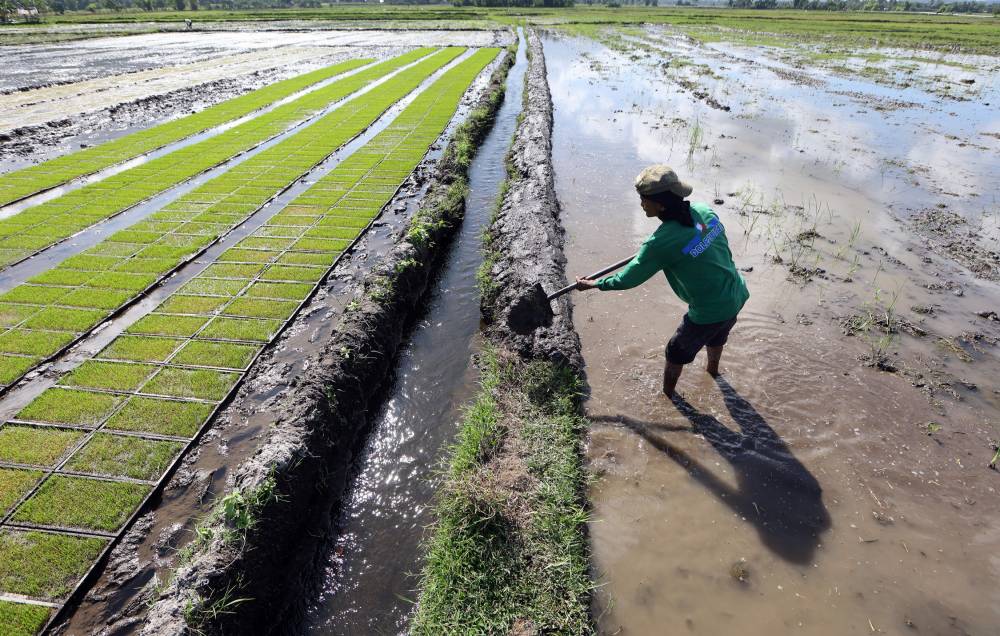
The Department of Agriculture (DA) on Wednesday said it is prepared to provide up to P150 million worth of fuel subsidies to some 25,500 eligible fishers and farmers nationwide.
“This is what we can immediately distribute to our farmers and fisherfolk who may be affected if the problem in the Middle East continues,” Agriculture Assistant Secretary Arnel de Mesa said in a press briefing. “Anytime, we can release the [subsidy] funds.”
The agriculture official said the agency has P100 million in fuel subsidies available for immediate disbursement, while the Department of Budget and Management (DBM) will release an additional P50 million once global oil prices rise significantly.
De Mesa explained that the DBM will release the money after the initial P100 million in subsidy funding has been distributed and crude oil prices reach or exceed $80 per barrel.
The DA also assured the public of stable rice supply and prices despite the intensified conflict in the Middle East, owing to its sufficient stocks.
Beneficiaries
According to the DA’s master list, 9,700 farmers and 15,800 fishers are qualified to receive financial assistance and De Mesa said the agency would prioritize those who have not received any subsidy in the past years.
Under the DA’s existing guidelines, qualified fisherfolk will receive P3,000 each, while eligible farmers will get P5,000 each.
The one-time fuel assistance is provided to farmers and fisherfolk who own or rent agricultural machinery or equipment for their fishing or farming operations, are duly registered under the Registry System for Basic Sectors in Agriculture, and use agricultural machines or equipment that are not harmful to the environment.
Beneficiaries will receive a fuel assistance card loaded with a fixed amount to buy fuel at accredited fuel stations.
In the case of farmers or fishers situated in far-flung areas, fuel vouchers will be given.
On Tuesday, oil companies jacked up prices of diesel and kerosene by P1.20 and P1.50 per liter, respectively, marking the 10th consecutive price hike for diesel. Gasoline rose by P1.90 per liter, the eighth consecutive week of price increases.
The Department of Energy earlier said it would ask industry players to stagger local pump price increases if fuel import costs continue to surge due to the conflict in the Middle East.
PUV drivers
Meanwhile, the Land Transportation, Franchising and Regulatory Board (LTFRB) on Wednesday said it has allotted P2.5 billion for the possible implementation of a fuel subsidy program to help public utility vehicle (PUV) drivers cope with the rising fuel prices due to the Middle East conflict.
In a Facebook post, LTFRB Chair Vigor Mendoza II said the budget should be enough to implement the program for more than a month, but did not give an amount of fuel subsidy each PUV driver may receive, saying there is still no final decision on the matter.
Among the expected beneficiaries are drivers of modern and traditional jeepneys, UV express and transport network vehicle services.
Tricycle drivers will have to rely on assistance from their respective local government units, according to the LTFRB.
The agency urged qualified beneficiaries to ensure that their fuel subsidy cards remain active.
Those with missing, expired or inactive cards may coordinate with the Land Bank of the Philippines to validate or replace their card, the LTFRB said in an advisory on Tuesday.
Beneficiaries were asked to immediately resolve missing or inactive cards in order to avoid delays once the fuel subsidy program is implemented.
Mendoza also reminded drivers and operators that the fuel subsidy cannot be withdrawn as cash.

Price freeze
The DTI said it is consulting manufacturers on the potential price impact of the Middle East conflict, which threatens to push up fuel prices and, in turn, production costs.
Trade Secretary Cristina Roque said on Wednesday that discussions with industry players were underway as the government assesses the potential impact of the crisis on consumer prices.
Even before the latest escalation, the DTI had scheduled a meeting of the National Price Coordinating Council on March 13, according to Steven Cua, president of the Philippine Amalgamated Supermarkets Association.
Roque said most goods currently being sold in the market were manufactured before tensions flared in the Middle East on Feb. 28, when the United States and Israel carried out joint strikes on Iran.
The conflict has since prompted several airspace closures, disrupting international travel, including flights to and from the Philippines, while authorities weigh possible interventions such as cutting fuel taxes and adjusting public transport fares.
For now, Roque said manufacturers have not requested price increases and there has been no movement to raise prices.
She added that the government will urge manufacturers to hold prices steady during the crisis.
In a message to the Inquirer, Cua said another round of price freezes could be considered, but urged the DTI to give manufacturers at least a seven-day window to adjust prices before imposing such a policy.
Business groups have earlier called on the government to adopt protective measures to shield the economy from potential spillover effects of the Middle East conflict.
In a statement on Monday, the Philippine Chamber of Commerce and Industry urged authorities to implement measures such as buffer stocking and price monitoring to ensure adequate supply of basic goods.