








Oil spike may raise power rates by up to P4 per KwH

BAGUIO CITY—Filipinos may face further financial stress next month as the prices of electricity traded at the spot market may climb by as much as P4 per kilowatt hour (kWh) amid the ongoing war in the Middle East.
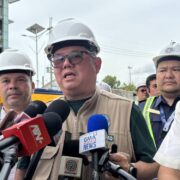
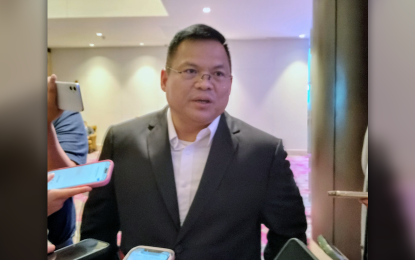
Speaking to reporters on Thursday, Energy Regulatory Commission (ERC) chair and CEO Francis Saturnino Juan said simulations conducted by the Independent Electricity Market Operator of the Philippines (IEMOP) based on the trend in fuel prices showed a potential increase of P2 to P4 per kWh.
Aside from the impact of the attacks in the major oil-producing region, higher demand during the hotter months and possible power plant outages were considered in the stress test.
According to IEMOP, it used established global commodity benchmarks as of March 9, reflecting costlier coal, natural gas and oil.
Cost recovery
The simulation showed that with the jump in fuel expenses, thermal generators are expected to subsequently hike their prices as part of cost recovery.
IEMOP is the operator of WESM, an avenue where power is traded between producers and distributors to boost their supply.
“Remember, whatever the movement in prices in WESM is, it doesn’t necessarily translate one-is-to-one to our generation price. It still depends on how exposed the utilities are to WESM. That’s why we also monitor their level of exposure,” Juan said on the sidelines of the Philippine Electric Power Industry Forum in Baguio City.
“If their WESM exposure is large and the increases reach that level, they will bear the brunt of it. But if they are sufficiently contracted under power supply agreements—especially those that are financial in nature and do not have fuel pass-through or automatic fuel pass-through—then at least their generation cost will remain relatively stable,” he added.
Department of Energy (DOE) Secretary Sharon Garin said earlier that the geopolitical tension could result in about a 16-percent increase in electricity rates.
Meralco consumers
Officials from the Manila Electric Co. (Meralco), the largest power distributor, also said consumers may have to shell out more money next month to settle their electricity bills.
Although the conflict’s impact has yet to be factored in, more than eight million Meralco consumers will see power rates go up by 64 centavos kWh this March.
The ERC, however, said last week that regulatory safeguards and market protection mechanisms are in place to shield consumers from swelling power prices.
This includes the secondary price cap, which functions as a preemptive safeguard in the spot market and is designed to prevent sustained price surges during periods of tight supply.
Last month, spot power prices dipped by 1.8 percent to P3.50 per kWh from January’s P3.56 per kWh driven by a stronger electricity buffer built during the period.
Offers coming in
In a related development, Garin said offers are already coming in from potential suppliers of petroleum products after President Marcos pushed for exploring new markets.
She said they are working closely with the Department of Foreign Affairs to help the agency connect with oil producers.
“I think that’s a good thing that the President directed to actively proactively find alternatives because now that the government is involved, there’s more weight on our offers,” she said in a television interview on Wednesday night.
“They pay more attention if it’s a government looking for a supply. So the offers are coming in,” Garin added.
The energy secretary hopes deals will be sealed soon “to make sure that we have deliveries by April.”
On top of government efforts, local oil firms have also begun their search to boost their inventory.
She, however, did not specify the identities of the possible new suppliers.
Data from the DOE showed that 97 percent of imports of liquid petroleum products—such as diesel, gasoline and kerosene—are from Asian countries.
However, Garin earlier said that although the majority of supply comes from neighboring countries, the crude oil they use is still sourced from other nations, including those in the Middle East.
******
Get real-time news updates: inqnews.net/inqviber