







P3-M abaca revival program launched in Southern Leyte

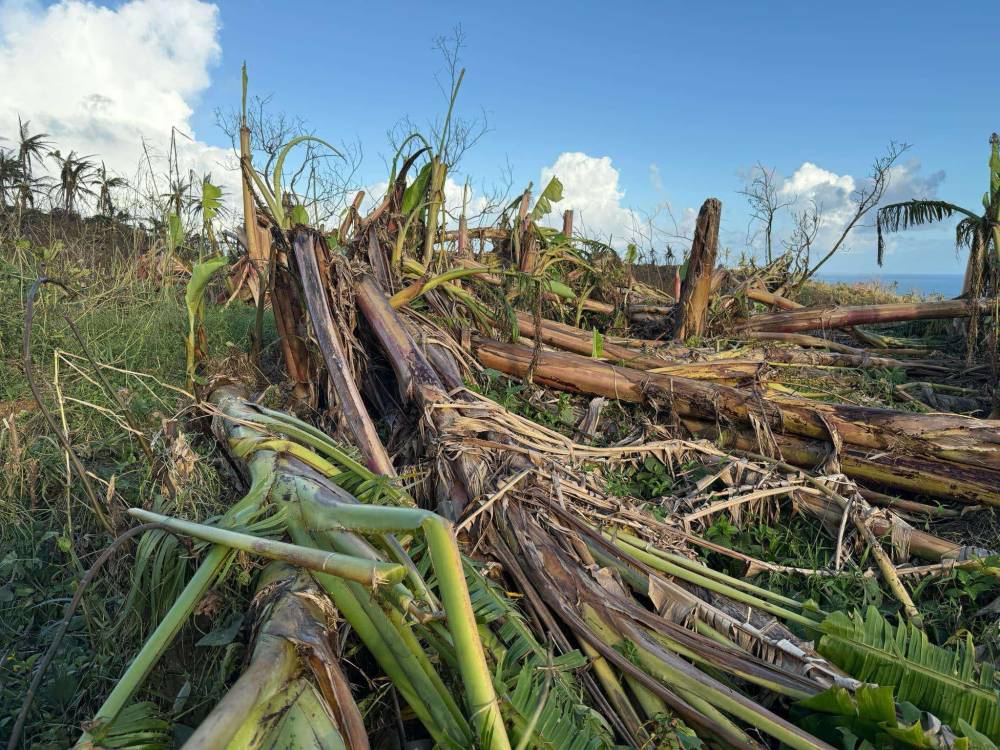
TACLOBAN CITY—The provincial government of Southern Leyte has launched a P3-million program to rehabilitate abaca farms damaged by disease over the past decade.
The “Rehabilitation/Replanting of Damaged Abaca Project” will cover 16 local government units (LGUs), including Maasin City, and the towns of Malitbog, Tomas Oppus, Bontoc, Padre Burgos, Sogod, Libagon, St. Bernard, Hinunangan, Silago, Anahawan, Hinundayan, Lilo-an, San Francisco, San Ricardo and Pintuyan.
Launched on Feb. 20, the program is spearheaded by the Provincial Agricultural Services Office in partnership with the Philippine Fiber Industry Development Authority Region 8, LGUs and selected farmers.
The initiative aims to address the lingering effects of the abaca bunchy top virus (ABTV), which decimated plantations from 2007 to 2020.
Transmitted by aphids, the virus stunts plant growth and sharply reduces fiber yields, threatening farmers who rely on abaca—also known as Manila hemp—for rope-making, specialty paper, textiles and other high-value products.
Disease management
Under the program, strict disease management and maintenance measures will keep ABTV incidence below 5 percent.
The fund will provide 33,333 locally sourced abaca suckers at P90 each, distributed to farmers chosen through a prelisting and masterlisting process. Selection will consider farm readiness, approved project allocations and farmers’ compliance with monitoring requirements.

Distribution will follow the availability of planting materials and geotagged farm preparation.
Local government technicians will monitor compliance and submit geotagged photos of planted areas, with P10 per sucker released upon verification.
Officials said the program aims to restore farmer confidence, prevent future outbreaks and position Southern Leyte as a sustainable and competitive abaca producer in Eastern Visayas.