






P6.793-T budget awaits President’s signature after Senate, House OK

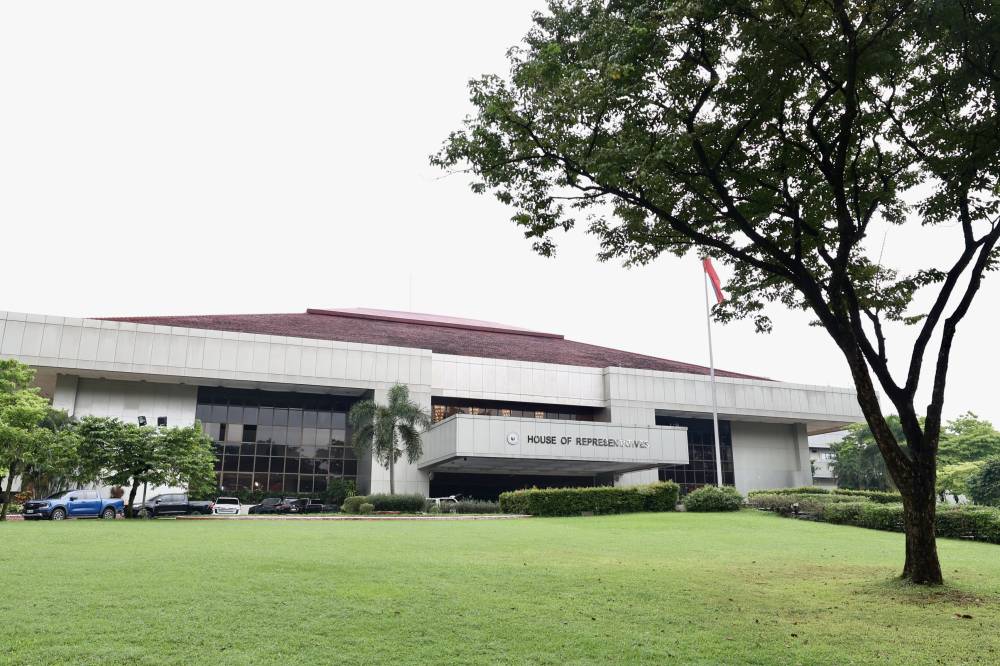
The Senate and the House of Representatives on Monday ratified the bicameral conference committee report on the proposed P6.793-trillion national budget for 2026, with some lawmakers expressing reservations over some financial assistance programs that may be used for political patronage.
The budget measure now awaits the signature of President Marcos, who is facing the biggest crisis of his administration yet stemming from the alleged collusion among senators, congressmen, public works officials and private contractors to siphon off billions of pesos from public works projects.
Senate President Pro Tempore Panfilo Lacson cast his affirmative vote to ratify the 2026 national budget “but with a strong reservation due to items that keep the door open to potential political patronage.”
No safeguards
Lacson cited the “absence of institutional safeguards” in the implementation of Medical Assistance to Indigent, Financially Incapacitated Patients (Maifip), Assistance to Individuals in Crisis Situation (AICS), and other social welfare programs from the interference of officials and politicians.
These assistance programs are “discretionary and duplicative of institutionalized and rules-based programs, and other similar budget items that lack agency requests,” he said.
“The national budget must not be a political tool or spoils for those in power. We deserve a budget that truly serves the people, free from political exploitation,” the senator said.
Sen. JV Ejercito also aired a similar reservation in voting for the ratification of the bicameral report.
Lacson and Ejercito had earlier flagged the steep rise in the Maifip funding from P24.23 billion under the National Expenditure Program to P51.6 billion in the bicameral version, saying this risked turning access to health care into a politically mediated process. The program allows politicians to issue guarantee letters to indigent patients.
‘Impunity’
Senators Rodante Marcoleta and Robinhood Padilla voted “no” to the ratification of the bicameral report, while their colleagues in the minority bloc—Senators Ronald dela Rosa, Christopher Go and Imee Marcos did not sign the report.
Marcoleta said his “no” vote was anchored on concrete audit findings, fiscal patterns, and policy distortions surrounding various financial assistance programs.
“We are expanding both the soft channels of political patronage and the fiscal backdoors that allow them to be financed, all while claiming to pursue reform and discipline. This is impunity,” he said.
With the ratification, Sen. Sherwin Gatchalian, who shepherded the measure as chair of the Senate finance committee, said the country was now one step closer to the enactment of landmark “people-first” budget legislation that seeks to prioritize education, health and agriculture.
‘Serious reservations’
The House ratified the report viva voce, with Speaker Faustino “Bojie” Dy III calling it a pioneering piece of legislation.
The fund increases for identified priority sectors were sourced from reductions in the proposed budget of the Department of Public Works and Highways (DPWH) amid the flood control mess.

Sen. Francis Pangilinan voted “yes with reservations” on the ratification of the bicameral report, but asked the President to veto a provision that would allow the Department of Agriculture (DA) to enter into agreements with the DPWH for the implementation of the P33-billion farm-to-market road (FMR) program.
Pangilinan said the law is clear on this. He cited the Agriculture and Fisheries Modernization Act, which provides that planning and prioritizing FMRs fall under the DA in coordination with local governments, farmers and fisherfolk.
Sen. Risa Hontiveros voted “yes” for the ratification of the report, but manifested “serious reservations” about unprogrammed appropriations, among others.
“It is very unfortunate that some of the reforms we are pushing for, including an overwhelming cut in unprogrammed funds, are not carried in this budget. Still, it is an improvement that the bicam version includes safeguards aimed at preventing unprogrammed funds from becoming slush funds,” she said.
Universal health care
Sen. Loren Legarda, for her part, also voted for the ratification of the report, but expressed reservations to the government’s failure to remit legally mandated sin tax revenues of the Philippine Health Insurance Corp. (PhilHealth) from 2023 onward as well as statutory shares from the Philippine Charity Sweepstakes Office and Philippine Amusement and Gaming Corp. from 2019.
“This undermines the Universal Health Care Act and [delays] the transition to an institutionally guaranteed zero out-of-pocket care framework in public health facilities,” she said.
Padilla, for his part, cited unclear allocation for social welfare assistance programs and lack of funding for indigenous communities as his reasons for his “no” vote. —WITH REPORTS FROM CHARIE ABARCA AND PNA