










Palace, print media join forces vs fake news

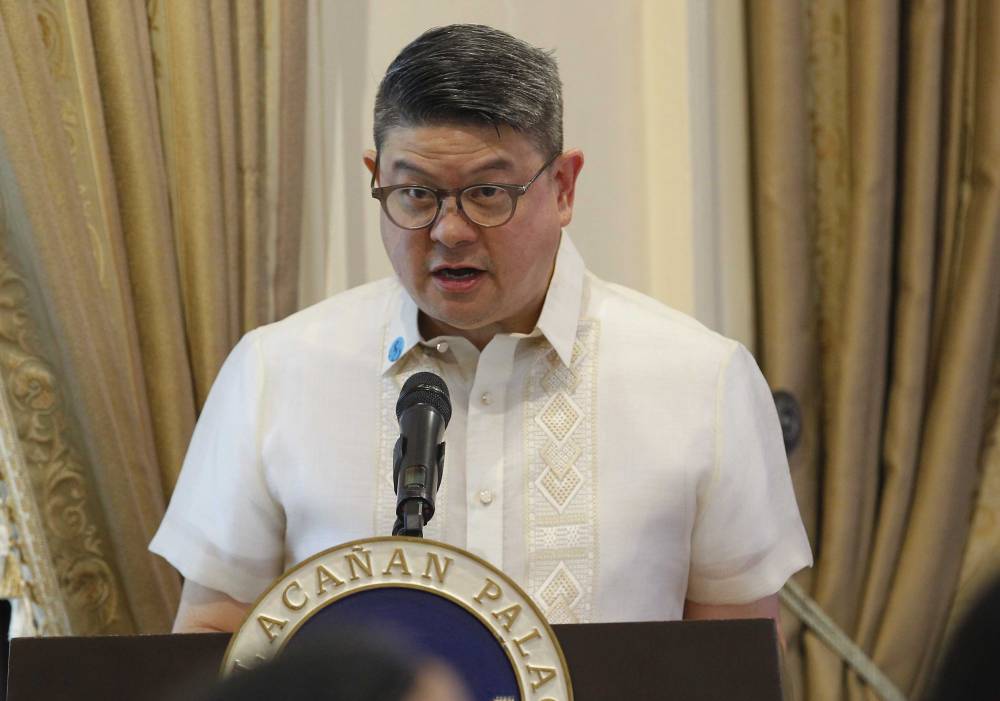
Malacañang on Wednesday joined forces with the country’s nine leading newspapers, including the Philippine Daily Inquirer, to combat “fake news” across digital and social media platforms, calling it a “poisonous” venom.
In a program held in Kalayaan Hall at the Palace, Presidential Communications Office (PCO) Secretary Dave Gomez signed a memorandum of understanding (MOU) with officials of the nine broadsheets, among them Inquirer Interactive Inc. president and CEO Paolo Prieto, in a bid to “dismantle false narratives’’ but at the same time “rebuild public trust in credible sources.”
The other newspapers are Business Mirror, BusinessWorld, Daily Tribune, Malaya Business Insight, Manila Bulletin, Manila Standard, The Manila Times and The Philippine Star.
“Together, we will enhance the spread of accurate, verified information to dismantle false narratives; rebuild and sustain public trust in credible sources; champion media literacy and critical thinking; and ensure swift responses to deceptive content,” Gomez said.
He likened fake news, disinformation and misinformation to “venom that poisons the hearts and minds” of Filipinos, endangering public welfare and undermining freedoms and institutions.
Rampant spread
“Fake news has become widespread, especially on social media, and many people are already believing it and being misled. It is time to put an end to this,” he added.
The government has been fighting against the spread of false information about President Marcos and his administration, as well as the country’s sea row with China, on digital and social media platforms such as TikTok, YouTube and Facebook.
In December, Mr. Marcos himself sought the help of journalists, saying fake news compromises not only the government but also the ability of Filipinos to make informed decisions that would benefit the country.
He admitted that the task would not be an easy one, both for the government and the media.
The partnership with print media was the first of its kind to be initiated by Malacañang, which earlier launched “Oplan Fake News” to crack down on individuals and groups peddling fake news and fabricated content that threaten public order and undermine freedoms.
‘Timely, necessary move’
Prieto called the agreement a “timely and necessary move.”
“As our nation faces political upheavals in the run-up to the 2028 elections and the unprecedented public infrastructure corruption, it is imperative that the government, through the PCO, adopts a policy of honesty and transparency toward the media without impinging on our independence and freedom of the press,” he said.
“This openness, in turn, will enable us, media organizations, to do a better job for the sake of our citizens,” Prieto added.

The Inquirer Interactive president cited various surveys in the past few years, which consistently found that the majority of Filipinos consider fake news a serious problem, but found it difficult to distinguish false from accurate information.
Antifake news desk
This became even more troubling as most Filipinos get their news mainly from social media instead of credible sources of information, including newspapers, he said.
As part of its commitment under the MOU, the PCO has set up an Anti-Fake News Desk, a dedicated mechanism where its partners and the public can report suspicious or misleading content.
“We will immediately evaluate these reports and refer them to the appropriate agencies, such as the Department of Information and Communications Technology, and the Department of Justice, among others, for prompt and proper action,” Gomez said.
He also said the PCO would go after sources of fake news on social media by working with platforms such as Meta and Google.
According to Gomez, the MOU should not be construed as a way to repress the media or prevent it from fulfilling its watchdog role in society. —WITH A REPORT FROM MARY JOY SALCEDO