







Palawan tribes seek 2 more seats in provincial board

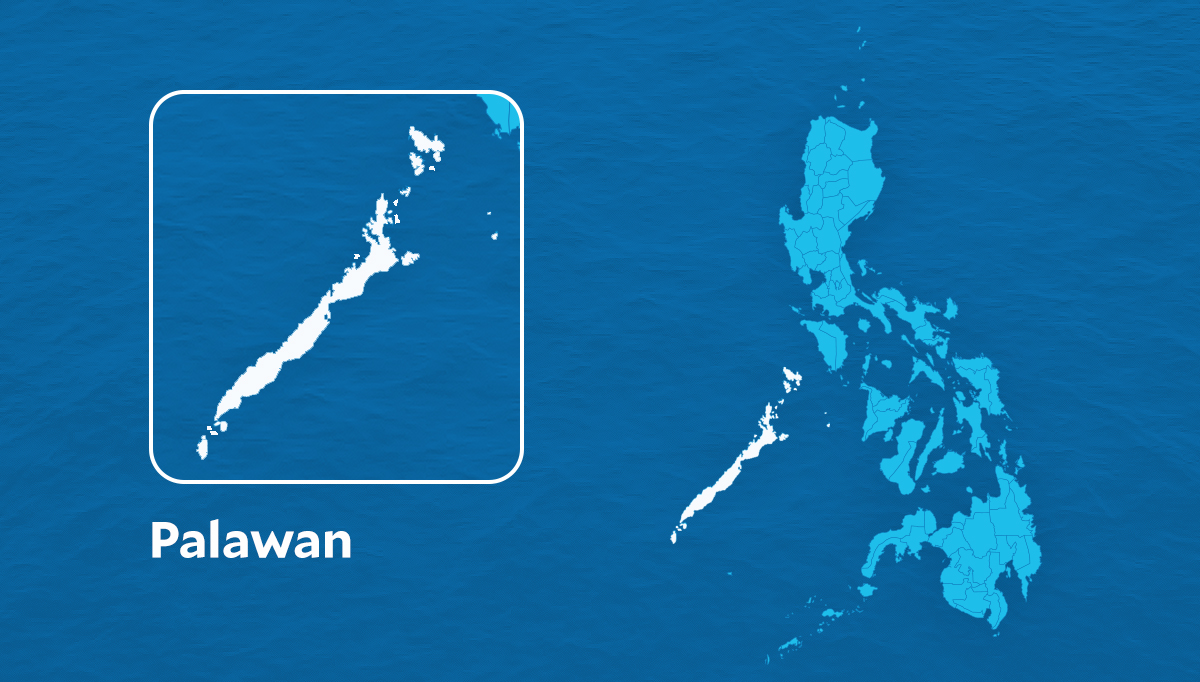
PUERTO PRINCESA CITY—Indigenous peoples (IPs) in Palawan are seeking two more seats in the provincial board via the mandatory representation for them provided by law, in a bid to amplify their voices in local policymaking.
This proposal is contained in a resolution filed by Board Member Arnel Abrina, Palawan’s IP mandatory representative (IPMR), noting that the province has at least nine tribal groups, each mostly facing challenges in their respective ancestral domain claims.
The IPMR seat is provided for in Republic Act No. 8371, or the Indigenous Peoples Rights Act of 1997, to guarantee participation of indigenous peoples in local governance, protect their rights and promote their welfare in the localities where they belong.
In his proposal, Abrina sought a clustering of the nine tribes into three groups, each having a representative who will sit as an ex-officio member of the provincial board.
Within each cluster, there will also be term-sharing where the chosen representative of each tribe will rotate in serving as IPMR.
“Based on the NCIP (National Commission on Indigenous Peoples) records, there are nine IP tribes in the province and they’re present in almost all barangays. If we look closely, the majority of the people in these barangays are IPs and they’re more aware now of their rights guaranteed under RA 8371,” Abrina said.
“In the southern part of Palawan, there are Molbog, Palaw’an and Tagbanua-Central while in the northern part, there are Batak and Tagbanua-Tandulanen in the mainland and the Tagbanua-Calamian in the Calamian Group of Islands; and in the eastern islands of the province, there are Cagayanen, Cuyonon and Agutaynen,” he added.
With nine tribal groups scattered throughout every barangay across the province, he said issues and concerns regarding indigenous political structures have become hard to identify and IP organizations are also spreading like mushrooms.
‘Bad precedent’
Abrina cited the rising number of Certificate of Ancestral Domain Title (CADT) applications that had not been acted upon, with only nine out of 167 applications having been approved so far, with many covered by overlapping claims.
The proposal, however, was opposed by other board members, who said it could set a dangerous precedent, and that there were other sectors, too, that needed representation.

Board Member Ferdinand Zaballa said that the NCIP should get more involved in resolving the Palawan IP issues particularly on their CADT applications.
“According to the law that mandates [IP] representation, there is only one [IP mandatory] representative. It seems that we are going over the [bounds of] law,” he said.
“We might set a bad precedent and draw strong opposition from civil society organizations, the agriculture sector, senior citizens and PWDs (persons with disability) because they do not have representatives while the IPs already have [one],” said Board Member Rafael Ortega Jr.
Board Member Ryan Maminta said the NCIP should instead adjust its bureaucratic processes to fully function and make things done for the IPs. “Until now, I have not seen any proposal that we can support and push because it is what is needed—the functionality of the NCIP,” said Maminta.