






Pangasinan town nuke plan faces backlash

(Second of three parts)
LABRADOR, PANGASINAN—Residents opposing a proposed nuclear power plant in this coastal town are looking to Sual, as a cautionary tale, where a 1,218-megawatt coal-fired plant has been running since 1999.
“They promised cheap or free electricity,” says Joel Ferrer of the Save Sual Movement. “That never happened.”
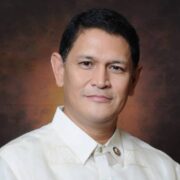
Pangasinan Rep. Mark Cojuangco had previously said nuclear power would enable Labrador residents to pay as little as P5 per kilowatt-hour, and in the future, even get it for free.
Cojuangco has championed nuclear power for 18 years, insisting it is the key to solving the country’s persistent electricity problems—issues, he says, have long discouraged investors.
He says access to nuclear power would translate into lower household bills, reduced farm and business costs and a stronger foundation for local industries.
But Labrador residents say they have learned their lesson from Sual.
“Electricity would supposedly be free or discounted. We’ve heard that before in Sual. It was promised to us,” Ferrer states.
That promise, he asserts, was broken.
“We pay the same rates as every household covered by Pangasinan Electric Cooperative I. We never benefited from lower electric bills, despite our town hosting the country’s biggest coal-fired power plant since 1999,” shares Johnny Gapuz, a Sual resident.
Residents also question the proponents’ promises of jobs for locals.
For Hipolito Mislang, 93, a farmer-leader, there may be plenty of jobs during construction.
“But once it’s built, who will work there? Are there experts here? No. Only specialists can work there. That’s the reality of nuclear plants,” he points out.
Ferrer also notes the scarcity of nuclear scientists in the country.
“If there are any, they are probably very few and inexperienced. We would likely have to hire from abroad, and they would command extremely high salaries,” he says.
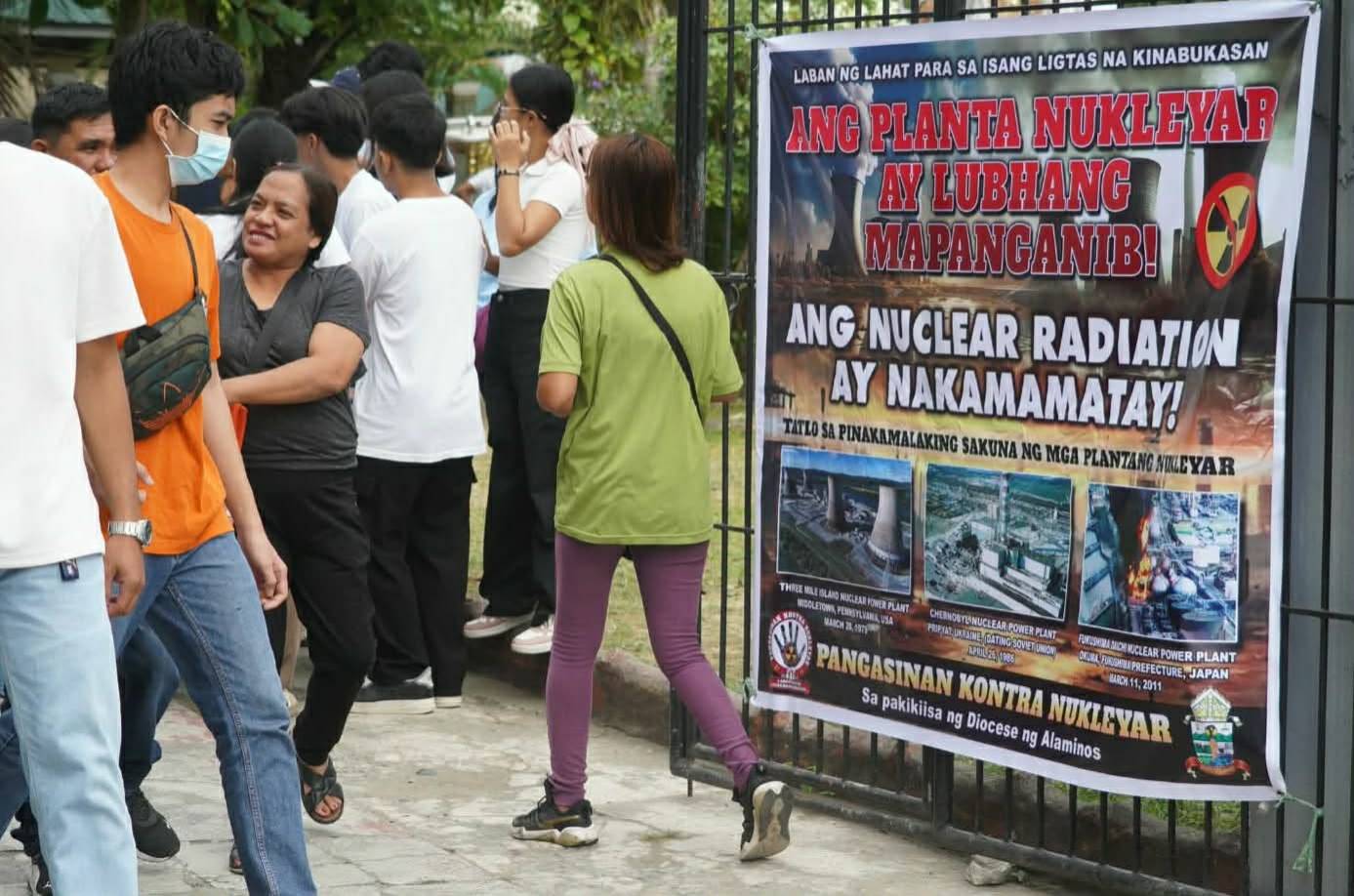
Ferrer, a creative artist who admits he is neither a nuclear scientist nor an engineer, but has been opposing nuclear plants since he was a student, emphasizes that the main public concern is nuclear radiation.

“In our daily lives, radiation is already part of our everyday existence—light bulbs, cameras, remote controls, televisions, cell phones, cell phone batteries—they all emit radiation. But it is very minimal,” he stresses.
He adds: “It is radiation our bodies can tolerate. However, a nuclear power plant could release radiation up to 30 sieverts. By comparison, X-rays, MRI scans or nuclear radiation treatments expose us to only about 0.000 watt-sievert.” (Sievert measures the biological effect of radiation on the human body, accounting for type and energy to indicate potential health harm.)
Lack of consultation
Critics also decry the lack of meaningful public consultation about the project.
Jericho Loctoc, a young schoolteacher, recalls that Cojuangco once sent invitations to schools and every barangay to inform people about the nuclear power plant.
“We expected to learn both the negative and positive effects of the nuclear power plant. But not a single speaker mentioned anything harmful. Everything was presented positively,” he recounts.
Later, information emerged claiming that the people of Labrador had agreed and signed in favor of the project.
“Where did those signatures come from? People didn’t even know what they were signing. That was our concern,” Loctoc shares, adding that Catholic Church leaders opposed the release of the data.
“So the Church organized a signature campaign. Later, it was said that the Church ‘used’ the people who attended Mass to sign against the nuclear plant. But everyone attending the Mass (led by Alaminos City Bishop Napoleon Sipalay) knew it was genuinely about opposing the plant,” Loctoc reiterates.