










PH celebrates a century of Art Deco

Originating in France in 1925, Art Deco is perhaps the most enduring global artistic movement in the 20th century.
Art Deco arrived in the Philippines in the 1930s, first through architecture in terms of houses, commercial buildings, theaters, and even niches and mausoleums in cemeteries; then spreading to furniture design, attire and costumes, the cinema, and everyday objects.
Its name came from the Exposition internationale des arts décoratifs et industriels modernes (International Exhibition of Modern Decorative and Industrial Arts) held in Paris in 1925.
Marked by lines, geometric patterns, and designs from ancient cultures, such as Egypt, China, and the Mayan civilization, Art Deco is a design movement that has become part of the Filipino identity and a contributor to the country’s nationalist ideals.
“In a way, it (Art Deco) was an opportunity to express a nationalist architecture in the context of a colonial political system, prefiguring Philippine nationalist architecture,” said architectural historian and conservation architect Gerard Lico.
As a versatile, anticlassical style, Art Deco presented an opportunity for the Philippines to nationalize the art form, an opening seized by second-generation architects, such as Juan Arellano and Juan Nakpil.
“They were anticlassical because they were trying to create a national identity using Art Deco as a springboard. So that’s why, if you look at the works of Juan Nakpil, in his cinemas there are carabaos, palm trees, sampaguita, and even ‘baro’t saya’ as motifs,” Lico said.
These designs can be prominently seen in Nakpil’s Capitol Theater in Escolta, Manila, now a ruined structure.
Lico explained that the indigenization was technically not allowed in classicism since it had its own canon, but Art Deco was “open to interpretation and was capable of accommodating the identity of the locals.”
Significant buildings
There are many notable Art Deco edifices in the country, but many have been lost either to World War II or to modern redevelopment projects.
Among the lost landmarks are the Crystal Arcade in Escolta, Cine Astor at Plaza Goiti in Manila’s Sta. Cruz district, and Geronimo de los Reyes Building at Plaza Cervantes in Binondo, all built during the American colonial period.
Another now-gone landmark is the Jai Alai Building on Taft Avenue in Manila, which was demolished 25 years ago supposedly to give way to a hall of justice. The site is now an open space with the controversial Torre de Manila condominium at the back.
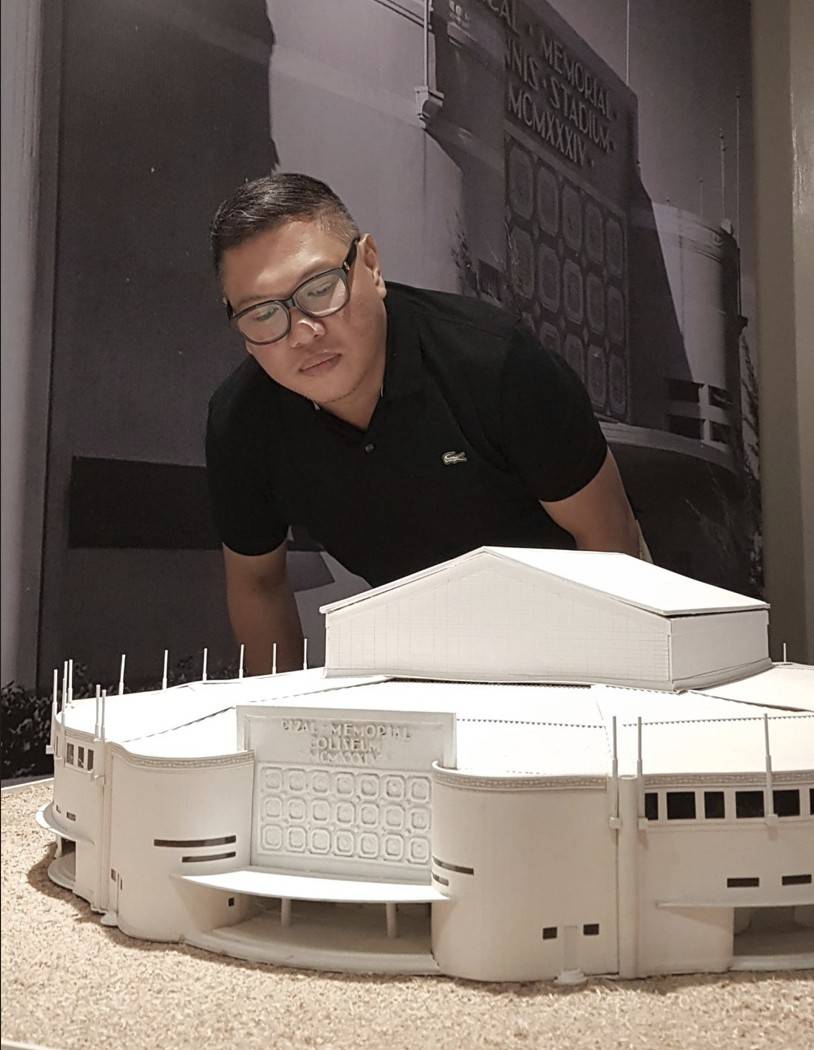
Extant Art Deco buildings include the Luis Santos House in Malolos, Bulacan; the Metropolitan Theater in Manila, declared a national cultural treasure; Rizal Memorial Coliseum in Malate, Manila; the Gala Rodriguez Mansion of Sariaya, Quezon; S. Villanueva Building in Iloilo City; Daku Balay in Bacolod City, Negros Occidental; and the identical municipal halls of Calumpit in Bulacan, Sariaya in Quezon, and Jaro in Iloilo.
The Bauan Municipal Hall in Batangas, on the other hand, has only the façade remaining to this day, following demolition works done in 2011.
Mindanao architecture
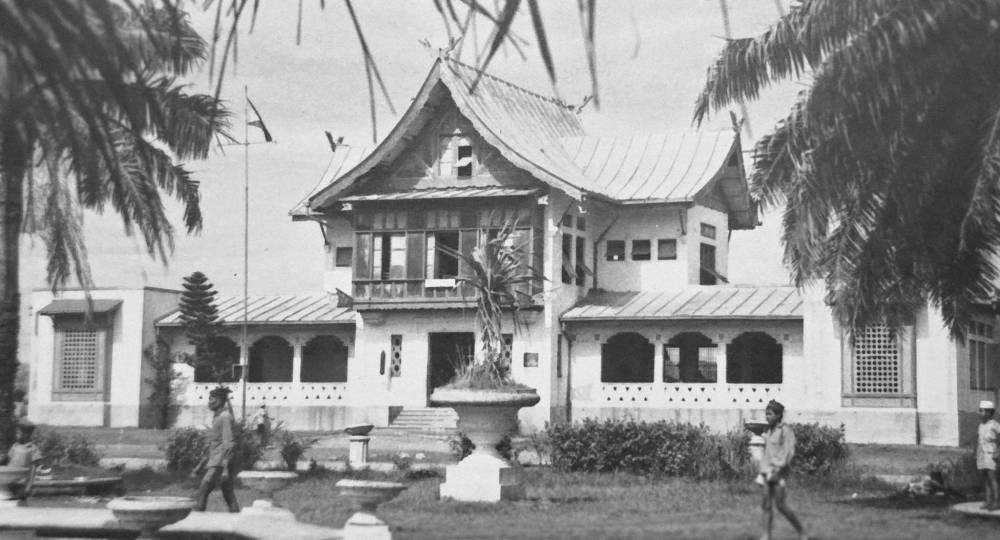
Designed by Juan Arellano, the agricultural-themed Art Deco design prominently features motifs, such as the bamboo.
Arellano was one of the most important Filipino architects during the American colonial period.

Championing the indigenization of Philippine architecture, Arellano was already looking into Mindanao architecture as a source of Filipino architectural language in the 1930s.
These can be gleaned from the batik patterns on the Metropolitan Theater and the “okir” designs at the old Cotabato City Hall that he produced.
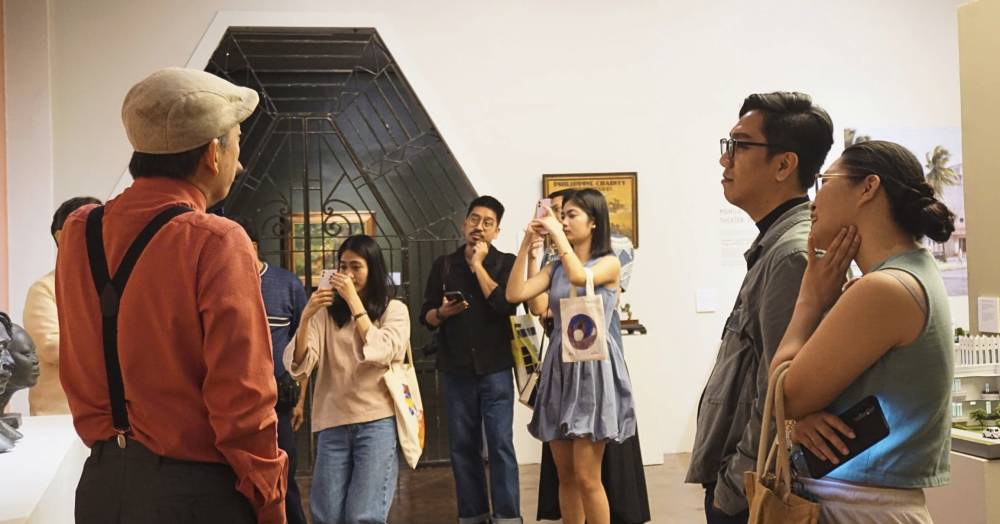
National Museum exhibit
The latter is particularly noteworthy since it is an excellent example of a vernacular building built following local architecture and traditional Mindanaoan designs—but married to the Art Deco style as seen from the zigzag patterns in its interior and the okir-inspired scrolls adorning its walls.
Arellano “interpreted the Maranao okir, an indigenous design, as an Art Deco springboard. This is important since it shows how a regional style was interpreted [through] Art Deco,” Lico said.
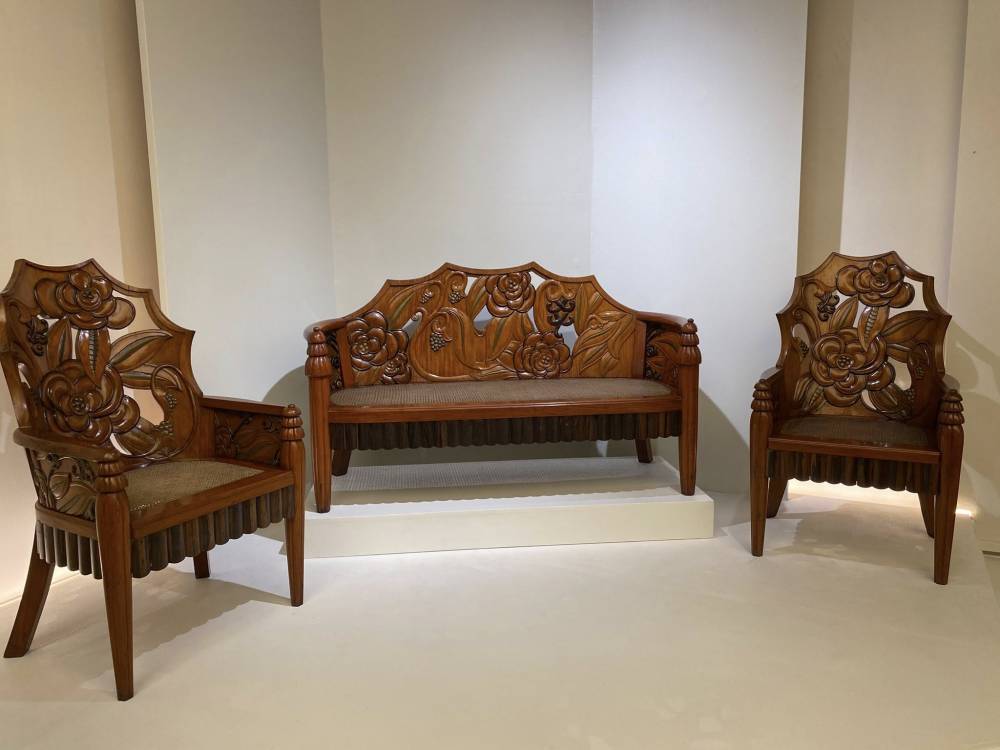
To celebrate the centenary of the Art Deco movement, the National Museum of the Philippines launched in November an exhibition called “Art Deco: Modernity and Design in the Philippines 1925-1950.” It’s touted to be one of the largest such exhibits to date, with more than 300 objects on show.
Ongoing at Galleries VII and X of the National Museum of Fine Arts, the exhibit “introduces the history and context of Art Deco, as well as the distinct stylistic qualities that define its Philippine expression,” according to the National Museum.
It likewise “highlights the sociocultural milieu of Art Deco and introduces the innovations brought by the modern urban lifestyle, outlining the historical events that unfolded in the first half of the twentieth century.”
Curated by Ivan Man Dy and Miguel Rosales and featuring objects, such as household items, attire, furniture, images, and other ephemera as well as scale models of buildings, the exhibit runs until May 31, 2026.