











PH liver center pushed as cancer cases rise

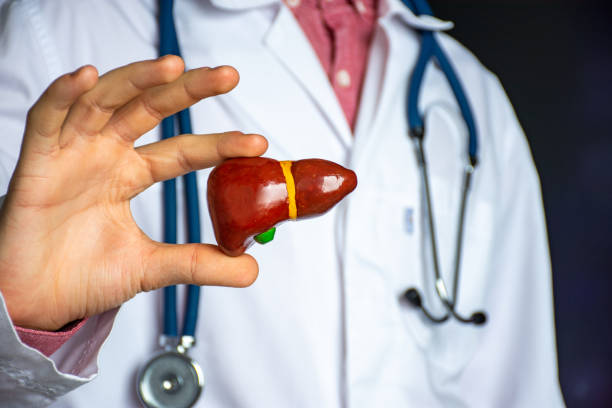
With the Philippines recording 32 deaths daily due to liver cancer, a group of hepatologists or doctors specializing in liver diseases has urged the government to establish a national liver center to help patients and also serve as a training ground for more liver specialists.
Speaking to reporters after a recent briefing, Dr. Jennielyn Agcaoili-Conde, president of the Hepatology Society of the Philippines, stressed the importance of having a liver center as a venue for research and registry of liver-related diseases.
“Our statistics or registry will improve because until now, our registry of liver diseases is not good. So, I hope the establishment of that liver center will really give us a more updated incidence [or] prevalence of liver diseases,” she said.
According to Conde, future hepatologists can also be trained at the center as she noted that the country has less than 100 liver specialists, translating into a ratio of only one for every 100,000 Filipinos.
“Most of our hepatologists or hepatobiliary surgeons or even transplant [specialists] are trained in other countries, and they would just come back,” she said. “That’s why [we’re] hoping for that liver center [to] also be a venue for our homegrown liver specialists.”
Conde also called for the Philippine Health Insurance Corp. to offer an expanded benefit package for patients with liver cancer, as she noted that the disease is now the fourth most common cancer in the country and the third most common cause of death due to cancer.
Asymptomatic
“When a Filipino is diagnosed with liver cancer, it seems to be automatically equivalent to mortality. Why? We notice that most of the patients with liver cancer do not feel anything. In the early stage, it is asymptomatic. It will only be felt when it has worsened,” she said.
As a result, patients only consult a doctor when their ailment is already in an advanced stage and requires more expensive treatment, Conde said.
She said some families are “forced to sell their property, or they have to take out a loan for the treatment of their family member with liver cancer, or they have to pull out their children from school so they have money to pay for laboratory tests.”
“We do not lack science. What we lack is full system implementation and financial protection,” she said, as she called on the government to expand the financial protection for liver cancer patients and cover their expenses from diagnosis to treatment.
Hepatitis B screening
Conde also pushed for a nationwide screening for hepatitis B, which can lead to liver cancer.
“The math is clear. Screening and prevention is more affordable compared to treating a patient with terminal cancer. When a benefit package is not enough, the Filipino family is the one shouldering the expenses, and that’s where the difficulty begins,” she said.
According to the Global Cancer Observatory report of the World Health Organization, there were 188,976 new cancer cases recorded in the Philippines in 2022, with 113,369 deaths.

Of the new cases in the country, liver cancer was the fourth most common after breast, lung and colorectum, registering 12,544 cases or 6.6 percent of the total. Ranked by deaths, the top 3 leading cancers among Filipinos were lung, breast and liver. The death toll due to liver cancer was 11,353 in 2022 or 10.3 percent of the total.
The Department of Health said the liver has very important functions as it helps break down the food in the stomach, processes the nutrients needed by the body, regulates blood clotting, and fights infections due to viruses, bacteria and other poisonous and harmful sources.
Liver cancer, on the other hand, is caused by a mutation or changes in the DNA of liver cells, according to the Hepatology Society of the Philippines. The sudden change may cause the growth of a tumor or mass or cancerous cells, it said.
It added that chronic hepatitis B or hepatitis C virus infection is one of the causes of liver cancer, along with cirrhosis due to excessive alcohol as well as non-alcoholic fatty liver disease.
Symptoms
Among the most common symptoms of the disease are drastic weight loss for no reason, loss of appetite, upper abdominal pain, dizziness and vomiting, constant tiredness, bloated stomach, yellowing of the whites of the eyes, and whitish or chalky stools.
To prevent the disease, the Hepatology Society of the Philippines recommended that people get vaccinated against hepatitis B and avoid contracting hepatitis C or getting infected by people diagnosed with the disease. It also advised against smoking or drinking alcohol as it urged people to exercise regularly and maintain their weight.