








PH pushes pacts on cyberdefense

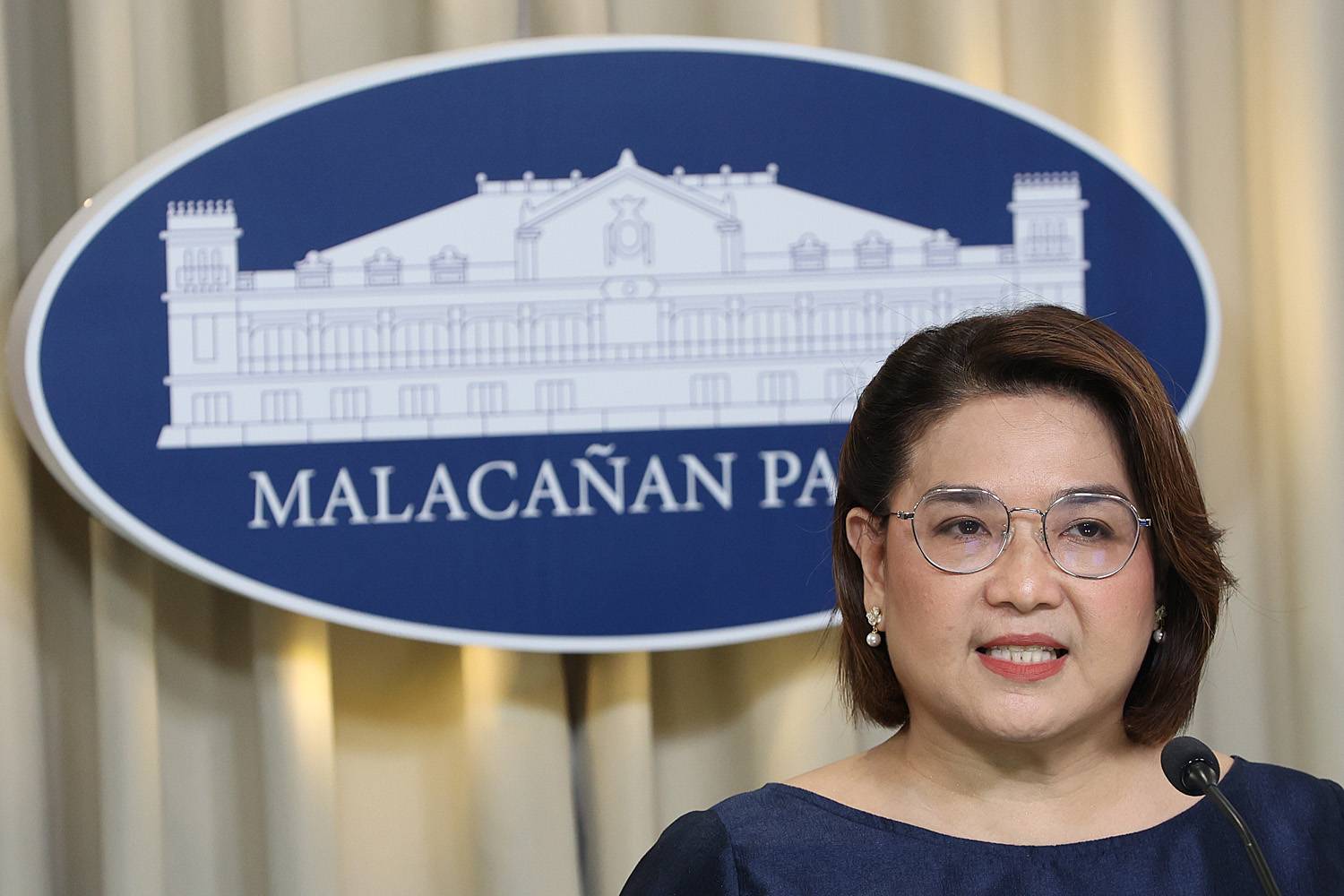
The Philippines will be stepping up its collaboration with other countries to address state-sponsored attacks and espionage, foreign interference and misinformation, ransomware and data breaches, critical infrastructure protection, talent and infrastructure gaps, Malacañang said on Friday.
Palace press officer Claire Castro cited the country’s cyberdefense partnership with Canada as an example of the government’s strengthening cybersecurity posture with foreign allies.
“These cyber threats are evolving. That’s why we must continue to provide, exchange knowledge so that the country can be better protected from cyberattacks,” Castro told reporters.
The Philippines and Canada have stepped up cooperation in cyberdefense and information security following a high-level meeting between officials of the Department of National Defense (DND) and Canada’s cybersecurity leadership.
The discussions focused on strategic cyber threat intelligence exchange, updates on emerging threats and joint training programs and professional exchanges as well as the regular meetings of the annual Philippines-Canada Cyber Working Group.
Envoy’s take
Canadian Ambassador David Hartman told reporters on Thursday that both nations are talking about a proposed General Security of Information Agreement (GSOIA), following the recent signing of a Status of Visiting Forces Agreement (SOVFA).
“We’re in active negotiations on that now with the Department of Defense here. Again, that is indicative of how advanced the relationship is,” Hartman said on the sidelines of a forum hosted by the Stratbase ADR Institute in Makati City.
Hartman said the GSOIA would allow a freer exchange of classified information between the two militaries.
“The absence of that doesn’t preclude us from engaging very comprehensively, very robustly, but with that extra layer, it just allows us to go deeper in terms of the exchange, and the frankness and the candor of information that we’re able to share,” Hartmand said.
Similar deals signed by Canada have enabled multimillion-dollar transactions by allowing security-cleared suppliers in both countries to access classified information needed to bid on sensitive projects.
Under its Indo-Pacific Strategy, Ottawa sees Manila as a key partner in sustaining regional stability, which it considers vital to its economy.
Since launching the strategy, Canada has expanded economic and defense ties with the Philippines, with the SOVFA as the latest milestone.
‘Balikatan exercise’
For the “Balikatan Exercise 2026,” Hartman said Canada plans to deploy more than 600 personnel and assets.
“This year, Canada will be the third largest participant at Balikatan. This is from three and a half years ago, when we didn’t even have a resident defense attaché,” Hartman said.
“As I’ve said repeatedly, we’re trying to put our money where our mouth is and demonstrate, not just in words but in deeds, our commitment to the Philippines and to our collective and shared interests,” he added.
Meanwhile, the two countries agreed to further strengthen collaboration in the cyber and information domains, following a meeting at Camp Aguinaldo between DND Undersecretary Angelito de Leon, officer in charge of the Office of the Undersecretary for Information Systems and Cybersecurity, and Canada’s senior official for cybersecurity, Sami Khoury of the Communications Security Establishment, last Feb 18.
“The engagement built on the growing defense partnership between the Philippines and Canada, is highlighted by the signing of the Philippines-Canada Status of Visiting Forces Agreement in November 2025,” DND spokesperson Arsenio Andolong said in a statement on Thursday.
At the meeting, De Leon cited previous cyber engagements and expressed appreciation for Canada’s continued collaboration. He also conveyed the DND’s interest in learning from Canada’s best practices in cyber governance, operational coordination and resilience-building mechanisms to enhance national cyber capabilities.
Discussions focused on key areas of convergence, including the regular exchange of strategic cyber threat intelligence, updates on evolving cyber threats and institutionalizing joint training programs and professional exchanges.
The officials also discussed sustaining cooperation through the regular convening of an Annual Philippines-Canada Cyber Working Group to ensure continuity, alignment of priorities and measurable outcomes. —WITH A REPORT FROM PNA