
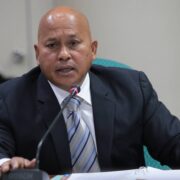




PH, US kick off combat drills with allied forces


The United States and the Philippines kicked off one of their largest combat exercises on Monday in an annual display of allied military might aimed at deterring aggression in Asia, despite Washington’s preoccupation with the war in the Middle East.
The large-scale combat drills between the United States and the Philippines will expand this year to include other militaries, including from Japan, France and Canada, which have signed visiting forces agreements with Manila, the Philippine military said.
More than 17,000 American and Filipino military personnel will participate in the “Balikatan”—Filipino for “shoulder-to-shoulder” exercise. The event will last nearly three weeks and will include mock battle scenarios and live-fire maneuvers in locations including Philippine provinces facing the disputed South China Sea and the Taiwan Strait.
Nearly 10,000 US military personnel will take part in the combat drills, a major deployment that US military officials said underscores Washington’s commitment to Asia despite its preoccupation with the war against Iran. (See related story on this page.)
“Regardless of the challenges elsewhere in the world, the United States focus on the Indo-Pacific and our ironclad commitment to the Philippines remains unwavering,” Marine Lt. Gen. Christian Wortman said in the opening ceremony.
Deterring aggression
Armed Forces of the Philippines chief of staff Gen. Romeo Brawner Jr. said the multinational combat drills build deterrence and resilience against aggression in the region. He did not mention any country in his speech but in the past, he has strongly criticized China for its increasingly assertive actions against Philippine Navy and Coast Guard forces in the South China Sea, which Beijing claims virtually in its entirety.
The Philippines, Vietnam, Malaysia, Brunei and Taiwan also lay claims to the waters, a key global trade route, but territorial confrontations have particularly spiked between Chinese and Filipino forces in recent years.
China has objected to the US-Philippine drills, saying they are aimed at containing its global rise. The Philippine military, however, has insisted the exercise does not target any country and is also needed to prepare allied forces to respond to natural disasters.
“We remain guided by a shared commitment to uphold international law, to respect sovereignty and to contribute to a free and open Indo-Pacific where nations can thrive without coercion,” Brawner said.
During the drills, Japanese forces will fire missiles from a coastal area in Ilocos Norte province to help sink a mock enemy ship about 40 kilometers away in the peripheries of the South China Sea, Philippine marine Col. Dennis Hernandez told The Associated Press (AP).
Meanwhile, the national fishers’ group Pamalakaya said more than 4,800 registered fisherfolk in Subic, Zambales, may be impacted by the 11-day no-sail zone imposed by the government during the Balikatan exercises.

Fishing operations in parts of Subic Bay have been limited to make way for the multinational drills, which include maritime, air, and live-fire exercises.
“In the midst of the economic crisis brought about by the geopolitical tensions, Filipino fishers do not deserve to be restricted from their livelihood,” Pamalakaya said in a statement on Monday.
The fishers’ group urged the government to redirect Balikatan funds toward economic aid and livelihood subsidies for struggling sectors such as farmers and fisherfolk.
******
Get real-time news updates: inqnews.net/inqviber