






PhilHealth fund restored via draft 2026 budget

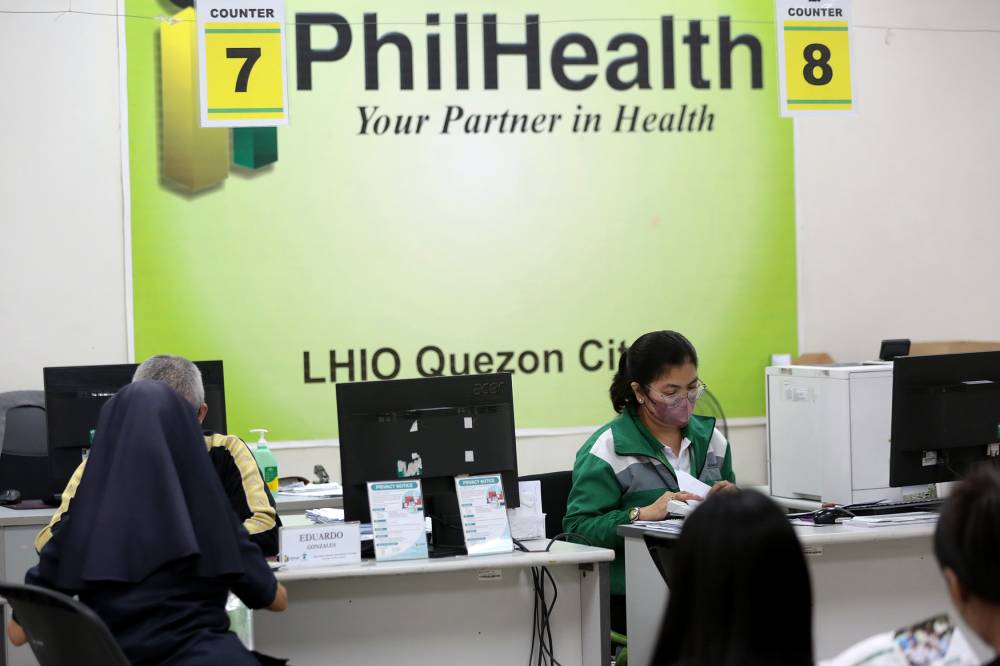
The vice chair of the appropriations committee of the House of Representatives said the panel has already carried out the only legal and constitutional remedy to return P60 billion to the Philippine Health Insurance Corp. (PhilHealth) as ordered by the Supreme Court—by restoring the funds through the 2026 national budget.
“If there is a process for getting, there is a process for returning. And that is through the national budget. The mechanism for returning the money is the same as the mechanism in getting it,” Lanao del Sur Rep. Zia Alonto Adiong said in a statement.
His remarks were in response to Cardinal Pablo Virgilio David’s call that President Marcos and Congress should not “simply backfill” the P60 billion ordered returned to PhilHealth but should instead recover the money from those who allegedly profited from the fund diversion.
The bishop of Kalookan said if the order to return the money means the government would get it from the proposed 2026 budget, then “no thanks.”
President’s directive
Adiong stressed that the House moved swiftly after Mr. Marcos’ directive last September, or before the high court declared the fund transfer void in its decision last Dec. 3.
“The House has already complied, following the President’s order, and regardless of the result of cases pending before the high court,” he said, emphasizing that Congress followed the same lawful mechanism used when the questioned amount was originally released.
Under the National Expenditure Program submitted by Malacañang, PhilHealth was originally allotted P53 billion for 2026.
The House later added the full P60 billion to comply with the President’s instructions, raising PhilHealth’s total allocation to P113 billion next year.
According to Adiong, budget officials reported that the House placed the additional amount into the general appropriations bill, while the Senate upheld the realignment in its committee report.
“The restoration was funded using savings generated from a review of the Department of Public Works and Highways’ proposed budget, which freed up P255.5 billion for social programs,” he noted.
Adiong said the move more than doubled PhilHealth’s 2026 subsidy, “strengthening universal health care and ensuring wider coverage for millions of Filipinos.”
“The House has done what the law requires. We followed the President’s directive, we followed the Constitution, and we returned the P60 billion through the national budget,” he said.
Accountability
However, Adiong said that while the constitutional path for refunding PhilHealth had already been completed, accountability processes may continue as separate legal matters.
Petitioners who questioned the transfer of the PhilHealth funds are already calling for an investigation into where the money was spent to find out who should be held accountable.
Bayan Muna chair Neri Colmenares said there should be an “accounting of where the P60 billion was spent” and what government projects were funded by it.
“In our petition, in our motion, if [the government] claims that they have already spent [the P60 billion], and therefore they cannot return it, it should be accounted for. Where did you spend it? There must be an accounting, that’s the first step that should be ordered by the court,” Colmenares said in an interview with the Inquirer on Sunday.
He said the government must provide the specific projects in the unprogrammed appropriations that benefited from the PhilHealth fund transfer, and how much money was released to each of these programs.
“The [Department of Finance or DOF] itself should submit the accounting to the court,” Colmenares said. “[Secondly], because many people may not put so much credibility on a government accounting report, there should also be an investigation.”
He said the investigation, whether by the House, Senate or the Ombudsman, “should not only be for the accounting… it will also go into whether irregularities attended the spending of these funds.”
Different petition
Also on Sunday, labor coalition Nagkaisa urged the Ombudsman to create a fact-finding task force that will determine “who approved, implemented and benefited from the diversion” of health funds that went into “unprogrammed appropriations and unfunded infrastructure projects, including alleged ‘ghost’ projects.”
As one of the petitioners-in-intervention, Nagkaisa said it welcomes the Supreme Court ruling but noted that “clearly, the fight does not end here.”
It pointed out that according to the high court itself, “a petition for certiorari under rule 65 is not a vehicle to hold officials criminally or civilly liable.”
In its ruling, the Supreme Court declined the petitioners’ request to determine the alleged liability of Finance Secretary Ralph Recto for technical malversation or plunder over the transfer of PhilHealth funds as it is a special civil action that is limited to a determination of grave abuse of discretion.