







Phividec may boot out raided steel plant from Misamis ecozone

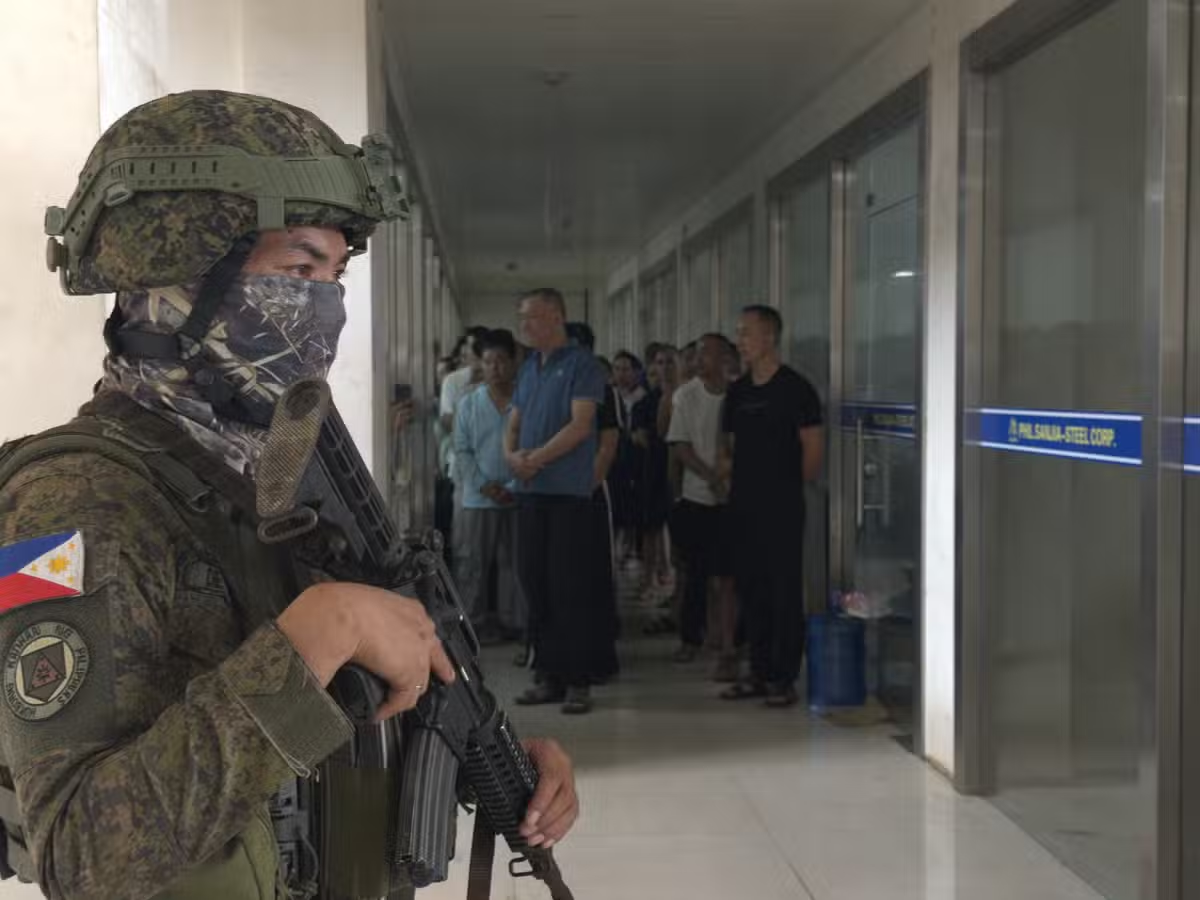
CAGAYAN DE ORO CITY—The management of Phividec Industrial Authority (PIA), which operates the 3,000-hectare economic zone in Misamis Oriental that hosts the manufacturing plant of Chinese-run Philippine Sanjia-Steel Corp., is eyeing the cancellation of its lease contract following allegations the company violated the country’s labor, immigration and nuclear safety regulations.
Joseph Donato Bernedo, PIA general manager, told a press briefing on Tuesday that the findings of an interagency investigation on Sanjia can become bases for a review of the company’s demeanor as a business locator in the industrial estate, and if found to have committed violations of the country’s laws, can lead to a termination of its lease contract.
Bernedo noted that in 2024, Sanjia’s compound was subjected to four inspections by law enforcement agencies after it was exposed that one of its incorporators was Tony Yang, a Chinese businessman who confessed to have faked his Filipino citizenship and who was linked to illegal Philippine offshore gaming operations.
But the PIA was not furnished any report of the inspections hence it has no basis to impose any penalty on the company, Bernedo pointed out.
He added that the latest general information sheet of the company submitted to the Securities and Exchange Commission no longer reflected Yang as an owner.
Sanjia’s plant is undergoing search by authorities, sanctioned by a warrant issued by a regional trial court here.
So far, authorities said they had unearthed violations of regulations on nuclear safety as various sections of its premises were laden with radioactive materials; work safety as its workers allegedly performed their tasks within the steel plant without the appropriate protective gears; and immigration as many of its 69 Chinese workers lacked the necessary work permits and others lacked valid entry documents.
Further, the company’s steel bars were found to be of substandard quality, according to National Bureau of Investigation Director Melvin Matibag.
The nongovernment Philippine Iron and Steel Institute first raised concerns about Sanjia’s substandard rebars in 2024, citing tests it did on samples from 16 hardware stores in Luzon.
The substandard rebars, according to Matibag, pose “serious concerns regarding structural integrity of [the country’s] critical infrastructure.”
The sheer potential impact of Sanjia’s violations of consumer protection laws by churning out substandard steel constitute a clear national security concern, Undersecretary Benjamin Acorda, executive director of the Presidential Anti-Organized Crime Commission (Paocc), said earlier.
Detention questioned
Sanjia was organized in 2018, and after securing a lease contract for 22.6-ha in the industrial estate for P30 per square meter, it began building its facility in 2019, with a declared investment of P800 million. It was fully operational in 2021, with a declared annual capacity of 600,000 metric tons of steel.
In Manila, Chinese Embassy Deputy Chief of Mission Zhou Zhiyong on Wednesday accused Philippine authorities of possible “discriminatory” treatment against 69 Chinese nationals arrested during the raid on Friday last week.
Sanjia’s Chinese workers, along with a Filipino worker, were taken to Manila and are now detained at the NBI facility.
Zhou said the embassy had written to several Philippine agencies to raise concerns over the May 15 interagency operation of the NBI, Paocc and the Armed Forces of the Philippines.
He disputed claims that the workers were undocumented, saying all 69 Chinese nationals held had valid work permits or visas.

“Fifty-seven are issued special work permits by the Bureau of Immigration, while 12 hold 9G work visas,” Zhou said at a briefing in Makati City.
He acknowledged that some permits had lapsed but said others were being processed for conversion.
Zhou said the embassy had submitted documentation to Philippine authorities and requested clarification on the legal basis for the continued detention of the workers.
The embassy also questioned why more than 300 Filipino workers at the same facility were released on the day of the operation while the Chinese nationals remained in custody and were transferred to Metro Manila.
“This raises the suspicion of discriminatory law enforcement practice,” he said.
Zhou said embassy officials who visited the detained workers at an NBI facility found them in “harsh conditions,” alleging that around 13 detainees were being held in cramped cells measuring about 5 square meters to 6 square meters.
“We urge the Philippine side to deal with the case in strict accordance with the law in a fair and just manner and ensure humane treatment of our Chinese citizens,” he said.
Zhou added that the embassy had raised concerns over the lack of formal notification to China following the detentions, citing obligations under a bilateral consular agreement.