








Phivolcs: Superheated gas detected at Mt. Kanlaon

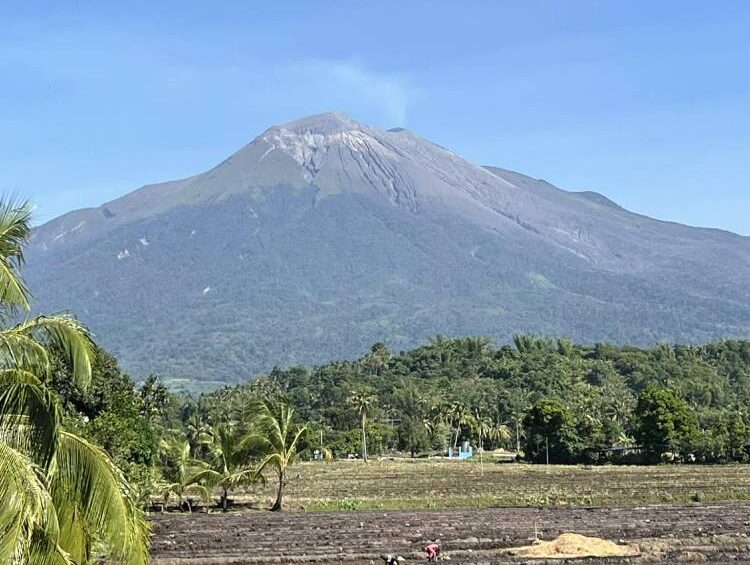
BACOLOD CITY—Superheated gas emissions have been detected at the crater of Mt. Kanlaon, indicating ongoing volcanic unrest, according to an official of the Philippine Institute of Volcanology and Seismology (Phivolcs).
In an interview on Friday, Phivolcs resident volcanologist Mari Andylene Quintia of Kanlaon Observatory in La Carlota City said the superheated plume, which is a common occurrence at Mt. Kanlaon, indicates that magma is intruding and waiting beneath the edifice.
Phivolcs is reminding the public that, despite short-term decreases in activity, unrest at Kanlaon is not over, and a major eruption remains possible in the long term, she said.
Quintia clarified an earlier statement regarding superheated plumes as eruption precursors.
“It has caused panic and I would like to correct my statement. We have not yet established that superheated plume as a precursor,” she said
Quintia added: “Volcanic earthquake swarms, abrupt increase or decrease in sulfur dioxide emissions, and ground deformation are our primary basis.”
The latest superheated gas emission at Kanlaon was detected by heat-sensitive cameras between 6:41 p.m. and 7:13 p.m. on Wednesday, Quintia said.
Nighttime emissions
Such cameras have frequently recorded nighttime emissions of superheated gas, which cannot be seen with the naked eye.
“The release of superheated gas could also be occurring in the daytime, but it cannot be seen,” she added.
Superheated gas is an indicator that magma could be rising within the volcano. The volcano also recorded earthquake swarms in January, she noted.

“This is the reason the 4-kilometer permanent danger zone should be strictly implemented for the safety of all,” she said.
According to Quintia, the volcano remains at alert level 2 due to ongoing increased unrest.
From 12 a.m. on Thursday to 12 a.m. on Friday, Kanlaon recorded five volcanic earthquakes and emitted 2,020 tons of sulfur dioxide.
Degassing reached 1,500 meters above the crater, though there was no ash emission, Quintia added.