









PH’s first salt research hub launched in Pangasinan

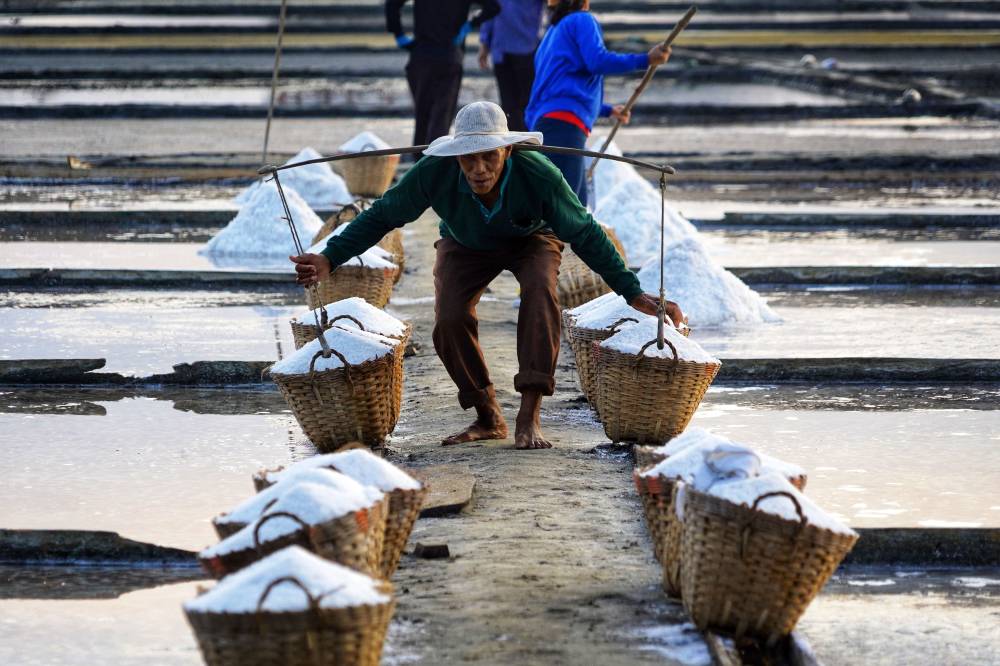
LINGAYEN, PANGASINAN—The country’s first dedicated salt research and development facility was formally launched on Tuesday at Pangasinan State University’s (PSU) Binmaley campus, marking a major step in the government’s push to revive the local salt industry and reduce the Philippines’ heavy reliance on imports.
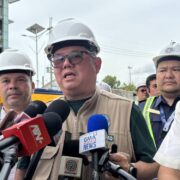
Science and Technology Secretary Renato Solidum Jr., who led the inauguration of the Accelerating Salt Research and Innovation (Asin) Center, said the establishment of the facility stemmed from the realization that the country cannot continue to rely heavily on salt importation despite its strong potential to become globally competitive.
Synergy
According to Solidum, the operationalization of the Asin Center enables it to directly address long-standing challenges that have left the Philippines importing as much as 93 percent of its salt supply.
“The Asin Center will help deliver the research capacity and modern technology we’ve long lacked, so the Philippines can secure its own salt supply, strengthen local livelihoods, and ensure that an industry central to our daily lives never falls behind again,” Solidum said.
PSU president Elbert Galas recalled visiting a coastal village where a veteran salt farmer lifted a handful of newly formed crystals and reflected, “Each grain is the work of sun, wind, and waiting.”
“Knowledge, much like salt, undergoes a process of evaporation. Uncertainties dissipate, insights crystallize, and what remains is refined through discipline,” Galas said during the launch.
He said the Asin Center affirms that the patience of traditional producers and the precision of modern science must not exist in isolation but in synergy, reflecting the university’s commitment to harmonizing indigenous wisdom with technological advancement.
Three divisions
The Asin Center houses three divisions: the Membrane Science and Separation Technology Division, the Salt Division, and the Process Design and Engineering Division. All are equipped with advanced equipment for highly applied research.
The facility will support the Philippine government’s goal of achieving salt self-sufficiency. It aims to assist the local salt industry through research on alternative production technologies, alt testing services, technical consultancy, human resource development, and science and technology promotion.

Program leader Rex Basuel said the center would enable PSU researchers to develop technology for cooked salt production.
The Asin Center received P43 million in funding support from the Department of Science and Technology and is monitored by the Philippine Council for Industry, Energy and Emerging Technology Research and Development.
******
Get real-time news updates: inqnews.net/inqviber