









PNP probe indicates Senate ‘not attacked’


All the evidence gathered from the initial investigation of the Philippine National Police on the May 13 shooting incident inside the Senate building showed that no “attack’’ took place, contrary to the description used empathically by Senate President Alan Peter Cayetano.
Interior Secretary Jonvic Remulla said President Marcos was already informed of the PNP’s findings. Records of the probe were also turned over to a joint panel of prosecutors formed by the Department of Justice and the Office of the Ombudsman.
The panel will conduct a further inquiry and eventually recommend the filing of appropriate cases.
“For the record, all evidence points [to the conclusion, for now,] that there was no attack on the Senate,” Remulla said in a Palace briefing on Tuesday.
But Remulla said investigators could not yet conclude if the incident was staged to create a distraction allowing the “escape” of Sen. Ronald “Bato” dela Rosa, who faces an arrest warrant from the International Criminal Court (ICC).
‘Red alert status’
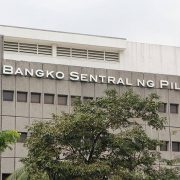
The chief of the Department of the Interior and Local Government (DILG) noted that retired Police Maj. Gen. Mao Aplasca, the acting chief of the Senate’s Office of the Sergeant-at-Arms (Osaa), had presided over a security coordination meeting on May 12 with the PNP, Armed Forces of the Philippines, Bureau of Fire Protection and security team of the Government Service Insurance System (GSIS) headquarters in Pasay City. The Senate occupies a part of the GSIS complex.
At 2:21 p.m. of May 13, GSIS President and General Manager Jose Arnulfo “Wick” Veloso placed the GSIS headquarters on “red alert” due to the possible “spillover effects” of tensions in the Senate after the events of May 11, when Dela Rosa showed up after a six-month absence and eluded agents of the National Bureau of Investigation who tried to serve the ICC warrant.
According to Remulla, Veloso ordered that the entrances of the GSIS be secured after Dela Rosa called on supporters to hold a “People Power” gathering supposedly because NBI agents were planning a second attempt to arrest him.
“Had there been anarchy in the Senate and it spilled over to the adjacent GSIS building, where billions of pesos worth of artworks are displayed on their walls, the damage would have been incalculable [for] the GSIS,” Remulla said.
“So [Veloso] found it better for them to secure the doors so that there would be no commotion inside the GSIS building,” Remulla added.
‘No NBI agent in Senate’
By 4:08 p.m. Veloso had formally requested assistance from the NBI to secure the GSIS premises.
A total of 29 NBI agents arrived at the GSIS main office at 6:17 p.m. and were escorted by GSIS in-house security.
Remulla echoed the contention earlier made by NBI Director Melvin Matibag that there were no NBI agents posted in the Senate building itself.
“They were asked by Veloso to secure the GSIS premises. So when he said that there was no NBI agent in the Senate, there was none. They never set foot inside the building,” he said.
Asked why Veloso asked for the NBI instead of the PNP in securing the GSIS, Remulla said the PNP was “already stretched thin” since 1,300 of its personnel were already deployed outside the GSIS complex for security.
“In this case, he thought it more prudent that the NBI secure the area according to their capacity. But there is no distinction. We are both law enforcement officials,” he explained.
Shots fired by Osaa
The PNP confirmed that NBI agents were drilling bolts to the door leading to the bridgeway connecting the GSIS to the Senate—not to prevent the escape of Dela Rosa, but to block access to the GSIS building should a mob try to enter the Senate side.
Most of the NBI agents had left by 7:01 p.m., with only two—Darwin Francisco and Antonne Mari Brylle de Leon—remaining to secure the bridgeway connecting the GSIS outdoor canteen hallway to the Senate’s sixth floor.
The PNP also released CCTV footage showing scenes in the GSIS and Senate sides before and during the three-minute confrontation which started at 7:46 p.m., and up to Dela Rosa’s departure from the building in the vehicle belonging to Sen. Robinhood Padilla around 2:30 a.m. the next day.
According to Remulla, Aplasca—after ordering the Osaa and the detailed security of both the PNP and AFP to “lock and load”—proceeded to the doorway where the two NBI agents were located.
Aplasca opened the door and told Francisco to identify himself. After Francisco identified himself as an NBI agent, Aplasca fired three warning shots “towards the vicinity” of Francisco.
As shown in the CCTV footage, Francisco withdrew while discharging “cover fire.” According to Remulla, the NBI agent was “under the impression that he was under attack.”
CCTV footage also showed Aplasca and two other Osaa personnel firing in Francisco’s direction.
Aplasca was seen firing more shots without a clear target, before retreating toward the area where journalists and media crews had been positioned.

“Mind you, there was nobody there. There were no shots being fired at them (Aplasca and Osaa personnel),” Remulla said.
‘Four shooters’
PNP chief General Jose Melencio Nartatez Jr. said a total of 44 fired cartridges were recovered at the scene—five of them came from the NBI side and the remaining 39 from the Osaa side.
“Per our ballistics examination, those 44 fired [bullets] came from four firearms, which means that there are four shooters,” Nartatez said.
Of these, 21 spent shells were accounted for and came from three firearms—five 5.56 mm bullets fired by the gun of NBI agent Francisco; and 16 bullets from the cal. .40 Jericho and 9mm Scorpion pistols owned by Osaa personnel Chris Montilla and Joemil Ledesma, respectively.
A total of 23 fired bullets remained unaccounted for, but were believed to be all from Aplasca’s shots.
Remulla said the PNP asked Aplasca on Tuesday to appear before its Criminal Investigation and Detection Group to turn over his firearm for ballistics examination, but “he refused to appear and gave an excuse.”
Justice Secretary Fredderick Vida, who was also present during the briefing, described the evidence as “very compelling.”
“But we still need to verify and validate. The DOJ will not take this investigation report as is. We will check on the timelines, we will check on the source of the videos, and everything,” he said, adding that the prosecutors would look into the “totality of circumstances” from May 11 to May 14.
“As to who are the culprits and to the type of cases that will be filed, I do not want to preempt the panel,” he added. —WITH REPORTS FROM ISABELLE PECHAY AND MARY JOY SALCEDO
******
Get real-time news updates: inqnews.net/inqviber


