






Prosecution’s dissection of drug war ‘hierarchy’ lauded

THE HAGUE, THE NETHERLANDS—The manner by which the prosecution had presented the merits of its case so far against former President Rodrigo Duterte was so cohesive and methodical that it would be impossible for the charges not to proceed to trial.
This was how human rights lawyers and other experts viewed the prosecution’s performance at the International Criminal Court (ICC) to prove Duterte was criminally responsible for the “widespread and systematic” extrajudicial killings that marked his so-called war on drugs.
For Kristina Conti, one of the lawyers assisting the victims’ families, the prosecution was able to show the process of “neutralizing” drug suspects under a hierarchical command structure.
“It showed that behind the scenes, there was a process on how the direct co-perpetrators (those who executed the killings) were paid, promoted and pardoned—the promise that no one would be held liable,” Conti told reporters at the end of Tuesday’s hearing.
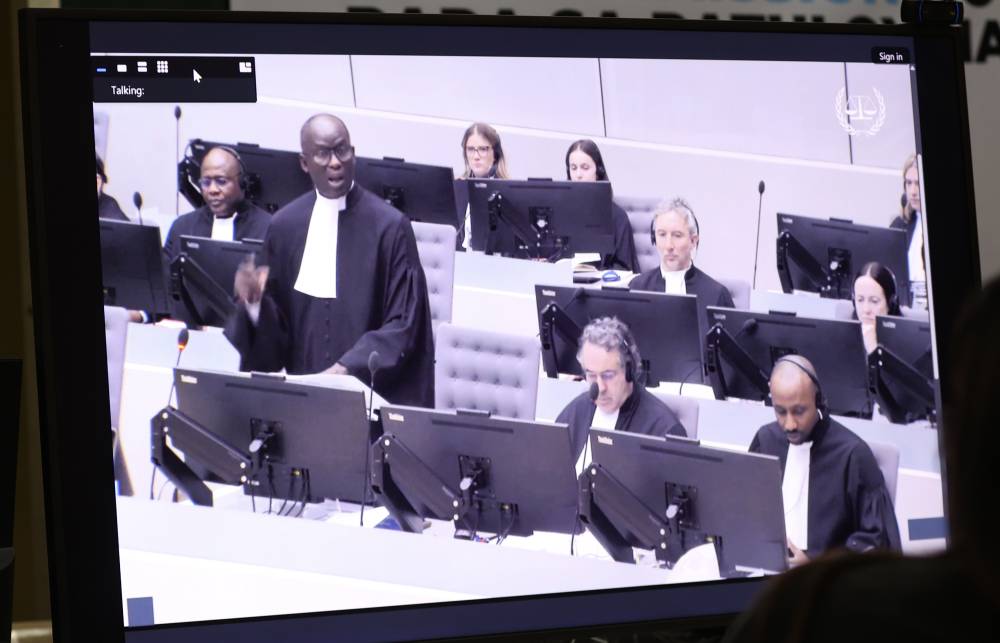
On the second day of the confirmation of charges hearing at the Pre-Trial Chamber I (PTC I) on Tuesday, prosecutor Robynne Croft cited the elements that she said showed the killings were carried out under a “state-organized policy” that was in turn based on the “Davao model” of targeting drug suspects.
From ‘PRRD list’ to ‘hit list’
The model was built on a hierarchical structure, with Duterte at the top giving orders to his co-perpetrators, who then relayed the directives to the “DDS (Davao Death Squad) handlers.”
The orders then go down to the DDS members, the police and “hit men” who make up the bottom of the pyramid.
According to Conti, the prosecution was also able to detail how the notorious “PRRD list” of alleged drug personalities turned into a “hit list.” PRRD stands for President Rodrigo Roa Duterte.
“We saw that the names on the list ended up dead. But it showed that behind the scenes, there was a process on how the ‘kill list’ ended up being a ‘hit list,’” she said, citing for instance that 23 persons were killed out of the 26 on the “drug list” of one barangay she visited.
This means the prosecution had strong evidence and that charges would be confirmed, Conti said, adding: “We’re already preparing for the trial because…. We are confident that it will proceed (to trial).”
Carlos Conde, formerly a senior researcher at Human Rights Watch, agreed that the prosecution did a “tremendous job.”
“It’s hard to look at this and not be convinced by the strength of the presentation of the prosecution. They were laid out very well and were too logical,” Conde told reporters outside the ICC.
‘Reasonable grounds’
The hearings will determine whether the 80-year-old Duterte will face trial for alleged crimes against humanity.
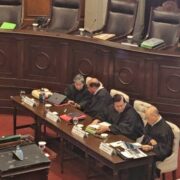
Also on Tuesday, the Office of the Public Counsel for Victims asserted that the prosecution met the substantial grounds needed to confirm the charges against the ex-president, who earlier waived his appearance at the hearings.
Addressing the PTC I judges, principal counsel Paolina Massidda said that for the victims the evidence presented by the prosecution clears the threshold required at this stage.
“The confirmation of all charges is not only legally warranted, it is essential to the integrity of international criminal justice,” Massidda said.
“The evidence before this chamber establishes reasonable grounds to believe that crimes against humanity of murder and attempted murder were committed in the context of a widespread and systematic attack against the civilian population,” she added.
She said Duterte bears individual and criminal responsibility under Article 25 of the Rome Statute.

According to Massidda, the victims have waited for years to obtain justice, especially after being “silenced, stigmatized and denied justice in their own country.”
‘In good spirits’
Duterte is facing two charges for counts of murder and one count of attempted murder for the death of 78 individuals in his crackdown on illegal drugs.
These include the murder of 19 victims in Davao City from 2013 to 2016 by the DDS while Duterte was still mayor; the murder of 14 “high-value targets” from 2016 to 2017 by a national network of state actors; and the murder and attempted murder of 45 victims during a barangay clearance operation from 2016 to 2018 while Duterte was president.
The government put the death toll at 6,000 but human rights groups said as many as 30,000 were killed.
Meanwhile, Duterte asked the PTC I for permission to also skip the Feb. 27 hearing for the review of his detention. He did not specify reason for the request.
“My counsel has explained to me the legal consequences emanating from such a waiver, and I trust him and my ICC legal team to represent him faithfully,” he said.
Since his arrest in Manila in March last year, Duterte has been detained at the Scheveningen prison complex at The Hague, a few kilometers from the ICC.
Speaking to reporters also on Tuesday, Duterte’s lead defense counsel, Nicholas Kaufman, reiterated that his client “has all the conditions expected of an 80-year-old man… [and] extra conditions which accompany his cognitive state.”
But the detained ex-president is “always in good spirits,’’ Kaufman said.