





PUV service contracting being revived to keep drivers on the road

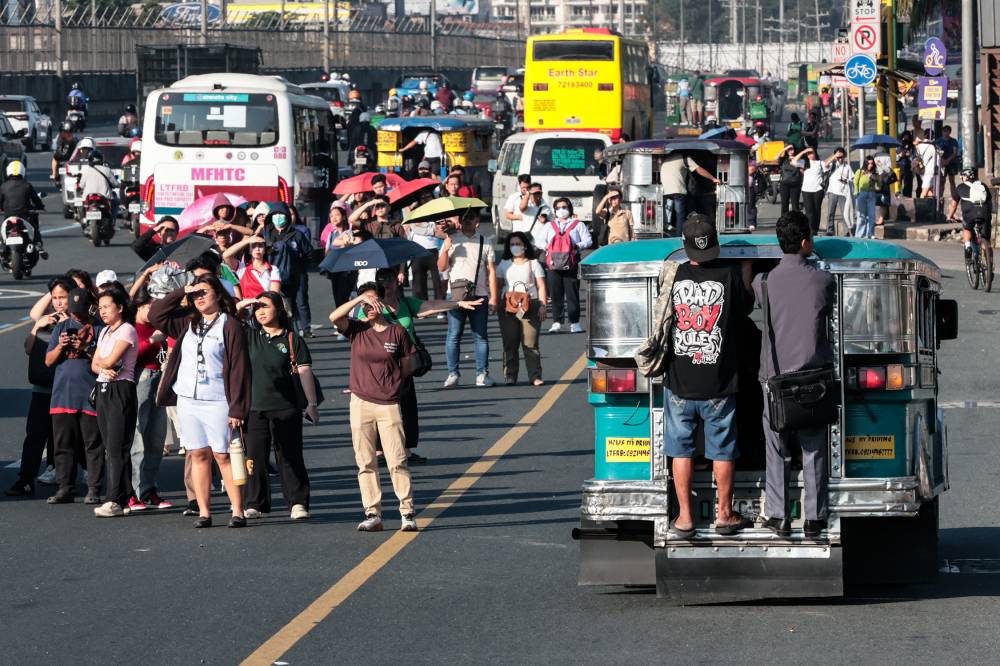
The Land Transportation Franchising and Regulatory Board (LTFRB) will revive an assistance program for public utility vehicle (PUV) drivers that was first implemented during the Covid-19 pandemic.
The agency said it will roll out a service contracting program in select routes in Metro Manila and other urban areas to ensure uninterrupted transport services for commuters.
Since the Iran war broke out on Feb. 28, five consecutive weeks of oil price increases have limited the availability of public transportation, with many PUV drivers now thinking twice about plying their routes because of the soaring cost of fuel.
Acting Transportation Secretary Giovanni Lopez earlier said his department had requested P1 billion from the Department of Budget and Management (DBM) for the program’s target implementation by April 15.
According to the LTFRB, the program will include bus drivers on Edsa and jeepney drivers plying the routes near Light Rail Transit (LRT) and Metro Rail Transit (MRT) stations.
Other PUVs traversing major transportation hubs in Metro Manila will also be included in the program, the LTFRB said.
“These routes were prioritized as they support connectivity to rail transport systems, serve high passenger demand corridors, improve overall commuter mobility and help reduce traffic congestion in key areas,” LTFRB Chair Vigor Mendoza II said in a statement.
‘Impact of limited funding’
Service contracting will also be implemented in Davao City, Cagayan de Oro City and other urban areas.
Routes will be selected based on passenger traffic and other factors, to “maximize the impact of limited funding” while ensuring continuity of transportation services, Mendoza said.
The DOTr first implemented service contracting in November 2020, following then President Rodrigo Duterte’s signing of the Bayanihan to Recover as One Act (Republic Act No. 11494) in September 2020.
The law was enacted as part of the government’s response to the pandemic, which prompted a worldwide lockdown that also severely affected the country’s economy and the livelihood of millions of Filipinos.
Under the service contracting program at that time, PUV drivers were given weekly subsidies based on the number of kilometers traveled, regardless of the number of passengers they were able to transport.
The total budget for the program was P8.58 billion across 2020 and 2021, and P8.4 billion in 2022.
Free rides in Manila
Meanwhile, Manila Mayor Francisco “Isko Moreno” Domagoso said on Tuesday that jeepney drivers in the capital will now receive P4,000 under the city government’s “Libreng Sakay” (free rides) program.
In his “Talk to the People” Facebook livestream, Domagoso said he thanked “our drivers for availing themselves of this program,” adding that “I thought it best to add P500 to the subsidy effective today.”
The subsidy, which covers a whole day trip by a jeepney driver who has signed up for the program, was initially set last month at P3,000. But P500 was added on March 31 and another P500 on April 7, following fuel price hikes announced on those dates.
Domagoso said “I cannot guarantee up to when this will continue, because we have already spent more or less P4 million in [taxpayer] money.”
The mayor appealed for the private sector’s support. “Perhaps there are also NGOs (nongovernmental organizations) out there that can help. Let’s all lend a hand,” he said.
DSWD’s cash aid
Also on Tuesday, the Department of Social Welfare and Development (DSWD) said its budget for cash assistance to the transport sector is still enough until July.
“In the short term, [our budget] could reach up to June and July, the next three months. It’s still possible. But it would also depend on budget prioritization,” Social Welfare Undersecretary Aliah Dimaporo said at a hearing by the Senate committee on social justice, welfare and rural development.
But she also noted that her agency’s cash assistance of P5,000 for PUV drivers is only “a stop-gap measure that affects our other programs.”
“We’re currently using our AICS (Assistance to Individuals in Crisis Situations) funds to respond to the fuel crisis. But we have regular programs that are also affected, of course—the medical, burial and other cash and financial assistance programs,” Dimaporo said in response to questions by committee chair Sen. Erwin Tulfo.
She said all this assistance “needs to be complemented by more long-term efforts. [If they are only good for] six months to 12 months, that risks the sustainability of these programs in question.” —WITH REPORTS FROM KEITH CLORES AND INQUIRER RESEARCH