









Recurring trash woes at Mt. Banahaw slammed

LUCENA CITY—Environmental group Tanggol Kalikasan (TK) expressed dismay over reports that pilgrims and tourists left piles of garbage at the foot of Mt. Banahaw during Holy Week despite repeated reminders from authorities to keep the area clean.
“It is a repeated cycle. Rehashed yearly reminders and appeals from the government and concerned sectors are clearly not working,” TK project officer Jay Lim said in a phone interview Monday.
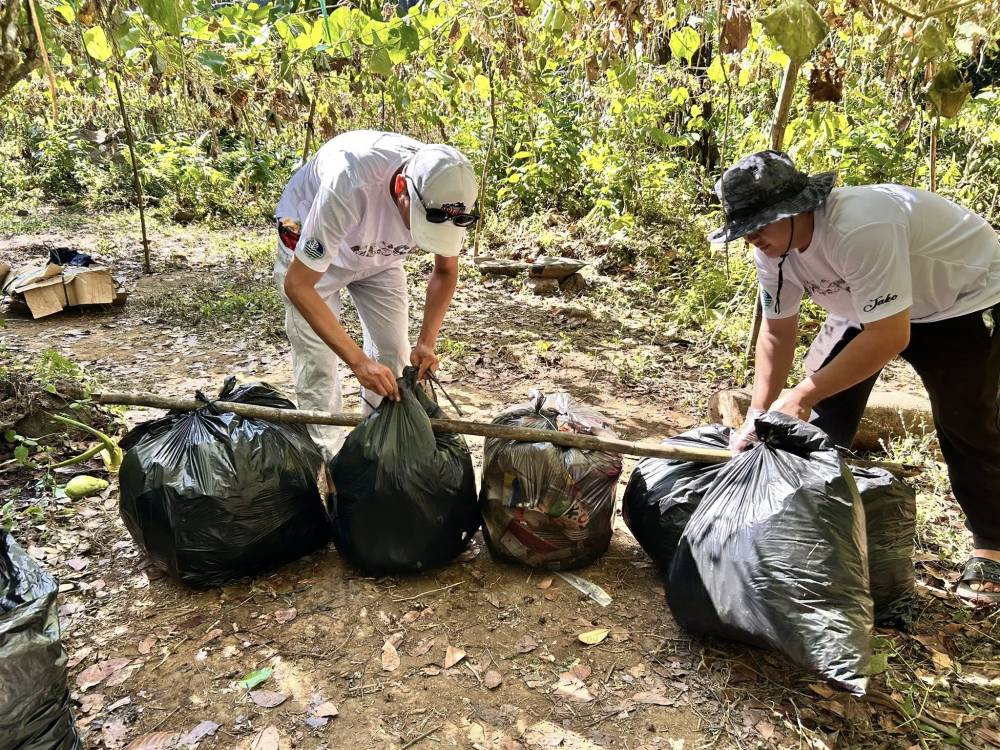
On Easter Sunday, the Protected Area Management Office of the Mts. Banahaw–San Cristobal Protected Landscape reported collecting 42 sacks of assorted garbage in Barangay Kinabuhayan, Dolores, Quezon, a key gateway to the mountain.
At the start of the Lenten season, the Department of Environment and Natural Resources (DENR) had urged visitors to strictly follow environmental rules, including bringing their own trash bags and taking their waste with them upon leaving.
Sanctuary
For many devotees and nature lovers, Mt. Banahaw remains a spiritual sanctuary, known for its mysticism and sense of peace.
“Another Holy Week has passed, and once again, Mt. Banahaw—our sacred mountain—is gasping under the weight of garbage left behind by pilgrims and tourists,” Lim lamented.
He noted that repeated reminders without strict enforcement have proven ineffective, citing the growing volume of trash each year as evidence of a failing system.
“It is time to move beyond simply cleaning up after the damage has been done,” Lim said.
Lim called for “systemic enforcement,” proposing measures such as a “cash-for-trash” deposit scheme, where visitors would recover their deposit only upon presenting their waste at exit points.
He also suggested mandatory bag inspections at entry points, a ban on single-use plastics, and the deployment of marshals at popular “puestos” or sacred sites to issue on-the-spot fines for littering.

“Let the penalty hurt the pocket, since reminders and appeals don’t seem to reach the heart,” he said.
Among other proposals were a “blacklisting” system for violators, barring repeat offenders from entering the protected area for five to 10 years, and limiting visitor numbers through a preregistration system if crowds become unmanageable.
In 2004, the DENR closed the inner sanctuaries of Mt. Banahaw to allow the area to recover from years of environmental degradation. The mountain’s peaks remain off-limits to the public.
******
Get real-time news updates: inqnews.net/inqviber