







Safe, potable drinking water reaches remote Bohol island


TAGBILARAN CITY—For the first time in decades, residents of Malingin Island in Bien Unido town, Bohol—where every drop of rainwater has long been treasured—are no longer solely dependent on rainfall for their drinking water.
Safe and potable water has begun flowing on the island following the turnover of a P7.4-million water desalination facility funded through the 20-percent allocation of the provincial government of Bohol’s development fund.
For 72-year-old Florentina Torreon, the project is nothing short of life-changing. She recalled that since childhood, residents had relied on rainwater to survive.
“What we have long waited for has finally arrived. We are very happy because we no longer struggle for water,” she told the Inquirer in Cebuano.
Malingin Island, home to at least 1,859 residents, has long suffered from water scarcity.
No reliable source
Despite attempts to drill wells across the island, no reliable potable source was found. Existing deep wells produce water with high salinity levels, suitable only for cooking and bathing.
Residents were forced to travel by boat for 45 minutes to an hour to mainland Bien Unido or Talibon just to buy drinking water costing between P60 and P80 per container—or wait for rainfall.
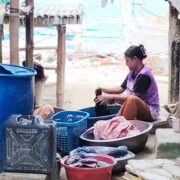
Households kept large barrels and “tadjaos” (earthenware jars) to catch and store rainwater.
The new desalination system converts saltwater into safe drinking water, supplying up to 11 cubic meters or 11,000 liters, of clean water daily to the community.
The project was implemented by the Provincial Engineering Office.
The facility was formally turned over on Feb. 20 in a ceremony attended by Gov. Erico Aristotle Aumentado, Rep. Vanessa Cadorna-Aumentado, Bien Unido Mayor Felix John Garcia and other officials, along with personnel from Nxtlvl Water Technology Inc., the project contractor.
Village officials said a proposed ordinance would authorize the collection of P10 per water container to fund the plant’s maintenance and ensure its sustainability.
Aumentado urged residents to take good care of the facility, noting that some desalination plants previously installed on other islands were damaged due to a lack of community support.
He noted that access to clean water remains a top priority of the provincial government, especially for geographically isolated island barangays like Malingin.
“Water is life,” Aumentado said, expressing hope that similar projects would soon reach other island communities in Bohol.