









SC: Duterte impeachment foiled by missed deadlines

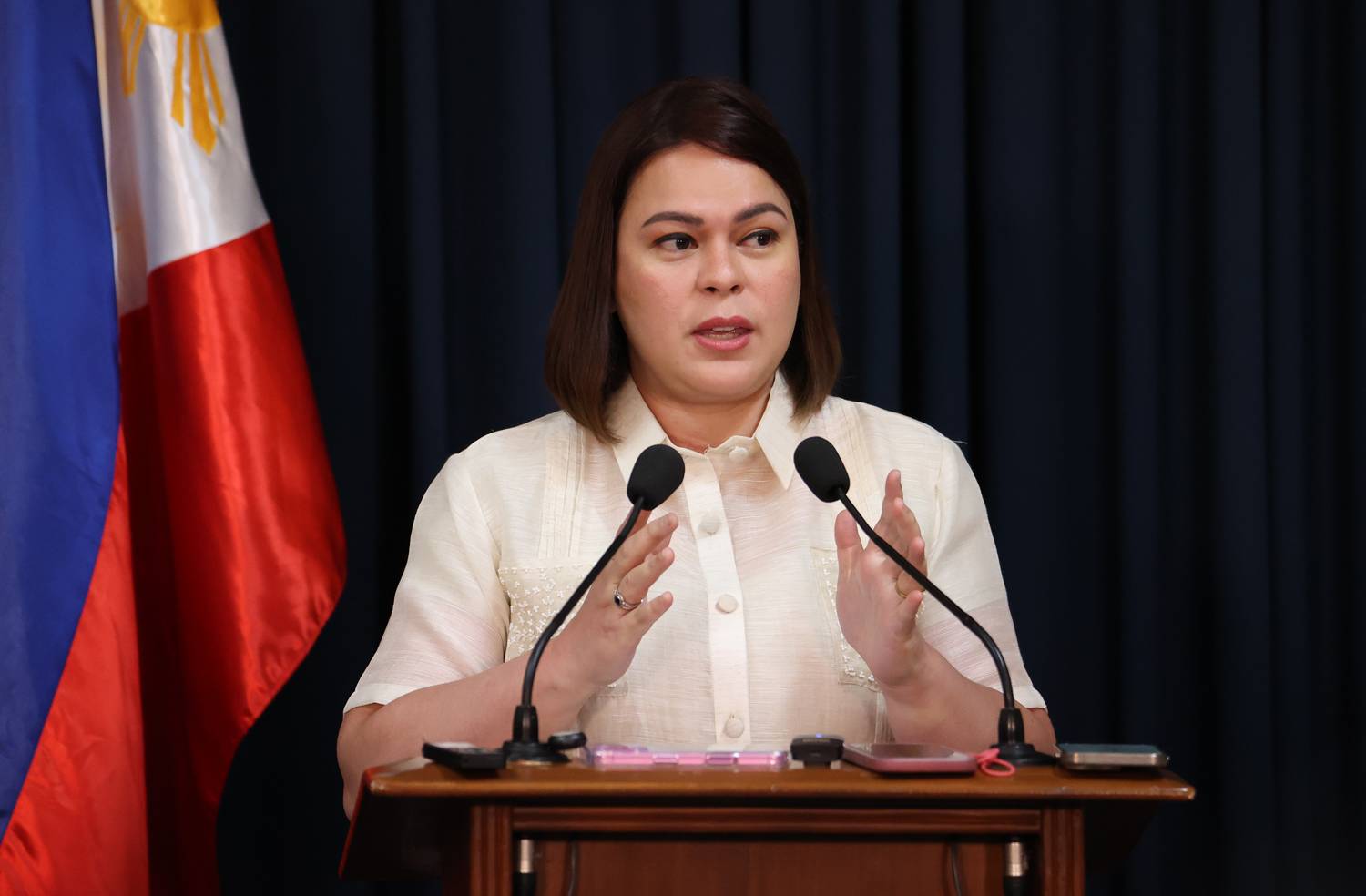
The inaction of the House of Representatives on the first three complaints against Vice President Sara Duterte “doomed” the fourth impeachment complaint that was endorsed by more than 200 lawmakers and transmitted to the Senate for trial.
This was the common explanation of the Supreme Court justices in concurring with the resolution authored by Senior Associate Justice Marvic Leonen declaring as unconstitutional the Vice President’s impeachment in February last year.
In her separate opinion, Associate Justice Amy Lazaro-Javier said “the failure to follow tasks within strict timelines doomed the complaints.”
“By disregarding the Constitution’s rigid deadlines, the House of Representatives rendered the first three impeachment complaints functus officio (having served their purpose),” she said. “As such, they had lost legal efficacy that then resulted in their dismissal by operation of law.”
She added that the fourth impeachment complaint “does not erase the violation.”
Session days
The main ruling stressed that the House lawmakers violated the 1987 Constitution when the first complaint, filed on Dec. 2, was not immediately endorsed to the committee on justice within the mandated period of 10 session days, or until Jan. 21.
This meant that the complaint lapsed when it was endorsed, along with the second and third complaints, to the House Speaker only on Feb. 5.
The court said the 10 session days should be reckoned from Dec. 2, 2024, when the first complaint was filed. The House had until Jan. 14, 2025, to include it in the order of business and until Jan. 21, 2025, to refer it to the House justice committee.
When it failed to comply with the required period, the impeachment was deemed to have been initiated and “any succeeding complaints are barred,” under Article XI, Sec. 3(5) of the Constitution, the ruling said.
‘House’s machinations’
In his separate opinion, Associate Justice Ramon Hernando castigated the House for its “machinations” as it “sidestepped” the rules, did not meet the deadlines set by the Constitution and then filed the fourth complaint, he said.
“I stress that with the respondent House’s machinations, the one-year bar rule was not only corrupted but veered away from its purpose. It was circumvented,” Hernando said.
“A mechanism, crafted to foster balance between stability and accountability, and given life through jurisprudence in order to achieve those ends, was instead handled in a manner comparable to any other procedural hurdle or technicality that must be overcome,” Hernando said. “As guardians of the Constitution, the Court cannot allow this degradation.”
‘Flagrant violation’
Hernando dismissed the arguments of House lawmakers that their archiving the first three complaints after the endorsement of the fourth hinged upon the earlier rulings of the high tribunal on impeachment proceedings—the Gutierrez v. House of Representatives committee on justice in 2011, and the Francisco Jr. v. House of Representatives in 2003.
“The rulings were never meant to allow an avenue where the one-year bar rule is to be avoided by unreasonably sitting on an impeachment complaint while contemplating the filing of another one,” said the magistrate. “Was this also the objective of respondent House behind its actions? I do not think so.”
He cited remarks made by former House secretary general Reginald Velasco who “admitted” in media interviews that the lawmakers sat on the first three complaints to avoid triggering the one-year bar rule.
Associate Justice Henri Inting zeroed in on the difference of the session days and legislative days in saying that the House “attempted to skirt” the time frame stipulated in the Constitution.
In his view, a session day, in its “plain and ordinary” language, refers to a calendar day that the Congress is in session; while a legislative day, refers to a period, not just a single day, from the start of a congressional session until its adjournment.
Because of this constitutional violation, Inting said, the articles of impeachment against Duterte must be struck down for being “void and unconstitutional.”

“To rule otherwise is tantamount to holding that the House’s flagrant violation of the Constitution is inconsequential,” he said.
‘Constitutional limitations’
For Associate Justice Ricardo Rosario, the deadlines required in setting an impeachment in motion are meant to be “constitutional limitations” on the power of Congress to impeach a public official.
It ensures that its exercise “remains measured and even-handed, even in times of political turbulence,” the magistrate said.
Associate Justice Raul Villanueva noted that the act of archiving, in the case of the first three impeachment complaints, “operated as an effective dismissal” that triggered the one-year bar rule.
The Court, nevertheless, underscored that it did not absolve Duterte of the charges against her, which included, among others, betrayal of public trust for her alleged misuse of P612.5 million in confidential fund as Vice President and education secretary and for threatening to kill President Marcos, first lady Liza Araneta-Marcos and then Speaker Martin Romualdez.
“At the House’s discretion, the grounds raised in the Articles of Impeachment may again be raised on any evidence that may been discovered, if any,” it said. “It is for Congress, by initiation of the House of Representatives and trial by the Senate, to determine the fate of the incumbent Vice President.”
******
Get real-time news updates: inqnews.net/inqviber