











SC reminds courts to weigh mitigating factors more fairly

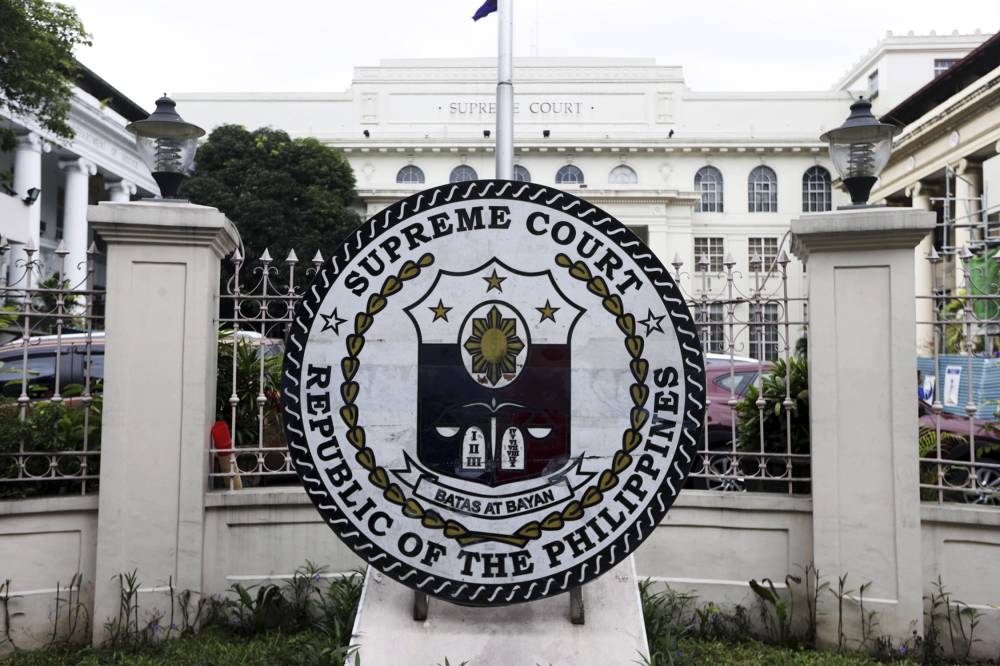
The Supreme Court has reminded trial courts to be more “considerate” in weighing instances of voluntary surrender that could lead to shorter sentences for those convicted, saying the law “may be harsh, but it need not be harsher.”
In a decision dated Aug. 12, 2025 and released on Thursday, the high court granted a petition for review on certiorari filed by a man who was tried and later convicted of bigamy in 2018. This was after his 14-year-old arrest warrant was discovered when he applied for a clearance from the National Bureau of Investigation.
The high tribunal’s ruling set aside the 2018 decision of a Legazpi City Regional Trial Court (RTC) in Albay province that was later affirmed by the Court of Appeals in 2020 and again in 2021.
“What the Court asks and expects of magistrates on the front-lines of justice is to adjudge each case wholly, fully and fairly as discerning persons learned in the law and literate in life experience, and not as cold-hearted automatons or soulless supercomputers,” it said.
Voluntary surrender
Under the Revised Penal Code, voluntary surrender may be considered a mitigating factor in one’s criminal liability if done in good faith.
The clarification from the Supreme Court stemmed from a bigamy case in which a man, who was still lawfully married to his wife, wed another woman before the Legazpi City Municipal Trial Court in 2002.
In 2016, the man went to the Laguna district office of the NBI to apply for a clearance. The NBI officer on duty, however, found that the individual had a pending case, which the accused immediately admitted.
Citing court records, the high tribunal noted that the man told the NBI officer that he would surrender and even asked for help in posting bail. He was then served the arrest warrant.
But the Legazpi City RTC denied the accused’s plea for it to consider his voluntary surrender as it argued that two out of the three elements required were not met.

The appellate court agreed with the lower court and said the accused only “surrendered” as he “had no other recourse, but to submit himself to authorities, considering he was inside the NBI office and his arrest was inevitable.”
Broadminded approach
The Supreme Court, however, stressed that while RTCs are mandated to “adhere firmly and strictly to all rules and precedents relative to criminal law and criminal procedure,” they have to be “more considerate” and employ a more “broad-minded approach” to mitigating circumstances.
“Thus, a trial court judge should be able to stay and hold back the rough hand of justice from further adding to the guilty party’s debt to society if justice, equity and the facts deemed so—and again, depending on the totality of circumstances present,” it said.
“The law may be harsh, but it need not be harsher,” it added.