








SC: School noise not necessarily a ‘nuisance’

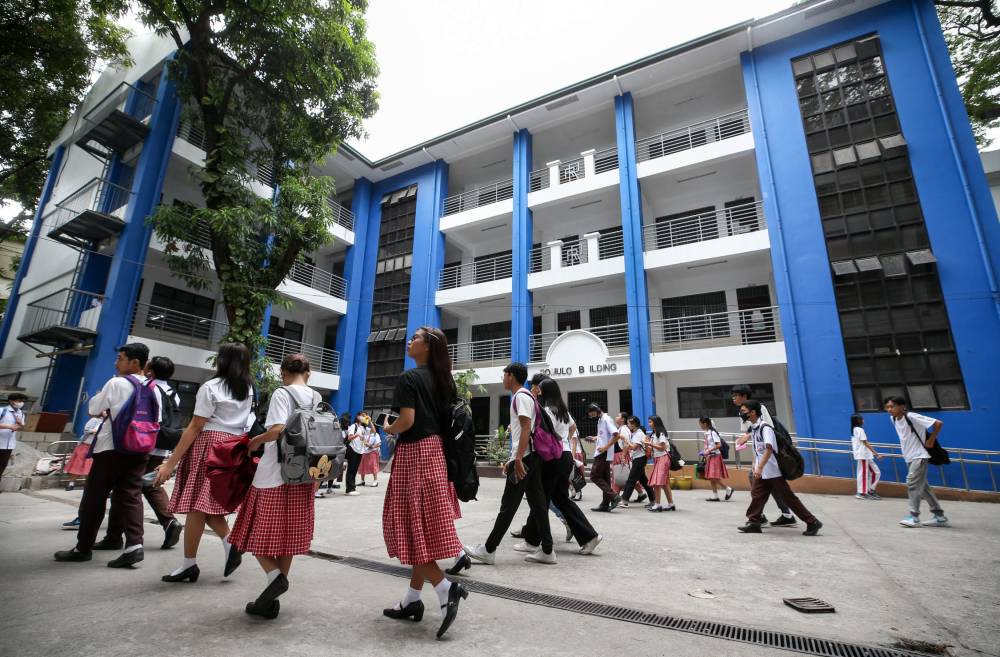
In a community, some sources of noise may irritate neighbors—but that doesn’t automatically make them a “nuisance” that can be a ground for claiming damages.
This was the rationale behind a Supreme Court ruling that decided in favor of a school and dismissed the complaint filed by nearby residents in Butuan City.
The high tribunal reversed the rulings of the Court of Appeals in the case filed against Couples for Christ-School of Morning Star (CFC-SMS) by 23 residents of Saint Joseph Subdivision.
The complainants earlier sued the CFC-SMS for damages in the local court, saying the noise from its campus activities had been affecting their well-being.
In 2021, the Butuan Regional Trial Court (RTC) dismissed the complaint, citing the residents’ failure to present proof of their supposed injury.
But the residents won on appeal, with the CA holding the school responsible for the noise and recognizing the harm done to the residential community where it is located.
The Supreme Court’s Third Division, however, in a decision promulgated on Nov. 26, 2025, but made public on Friday, overturned the 2023 and 2024 rulings of the CA and upheld the RTC decision.
‘Endless litigation’
The high tribunal said the complaining subdivision residents failed to establish that the noise coming from the school was an “actionable nuisance,” or that it was done with ill motive or in bad faith.
“Markedly, not every inconvenience gives rise to a cause of action for damages. Otherwise, courts will be inundated with endless litigation over minor and speculative grievances,’’ the Supreme Court decision said.
“Absent a preponderance of evidence rendering CFC-SMS liable, the action for damages against it is dismissed,” said the decision penned by Associate Justice Samuel Gaerlan.
The tribunal also gave weight to the noise-reduction measures earlier taken by the school in response to the initial complaint.
It also cited the 2020 report of the City Environment and Natural Resources Office, which measured the level of noise and found that it was still below the allowable maximum of 55 decibels
But even if the noise exceeded the limit, there is no existing law that states that levels exceeding the threshold would automatically be deemed a nuisance, the high tribunal said.

There are other factors to be considered, it added, like whether there’s proof that the safety and health of individuals have been jeopardized.
“There is also no evidence showing that the noise adversely affected the health or comfort of the people within the vicinity (of the school) to an unreasonable extent,” the Supreme Court said. “At best, their statements reveal minor inconveniences.”
The court also noted only five of the 23 complainants testified in court. Three of the five lived in the same household, making their statements “self-serving” and hardly representing the community.
“No other residents testified during the trial. Aside from the Inchoco family, the only persons presented were Elbert Villanueva and Angeline Rabor-Luta, who failed to establish that the noise caused significant discomfort and affected their health,” it said.
******
Get real-time news updates: inqnews.net/inqviber


