







SC upholds murder conviction of 3 cops over Kian slay in 2017

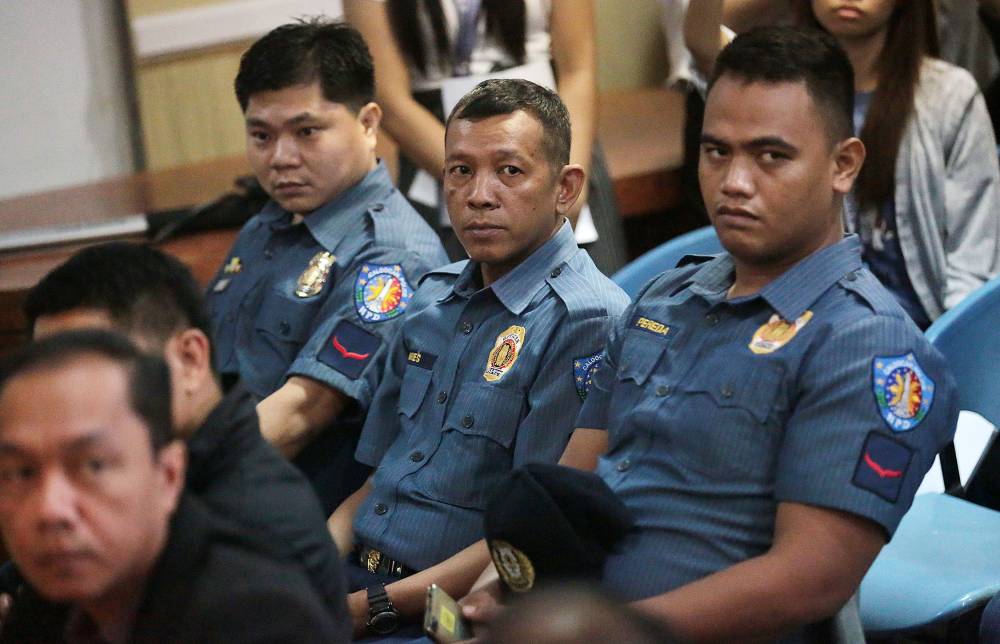
The Supreme Court has upheld the conviction of three policemen for the murder of 17-year-old Kian delos Santos at the height of the Duterte administration’s drug war in 2017, ruling that the killing of a minor “could not be considered standard” in police operations.
The killing of Delos Santos sparked public outrage, triggered street protests and prompted congressional inquiries. It is one of the cases cited in the filing of murder as a crime against humanity against former President Rodrigo Duterte with the International Criminal Court in The Hague, the Netherlands, in connection with his brutal crackdown on drug dealers and users.
In a 40-page decision promulgated on Aug. 11 and made public only on Monday, the high court’s Second Division denied the appeals of PO3 Arnel Oares and Police Officers 1 Jeremias Pereda and Jerwin Cruz, affirming their conviction for murder.
The policemen were sentenced to reclusion perpetua, or up to 40 years of imprisonment, and were ordered to pay the heirs of Delos Santos P275,000 in damages.
“On the day Kian was killed, Oares stated that they were conducting One Time Big Time Operation, while this was called Oplan Galugad by Pereda and Cruz. Regardless of nomenclature, the killing of a minor could not be considered standard in this operation,” the high court said in the ruling penned by Associate Justice Jhosep Lopez.
The high tribunal cited the Revised Philippine National Police Operational Procedures in 2013, the prevailing version at the time the crime was committed, which outlines the circumstances under which the use of firearms during police operations is justified.
Self-defense?
The justices took note of how Pereda responded to what the manual provides in situations involving gunfire, quoting him as saying that “if it is an operation and there is a gunshot fired towards us[,] we have the right to retaliate.”
“Neither has any of the accused proven any of the requisites of self-defense, defense of a relative, and defense of a stranger. Notably, despite their claims that gunshots were fired in their direction, none of the accused were shown to have been shot anywhere on their person,” the high court said.
Based on court records, witnesses saw the three policemen stop and frisk Delos Santos on the night of Aug. 16, 2017, in Barangay Baesa, Caloocan City. The officers punched him after allegedly finding illegal drugs in his possession.
Delos Santos cried and begged to be allowed to go home, saying he had a class exam the next day. The officers then forced the teenager to hold a towel covering what appeared to be a gun and made him stand with his shirt raised over his head. Witnesses later heard one officer ask whether they should take him to the police station, to which the others replied, “ibaba na lang natin ito (loosely translated as ‘let’s take him down here’).”
Treachery
The police officers dragged Delos Santos to a dark alley near a river. Oares and Pereda shot him multiple times while Cruz stood guard.
In their defense, the police officers claimed they were responding to reports of an illegal drug activity in the village and alleged that shots were fired toward them, prompting Oares to chase the supposed shooter and fire back.
Judge Rodolfo Azucena of the Caloocan Regional Trial Court Branch 125 sentenced the three policemen to life in prison without the possibility of parole, a ruling affirmed later by the Court of Appeals.

The high court affirmed the lower court’s finding that treachery attended the killing.
Article 248 of the Revised Penal Code defines treachery as taking advantage of superior strength with the help of armed men “or employing means to weaken the defense or of means or persons to insure or afford impunity.”
The high court noted that Oares admitted to shooting Delos Santos, while Pereda and Cruz also said that it was Oares who fired the shots that killed Delos Santos.
Eligible for parole
The tribunal further cited the medicolegal officer’s testimony that Delos Santos was likely kneeling when he was shot.
“Therefore, when Kian was shot, he was not in a position to defend himself. Next, we note that the prosecution evidence showed the chain of events that led to Kian being particularly put in this location and in that position by the accused, allowing them to shoot Kian with impunity and ensuring the execution of the crime,” the high tribunal said.
The high court, however, removed the lower court’s restriction on their eligibility for parole, saying this applies only when circumstances justify the imposition of the death penalty, which were not present in this case. —WITH A REPORT FROM INQUIRER RESEARCH